
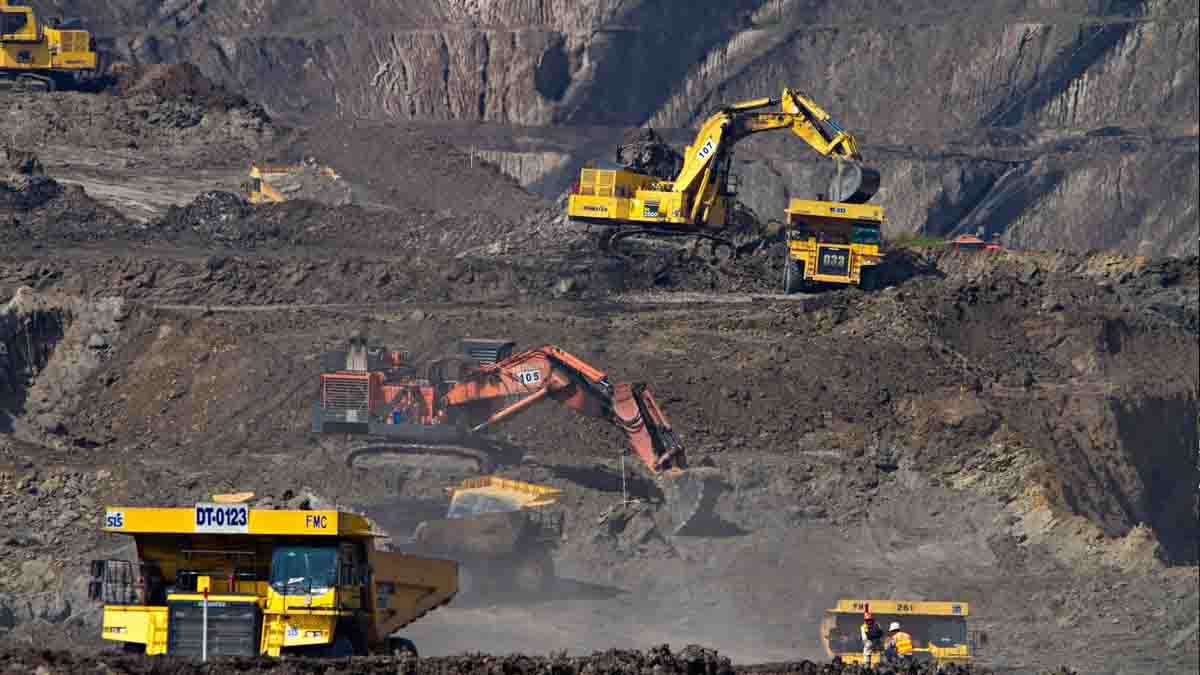
The Reko Diq project is Pakistan’s largest mining venture and one of the world’s biggest undeveloped copper-gold deposits. Located in the Chagai district of Balochistan, the project has secured over $5.5 billion in international financing commitments and saw early construction begin in 2025. But on March 26, 2026, operator Barrick Mining announced a 12-month delay due to escalating security concerns — casting uncertainty over a project that had finally appeared unstoppable.
The revised Phase 1 cost now stands at $7.723 billion, with first production originally targeted for late 2028.
What Is the Reko Diq Project?
The Reko Diq Mine is a planned mining operation, located near Reko Diq town in Chagai District, Balochistan, Pakistan. Reko Diq represents one of the largest copper and gold reserves in the world having estimated reserves of 5.9 billion tonnes of ore grading 0.41% copper and gold reserves amounting to 41.5 million oz, and a mining life of at least 40 years.
The name “Reko Diq” means “sandy mountain” in Balochi. The deposit sits within the Tethyan Magmatic Arc, a geological belt stretching from Southeast Europe through Turkey, Iran, and Pakistan. The project stalled for over a decade following a legal dispute between Pakistan and Tethyan Copper Company, which was resolved in 2022 through a restructured joint venture.
Reserves and Production Targets
The updated feasibility study, completed in March 2025, significantly expanded the project’s scope.
Phase 1 will result in 45-million tonnes of mill feed being processed a year, yielding up to 240,000 t of copper and 297,000 oz of gold. By 2034, Phase 2 will expand operations to 90-million tonnes a year, increasing production to an average of 460,000 t/y of copper and 520,000 oz of gold for the first ten years, from 2034 to 2043.
Probable mineral reserves, on a 100% basis, are three-billion tonnes at 0.48%, representing 15-million tonnes of copper, and 2.9-billion tonnes at 0.28 g/t, representing 26-million ounces of gold. The Reko Diq project alone added 13 million ounces of gold and 7.3 million tonnes of copper to its attributable reserves.
Read more: Reko Diq: Deal for world’s largest untapped copper, gold mine nears finish line
A recent feasibility study has upgraded the project’s scope, with phase one throughput increasing to 45 million tons per annum from 40 million, and phase two throughput rising to 90 million tons per annum from 80 million. The mine life has been revised from 42 years to 37 years due to the rising throughput, although the company believes unaccounted-for minerals could extend the life to 80 years.
Ownership Structure
One of the largest undeveloped copper-gold projects in the world, Reko Diq is owned 50% by Barrick, 25% by three federal state-owned enterprises, 25% by the Government of Balochistan of which 15% is on a fully funded basis and 10% is on a free carried basis.
The federal 25% stake is held through Pakistan Minerals Private Limited (PMPL), a consortium of OGDCL, PPL, and GHPL. The province’s interest in the mine will be fully funded, which means that Balochistan will reap the dividends, royalties and other benefits of its 25% shareholding without having to contribute financially to its construction and operation.
Saudi Arabia’s Manara Minerals, a Public Investment Fund and Ma’aden joint venture, has also expressed intent to acquire a 15 percent stake.
Project Cost and Financing
The government approved definitive agreements and financial commitments for the revised cost of $7.723 billion for the first phase of the Reko Diq Copper-Gold Project. The estimated cost for Phase-I has risen by 14 per cent from $6.765bn in March to $7.723bn, mainly due to higher financing costs following an increase in project debt and the inclusion of cost contingencies.
RDMC has secured over $5.5 billion in financing commitments from international financial institutions (IFIs), surpassing its actual funding requirement of $3.74 billion.
IFC and World Bank
RDMC welcomes the approval on 12 June 2025 by the IFC and IDA of a direct loan of up to US$700 million for RDMC at a joint board meeting. The IFC loan represents its first mining investment in Pakistan, helping to lay the foundation for further investment in mining and to support resilience in a fragile economic region.
Asian Development Bank
The Asian Development Bank (ADB) has approved a financing package for the Reko Diq copper-gold mine in Pakistan. ADB’s contribution includes up to $300 million in senior loans and a $110 million financing guarantee for the Government of Balochistan. The ADB has approved $300 million in financing, marking its first mining-sector investment in over four decades.
US EXIM Bank
The US Export-Import Bank (EXIM) has approved $1.25 billion in financing to support the mining of critical minerals at Reko Diq. EXIM’s project financing will bring in up to $2 billion in high-quality U.S. mining equipment and services needed to build and operate the Reko Diq mine, along with creating an estimated 6,000 jobs in the U.S. and 7,500 jobs in Balochistan, Pakistan.
Railway Link Financing
The meetings also discussed a financing arrangement through RDMC to provide $350 million to Pakistan Railways for the construction of a dedicated railway line connecting the mine to Port Qasim. The funding, to be extended as a loan under a sovereign guarantee from the federal government, will form part of the Main Line-III (ML-3) project.
Construction Progress
Early works construction started during the first quarter of 2025, with first production anticipated by the end of 2028. The project workforce could peak at 7,500 during construction.
The civils fleet has begun double shift operations as the company continues to train and expand its Pakistani workforce, demonstrating successful local capacity building. The first tranche of the tailings storage facility fleet has arrived on-site with the second tranche in Karachi awaiting mobilisation to site, expected to begin ramp-up in the fourth quarter of 2025.
Reko Diq Mining Company has awarded Metso with the remaining major contracts to supply advanced Metso Plus beneficiation and dewatering equipment for Reko Diq Mining Company’s copper-gold project in Pakistan. These contracts are valued at approximately EUR 70 million.
Barrick Delays Project by 12 Months
On March 26, 2026, the project hit its most significant setback since the 2022 restructuring. Barrick Mining has announced a delay in the development of the Reko Diq copper-gold project in Balochistan due to escalating security concerns in the region and the Middle East. The ongoing review of the massive project will now be extended by 12 months from July 2026. As a result, previously announced budgets and timelines may be affected.
The Canadian company announced earlier this month it planned to “immediately” begin a comprehensive review of all aspects of the Reko Diq project following coordinated attacks in Balochistan on Jan. 30-31 that killed 36 civilians and 22 security forces personnel.
“As you saw in the press release, the board and the management are a little concerned about the security situation on the ground in Balochistan. There has been some escalation in security events there, and our primary focus is the safety and security of our people.”
He added that the company had informed its lending consortium that a review needed to be completed before financing could be finalised. This means the previously expected financial close has been indefinitely postponed.
Meanwhile, “The project continued to advance site works during the period (July-December FY26),” the PPL said. “The operator (Barrick) is undertaking a review of all aspects of the project, including with respect to the project’s security arrangements, development timetable and capital budget.”
Economic Impact on Pakistan
The stakes for Pakistan are enormous. The mine’s estimated life is 37 years with projected operating cash flows of $90bn, including $70bn in free cash flows. About $53bn of revenue is expected to remain in Pakistan. This includes $11bn in fiscal revenue for the federation, $11bn for Balochistan, $6bn in free carry interest to the provincial government, $9bn equity inflows for BMRL, and $15bn inflows for PMPL.
If financing closes on schedule, Reko Diq is projected to generate $2.8 billion in export potential in its first year of shipment, nearly 10 percent of Pakistan’s existing export volume.
The project will employ 7,500 people during peak construction (2025-28) and 3,500 during operations. Twenty-seven Baloch graduates have been sent to Barrick’s overseas sites for training, while 300 students from Chagai district are enrolled in Hunar Foundation programmes.
What Comes Next
The 12-month delay is a serious blow but not necessarily fatal. This decision follows preliminary findings from a review launched on February 5, which examined all aspects of the project, including capital allocation and operational risks. The extended review period will enable Barrick to better evaluate security risks and optimize its project delivery strategy.
Site works continue despite the review. Pakistan’s government has reaffirmed its commitment, and the lending consortium — spanning the World Bank, ADB, US EXIM Bank, and development banks from Japan, Canada, Germany, Sweden, and Finland — remains engaged.
The fundamental economics have not changed. Copper demand continues to surge globally, driven by renewable energy, electric vehicles, and AI infrastructure. If security conditions stabilize and financing closes, Reko Diq will rank among the world’s top five copper-gold mines — a transformational asset for Pakistan’s economy and Balochistan’s future.



Join the Conversation
Share your thoughts, questions, or feedback below.