
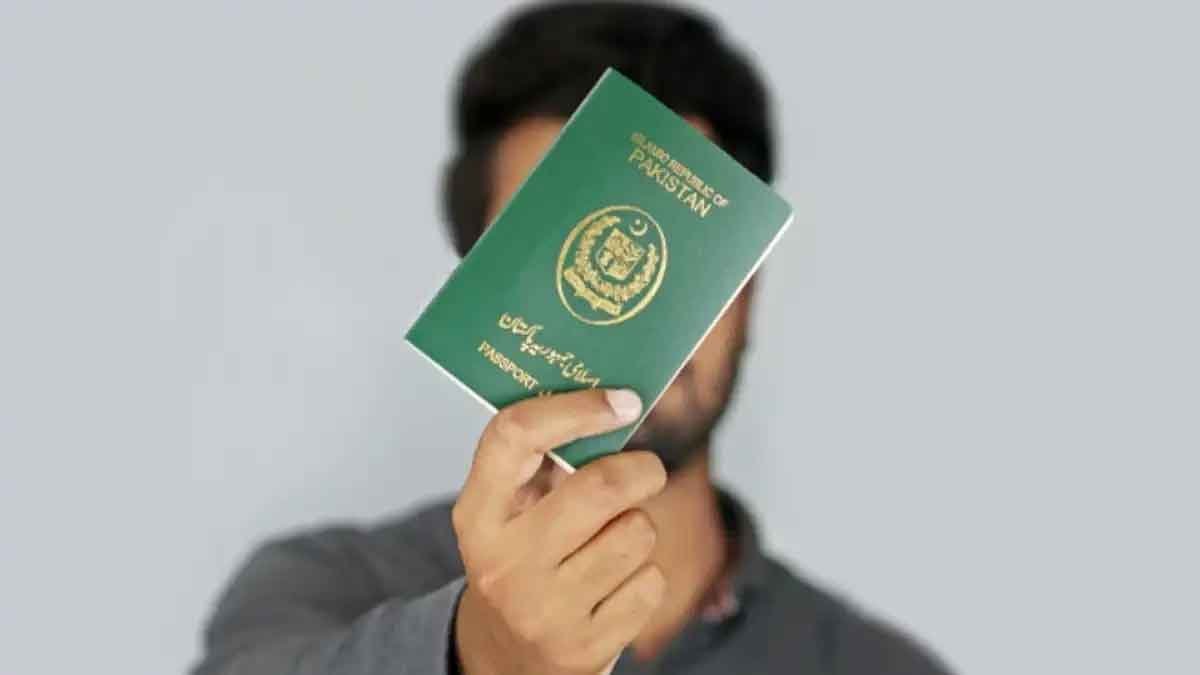
The green passport of Pakistan is, by global standards, a difficult document to travel on. Most of the world’s 227 destinations require a visa arranged in advance. Consulate queues, bank statements, proof of return, employment letters — the machinery of a Pakistani visa application is familiar to millions.
And yet, 2026 is a year of measured progress. Interior Minister Mohsin Naqvi welcomed Pakistan’s latest improvement, saying: “Pakistan’s passport ranking improving from 126th to 98th is a strong achievement, and this momentum will continue.”
That 28-place climb — from 126th to 97th over recent years — is not a revolution. But it is a direction. For the first time in years, the number is going the right way.
Where Pakistan Stands in 2026
Pakistani citizens are enjoying growing travel freedom as the Henley Passport Index for February 2026 ranks their passport 97th, up from 98th in January and 103rd last year. Pakistani passport holders can now visit 32 countries visa-free, with visa-on-arrival, or via electronic travel authorisation — up from 31 in January — following the reinstatement of The Gambia.
At the top, Singapore retains its spot as the world’s strongest passport for the third consecutive year, offering visa-free access to 192 destinations. Japan and South Korea follow with 188, while Denmark, Luxembourg, Spain, Sweden and Switzerland share third place. The UAE surpassed New Zealand, Australia, the UK, Canada, Iceland and the US to complete the top five. The US slipped to 10th with 179 destinations.
Pakistan’s passport remains among the weakest globally — tied with Yemen and ranking just above Iraq, Syria and Afghanistan. The honest picture requires both facts: Pakistan is improving, and Pakistan is still fourth from the bottom. Those two truths coexist.
The Complete Visa-Free and Visa-on-Arrival List
Pakistani passport holders can currently access 32 destinations across four categories:
Visa-Free Entry (No Prior Arrangement Required)
Pakistan passport holders have free visa access to Barbados, Cook Islands, Dominica, Haiti, Micronesia, Montserrat, Rwanda, St. Vincent and the Grenadines, Trinidad and Tobago, Vanuatu, and The Gambia.
Visa on Arrival (VOA)
Visa-on-arrival access is available for Burundi, Cambodia, Cape Verde Islands, Comoro Islands, Djibouti, Guinea-Bissau, Madagascar, Maldives, Mozambique, Nepal, Niue, Palau Islands, Qatar, Samoa, Senegal, Sierra Leone, Timor-Leste, and Tuvalu.
Electronic Travel Authorisation (eTA)
Pakistani passport holders can also obtain an Electronic Travel Authorisation for Kenya, Seychelles and Sri Lanka.
These 32 destinations span Caribbean islands, East African parks, South Asian cultural capitals, and Pacific Ocean escapes — offering genuine options for leisure, business, and short-term travel without the burden of embassy visa applications.
Read more: Get Your Turkey e-Visa in Less Than 3 Days: 2026 Guide for Pakistanis
How It Compares to a Decade Ago
The numbers tell a story of gradual, painful improvement.
Pakistan ranked 107th in 2021 with a visa-free score allowing entry into 32 countries, 109th in 2022, and 103rd in 2025 with access to 31 countries. In 2026 the ranking has risen to 97th.
Going back further, Pakistan’s ranking improving from 126th — where it sat in recent historical data — to 98th is what Interior Minister Naqvi cited as the benchmark of improvement.
A decade ago, in 2015–2016, the Pakistani passport was similarly trapped at the bottom of global passport rankings — offering visa-free access to fewer than 30 destinations, ranking around 104th to 107th globally, and providing access almost entirely to the same small cluster of African, Pacific and Caribbean nations that appear on today’s list.
The comparison reveals an uncomfortable truth: in ten years, the number of visa-free destinations has barely changed. What has improved is Pakistan’s diplomatic positioning — the country has signed more structured bilateral agreements, improved document security, and received recognition from more international index trackers. But the actual travel freedom experienced by ordinary Pakistanis at an airport counter has not transformed.
The gap between Pakistan and India is telling. India ranks 80th, with visa-free access to 55 countries — a gap of 23 additional destinations compared to Pakistan’s 32. For context, Singapore sits at 192. The global mobility inequality is stark and widening at the top end of the index even as Pakistan edges upward at the bottom.
The Practical Reality for Pakistani Travellers
Beyond rankings, Pakistani travellers navigate a set of very specific realities.
Prolonged processing times mean embassy protocols for the UK or the US can take anywhere from 15 days to 3 months. Booking fixed, non-refundable flights prior to physical visa issuance carries massive financial risk. Western embassies thoroughly evaluate regular income, active employment certificates and active bank statements to guarantee the applicant’s intent to return to Pakistan.
These are not abstract bureaucratic hurdles. They determine whether a Pakistani professional can attend a conference, whether a Pakistani student can visit a university, and whether a Pakistani family can take a summer holiday in Europe. The visa regime shapes economic mobility as much as physical travel.
The most popular high-demand destinations — UAE, Saudi Arabia, the UK, the US, the EU, Canada, Australia — all require advance visas with significant documentation. Qatar, notably the closest regional country on the visa-free list, removed its visa requirement in recent years as part of broader Gulf-Pakistan diplomatic strengthening.
How to Renew Your Passport in 2026
Pakistan’s Directorate General of Immigration and Passports (DGIP) has substantially digitised the renewal process in recent years. Here is how it works in 2026:
Step 1 — Pay the Fee First
The Passport Fee Asaan mobile app and web portal have made payments seamless. Download and register the app, generate a 17-digit PSID number by selecting your passport type — new, renewal or lost — then choose your page count, validity and urgency. Payment can be made via JazzCash, Easypaisa, ATM or internet banking.
Step 2 — Apply Online or Visit in Person
For online renewal, go to the DGIP official portal and create an account using your email and phone. Select “Renewal” as your application type, enter your old passport number and CNIC, upload scanned copies of your documents, choose your urgency level, pay the fee online and book an online appointment at your nearest MRVP centre.
Step 3 — Documents to Bring
Required documents include proof of prescribed passport fee payment through original bank paid fee challan or e-payment confirmation, original valid CNIC or NICOP with photocopy, and the previous passport in original with its photocopy. Government employees must also produce a No Objection Certificate from their department. Dual nationals must bring their foreign passport and its photocopy.
Step 4 — Biometric Verification
After booking your appointment, attend at the MRVP centre for biometric verification — fingerprint capture and photograph. Personal presence is required. If fingerprints fail to scan three times, manual NADRA verification may be required.
DGIP has also launched biometric verification via the NADRA PAKID Mobile app, allowing fingerprints to be submitted digitally through the app at the upload stage — replacing the need for a physical fingerprint form for online applicants.
Step 5 — Collect Your Passport
Normal service takes approximately 21 working days. Urgent service takes approximately 5 working days. Fast Track service, available in 47 major cities, delivers in just 2 working days.
Home delivery is currently available only for overseas Pakistanis. Inland applicants collect their passports from their selected Regional Passport Office or Executive Passport Office.
Read more: What Pakistanis Need to Know About New Canada Permanent Residency Rules in 2026
2026 Passport Fees — The Complete Breakdown
Pakistan’s passport fee structure offers three core variables: number of pages (36, 72 or 100), validity (5 or 10 years), and processing speed (normal, urgent or fast track).
No additional fee increases specific to 2026 have been announced beyond earlier revisions. Previous adjustments introduced between 2024 and 2025 raised base passport fees by roughly 20 to 50 percent. Current passport fees also include a Rs1,000 service charge plus applicable taxes across all application categories.
The current DGIP fee schedule for ordinary machine-readable passports is as follows:
36 Pages — 5 Years: Normal Rs4,500 | Urgent Rs7,500 36 Pages — 10 Years: Normal Rs7,700 | Urgent Rs12,200 72 Pages — 5 Years: Normal Rs13,500 | Urgent Rs27,000 72 Pages — 10 Years: Normal Rs24,750 | Urgent Rs40,500100 Pages — 10 Years: Normal approximately Rs27,000 | Urgent higher
If you travel frequently, the 10-year 72-page passport offers the best value as it reduces the frequency of renewals and administrative visits.
Lost passport replacements carry escalating penalties — fees increase with each subsequent loss as a deterrent.
The e-Passport: Pakistan’s Security Upgrade
Pakistan launched its biometric e-passport in 2022, introducing an electronic chip that stores the holder’s biometric data — dramatically improving document security and reducing forgery risk.
e-Passport issuance is now available at all passport offices across Pakistan. The facility was initially available only in Islamabad but was extended to all field offices nationwide from August 16, 2023.
The e-passport chip stores fingerprints, facial image, and personal data in encrypted form, making the document machine-verifiable at international border crossings. It is compatible with e-gate systems at airports that support biometric verification — reducing manual processing times at compatible borders.
Plans are under way for e-gates at all major Pakistani airports, which would mean faster travel for e-passport holders. A new passport app is also in development to allow home-based applications.
Three Passport Sizes — Which Is Right for You?
Pakistan offers three booklet sizes to match different travel patterns:
36 Pages — The standard option for infrequent travellers. Sufficient for most Pakistanis who make one or two international trips per year and fill only a handful of visa pages.
72 Pages — For moderate to frequent travellers. Recommended for business professionals, academics and those with regular Gulf or regional travel. This is the most popular format for working-age Pakistanis with regular travel needs.
100 Pages — For the very frequent traveller — journalists, diplomats, consultants and those who travel monthly. Reduces the frequency of early renewals due to exhausted pages.
The 72-page and 100-page passport options carry additional fees above the base 36-page rate. All sizes are available in both 5-year and 10-year validity formats except for minors under 15, who are issued only 5-year validity passports.
Overseas Pakistanis: The Special Process
Pakistan’s 9 million strong diaspora has a separate, more streamlined process.
Overseas Pakistani applicants can handle all types of renewals, including new passports for newly born children up to two years, reprints, damaged and lost passport replacements, and modification for female applicants changing surnames — through the OnlineMRP web portal.
Home delivery is available for overseas applicants in most countries, with passports dispatched from the DGIP system directly to the applicant’s registered address abroad. Notable exceptions apply for countries such as Iran and Morocco, where local laws require embassy collection.
NICOP — the National Identity Card for Overseas Pakistanis — is the primary identity document required from diaspora applicants in lieu of a domestic CNIC.
What the Rankings Don’t Tell You
Raw ranking numbers obscure something important: the quality of the diplomatic relationship behind each visa-free arrangement matters more than the number of countries on the list.
Qatar’s inclusion on Pakistan’s visa-on-arrival list reflects a genuinely transformative Gulf-Pakistan relationship — one that involves millions of Pakistani workers, multi-billion dollar remittances, and deep bilateral investment. Sri Lanka’s eTA arrangement enables religious tourism and education access. Rwanda’s visa-free status reflects Pakistan’s growing African diplomatic footprint.
What the ranking cannot capture is trajectory. Pakistan’s passport ranking has improved from 126th to 98th — and the diplomatic momentum that produced that climb has accelerated significantly in 2025 and 2026. Pakistan’s role in the US-Iran ceasefire, its Strategic Mutual Defence Agreement with Saudi Arabia, the MENAAP reclassification, and its deepening ties with Turkey, Azerbaijan, China and Central Asian states all create the conditions for bilateral visa-waiver negotiations that did not previously exist.
The number on the Henley Index is a lagging indicator. The diplomatic infrastructure being built today will show up in visa-free scores two to five years from now.
Frequently Asked Questions (FAQs)
Q: How many countries can a Pakistani passport holder visit without a visa in 2026?
As of February 2026, Pakistani passport holders can access 32 destinations without a pre-arranged visa — through a combination of visa-free entry, visa-on-arrival and electronic travel authorisation. These destinations span the Caribbean, East Africa, South Asia and the Pacific. For all other destinations, a visa must be obtained in advance from the relevant embassy or consulate.
Q: What is Pakistan’s passport ranking in 2026?
Pakistan’s passport is ranked 97th on the Henley Passport Index as of February 2026, up from 98th in January and 103rd in 2025. The ranking places Pakistan just above Iraq, Syria and Afghanistan — the only countries with weaker passports globally. Interior Minister Mohsin Naqvi noted the improvement from a historical low of 126th, describing the climb to 98th as a strong achievement.
Q: How long does passport renewal take in Pakistan in 2026?
Normal service takes approximately 21 working days from the date of biometric verification. Urgent service takes approximately 5 working days. The Fast Track service, available at Executive Passport Offices in 47 major cities, delivers in 2 working days. These are working-day estimates and may vary based on verification workload and peak application volumes.
Q: What is the cheapest passport renewal option in Pakistan?
The most affordable option is the 36-page, 5-year passport on normal service, which costs Rs4,500. For better long-term value, the 72-page, 10-year passport at Rs24,750 on normal service reduces the frequency of future renewals and is recommended for anyone who travels more than once a year.
Q: Can Pakistanis apply for passport renewal online?
Yes, for renewal applications, online processing is available through the DGIP portal at dgip.gov.pk. Applicants create an account, fill the form, upload documents and fingerprints, and pay online. Biometric verification still requires a physical visit to an MRVP centre after booking an appointment. For overseas Pakistanis, the full process including home delivery is available through the OnlineMRP portal for most countries.
Q: Is the e-passport available across Pakistan and what are its advantages?
Yes. Pakistan’s biometric e-passport has been available at all Regional Passport Offices nationwide since August 2023. The e-passport contains an encrypted electronic chip storing the holder’s biometric data — fingerprints and facial image — making the document harder to forge and compatible with e-gate automated border systems at international airports. It is currently optional but is strongly recommended for frequent travellers.



Join the Conversation
Share your thoughts, questions, or feedback below.