
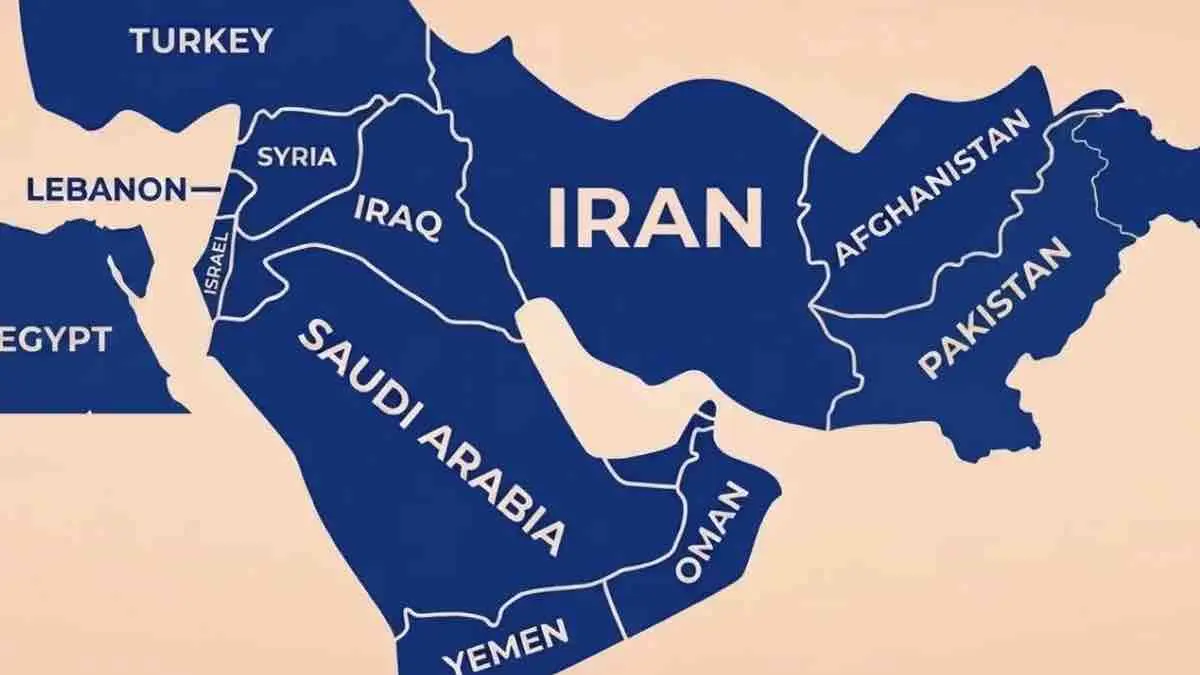
In April 2026, the World Bank updated its DataBank metadata glossary to list Pakistan alongside Afghanistan under the Middle East and North Africa regional classification, effective fiscal year 2026. Just a database entry quietly rewriting the administrative geography Pakistan has occupied for decades.
Yet that quiet update is generating loud debate — and for good reason. When one of the world’s most influential development institutions redraws the map around you, it is never purely administrative.
What Actually Changed
The World Bank has reclassified Pakistan from its longstanding South Asia regional grouping to the Middle East and North Africa category, creating a new MENAAP designation — Middle East, North Africa, Afghanistan and Pakistan — for fiscal year 2026. This administrative change, detailed in World Bank documentation released in February, ends decades of Pakistan’s placement alongside India, Bangladesh, Sri Lanka, Nepal, Bhutan and the Maldives in the South Asian economic cluster.
While the International Monetary Fund adopted a similar MENAP grouping in April 2013, the World Bank’s formal reclassification for fiscal year 2026 represents a more definitive institutional shift. Regional totals have been retroactively updated throughout the historical time series to reflect the new classification.
The World Bank was careful in its framing. The bank emphasised that the grouping is “for analytical purposes only,” noting that countries are organised based on shared economic challenges and development patterns rather than strict geographic boundaries.
But the implications stretch well beyond analytical convenience.
Why Pakistan Was Moved — The Economic Reality Behind the Decision
The reclassification did not happen in a vacuum. It reflects where Pakistan’s economic centre of gravity has already moved.
Pakistan’s economic momentum heading into FY2026 is increasingly tied to external flows and regional integration. Finance Minister Muhammad Aurangzeb confirmed in December 2025 that remittance inflows reached $38 billion in FY2025 with projections of $42 billion this year — and more than half of that originates from GCC states. In January 2026 alone, Saudi Arabia contributed $739.6 million and the UAE $694.2 million to Pakistan’s monthly remittance inflows of $3.5 billion.
Saudi Arabia, the UAE and Qatar have emerged as among Pakistan’s most consequential financial and diplomatic partners. Riyadh has repeatedly supported Pakistan’s balance sheet through deposits and rollover arrangements. Emirati capital has expanded its footprint in logistics, aviation and infrastructure. Millions of Pakistani workers remain central to Gulf labour markets, sending back remittances that underpin domestic consumption and foreign exchange reserves.
The shift reflects structural economic similarities Pakistan now shares with MENA economies — most notably high demographic pressures, conflict exposure, labour market strains, and limited private sector dynamism.
In short: the World Bank’s spreadsheet finally caught up with economic reality.
Pakistan Is Now the Largest Country in MENAAP
The reclassification has a striking statistical consequence that is easy to miss.
For 2024, the MENAAP population rises from 519 million in Pre-MENAAP to 813 million, with Pakistan representing the largest country in the new regional group at nearly one-third of the total. The age structure in MENAAP becomes noticeably younger relative to Pre-MENAAP, as the young-age dependency ratio rises by approximately 15%.
Pakistan is not a small addition to MENAAP. It is the single largest member. That demographic weight gives Pakistan a meaningful voice in how the World Bank frames the region’s development challenges — particularly around youth employment, skills, and labour market reform.
The $40 Billion Partnership Framework
The timing of the reclassification is directly relevant to a major financial negotiation currently under way.
Pakistan is currently negotiating a $40 billion Country Partnership Framework with the World Bank for fiscal years 2026 through 2035, centred on human capital development, private sector growth and economic resilience. Moving forward, World Bank analysis and recommendations for Pakistan will draw more heavily from MENA experiences than from South Asian benchmarks.
The World Bank’s MENAAP programme is working to channel nearly $20 billion into Pakistan between the years 2026 and 2035. Development strategies that have proven effective in resource-constrained, demographically young MENA economies — including labour market diversification, sovereign wealth fund models, and export-oriented industrial policy — will now shape the prescriptions Pakistan receives.
Read more: Is dividing Pakistan into 12 smaller provinces a cure or a complication?
New Benchmarks, New Comparisons
For years, Pakistan has been benchmarked against India, Bangladesh and Sri Lanka — South Asian peers it consistently underperformed on growth, exports, and human development indicators.
The reclassification recalibrates the comparative frameworks through which Pakistan is evaluated. Within a South Asian context, assessments centred on shared developmental challenges such as poverty reduction, service delivery and demographic pressures. In contrast, a MENA framing introduces a different set of reference points — higher income benchmarks in parts of the Gulf, state-led development models, resource-dependent economies, and alternative governance structures.
Those new benchmarks cut both ways. The reclassification offers several advantages — it provides more relevant benchmarks for challenges around demographics, labour absorption and state-led development, potentially yielding sharper and more context-specific policy recommendations.
At the same time, being measured against Gulf states with sovereign wealth funds, massive oil revenues, and capital surpluses creates a different pressure. Pakistan is joining a neighbourhood of relatively wealthy states. The expectations that come with that address are not trivial.
The GCC Free Trade Agreement Gets a Boost
One of the most immediate practical implications is what the reclassification does for the long-stalled Pakistan-GCC Free Trade Agreement.
The Pakistan-GCC FTA has been pending in various stages since 2004 — a 19-year negotiation that became a running joke in trade policy circles. But in September 2023, both sides initialised a preliminary deal. During PM Shehbaz Sharif’s November 2025 visit to Bahrain, he explicitly urged Gulf investment in IT and AI sectors and described the FTA as being in its final stages of negotiation. With Islamabad now formally classified under MENA, the political optics of finalising it have improved considerably.
An FTA with the GCC would give Pakistani goods — textiles, food, pharmaceuticals, IT services — preferential access to a combined market of over $2 trillion in annual imports. For Pakistan’s export sector, which has struggled to grow beyond its traditional markets, this would be transformative.
What It Means for Pakistan’s Startup and Tech Sector
The reclassification opens a door that was previously institutional closed for Pakistan’s technology ecosystem.
Pakistan’s VC-backed companies have now reached a combined enterprise value of $4 billion, representing a 3.6 times expansion since 2020, although capital constraints continue to limit breakout scale. In contrast, MENA startup funding hit $3.5 billion in September 2025, underscoring both the opportunity and competitive pressure facing Pakistan’s ecosystem.
A Pakistani IT company can now credibly pitch itself as MENA-proximate, Arabic-market-familiar and geopolitically insulated — a competitive positioning that simply did not exist inside the South Asia frame. The conflict has depressed Gulf client activity in the short term but simultaneously redirected tech outsourcing mandates away from within the conflict zone toward nearby but more stable geographies.
For startups, investors, and IT exporters, the institutional signal matters. Being listed in the same regional category as the UAE, Saudi Arabia and Egypt changes how Gulf investors and fund managers categorise Pakistan — potentially routing capital that previously flowed exclusively within MENA toward Pakistani opportunities.
The Geopolitical Context: Pakistan as Bridge State
The reclassification suggests that external institutions increasingly see Pakistan through a broader lens. Its economic dependencies, labour flows, security relevance and diplomatic networks now stretch decisively westward as well as eastward. The timing is notable.
Pakistan has sought a larger regional role amid turbulence across the Gulf and wider Middle East, presenting itself as a bridge state able to talk across blocs. Pakistani officials increasingly speak of connectivity corridors, energy integration and westward trade routes linking Central Asia, the Gulf and the Arabian Sea. In that framework, Pakistan is less a peripheral South Asian state and more a hinge economy connecting regions.
The US-Iran ceasefire that Pakistan brokered in April 2026, the deployment of Pakistani jets to Saudi Arabia, the activation of the Pak-Iran Transit Corridor, and now this World Bank reclassification — each event, seen individually, is significant. Seen together, they trace the outline of a country repositioning itself on the global map, not through declaration, but through action.
The Bigger Picture: A Country Redrawing Its Own Coordinates
The World Bank did not reclassify Pakistan arbitrarily. It followed the money, the labour flows, the defence pacts, the pipeline negotiations, and the diplomatic trajectories that Pakistan has been building for years.
Regional classifications do not simply organise the world — they also participate in constructing it. By moving Pakistan from South Asia to MENA, the World Bank is not merely reorganising its internal systems; it is re-scripting the narrative through which Pakistan is located in the global imagination. With each repetition, the classification gains legitimacy, until it begins to feel less like a decision and more like a fact.
For Pakistan, that fact — still settling into the global consciousness — represents a significant opportunity. A country of 240 million people, the sixth-largest population on earth, with a young workforce, a strategic coastline connecting South and Central Asia to the Gulf, and a newly demonstrated capacity for high-stakes diplomacy, is being reintroduced to the world in a new frame.
How Pakistan performs within that frame will depend not on the label, but on the policies that follow.
Frequently Asked Questions (FAQs)
Q: What is MENAAP and why was Pakistan moved into it? MENAAP stands for Middle East, North Africa, Afghanistan and Pakistan — a new World Bank regional grouping that took effect in fiscal year 2026. Pakistan was moved from South Asia because its economic structure, labour market dynamics, remittance dependence on Gulf states, and geopolitical exposure now more closely resemble MENA economies than its traditional South Asian peers.
Q: Is this a geographic reclassification? Has Pakistan officially “left” South Asia? No. Pakistan remains geographically in South Asia. The World Bank described the change as being “for analytical purposes only.” Pakistan is still a South Asian country in every geographic, cultural and historical sense. The reclassification affects how the World Bank organises its data, lending portfolios, development recommendations and benchmarks — not Pakistan’s geographic identity.
Q: How large is Pakistan within the new MENAAP group? Pakistan is the largest single country in MENAAP, representing nearly one-third of the group’s total population of 813 million. This gives Pakistan significant statistical weight in how the region’s development challenges — particularly around youth employment and labour markets — are framed by the World Bank.
Q: What is the $40 billion Country Partnership Framework? Pakistan is currently negotiating a $40 billion development partnership with the World Bank covering 2026 to 2035, focused on human capital, private sector growth and economic resilience. Now that Pakistan is in MENAAP, the analytical frameworks and policy prescriptions governing that partnership will draw more from MENA development experience than from South Asian comparators.
Q: Does this reclassification help or hurt Pakistan’s access to World Bank funding? It is mixed. In 2024, South Asia received $15.9 billion from the World Bank while MENA received only $4.6 billion, suggesting a potential reduction in Pakistan’s share. However, the $40 billion CPF and the MENAAP programme’s $20 billion commitment to Pakistan specifically may more than offset that difference. The outcome depends largely on how Pakistan uses the new framework.
Q: How does this relate to the Pakistan-GCC Free Trade Agreement? The reclassification meaningfully improves the political optics of finalising the long-delayed FTA with the Gulf Cooperation Council. By being classified in the same institutional region as Saudi Arabia, UAE and other GCC members, Pakistan’s integration into Gulf-centric trade frameworks becomes easier to justify and accelerate. Negotiations are currently in their final stages.

Join the Conversation
Share your thoughts, questions, or feedback below.