
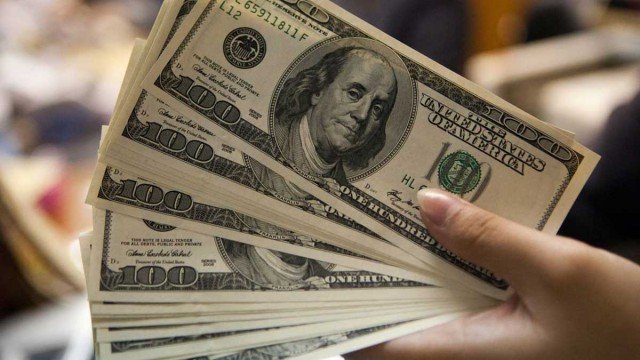
Ask ten Pakistanis where to invest and you will get ten different answers — and almost no data. Gold is for women. Real estate is safe. Stocks are gambling. Dollars are for the paranoid. Everyone has an opinion. Almost nobody has run the numbers.
We did. Starting with Rs 10 lakh in January 2015, here is exactly what each of Pakistan’s four most popular investment options returned by the end of 2025 — and what each one was worth after you account for inflation.
The answer will surprise most people on at least one of the four.
The rules of this comparison
To keep this fair, every calculation uses the same starting point: Rs 10 lakh (Rs 1,000,000) invested in January 2015. We measure the nominal return — what the rupee number became — and then the real return, adjusted for inflation.
Over the last five years alone to end-2025, Pakistan’s inflation averaged 15.6% cumulatively — 103.6% total over that period. Over the full decade 2015–2025, cumulative CPI inflation in Pakistan exceeded 250%, meaning money that simply sat in a drawer lost more than two-thirds of its purchasing power. That is the benchmark every investment has to beat just to stay even.
Gold: the family favourite
Gold has been Pakistan’s default savings vehicle for generations — stored in jewellery boxes, passed between generations, and trusted over banks.
In 2015, the price of 24K gold per tola in Pakistan was approximately Rs 47,450. By 2025, that figure had reached Rs 371,000. Over the last five years, gold in PKR more than quadrupled. In 2021, 24K gold was around Rs 100,000 per tola. By 2023 it crossed Rs 200,000. In 2025, Rs 350,000 — and today it sits above Rs 500,000.
The maths: Rs 10 lakh invested in gold in January 2015 at ~Rs 47,450 per tola would have bought approximately 21.08 tolas. At Rs 371,000 per tola by end-2025, that holding was worth approximately Rs 78.2 lakh — a nominal gain of 682%.
After adjusting for inflation (cumulative ~250% over the decade), the real purchasing power gain was approximately 120–130% in real terms. Gold did not just preserve wealth — it substantially grew it.
Two factors drove this: rising international gold prices in USD, and the rupee’s collapse against the dollar. Pakistan’s gold rate comes from two inputs — the international gold price in USD and the USD/PKR exchange rate. Even when international gold is flat, rupee depreciation alone pushes domestic rates higher.
Gold’s weakness: it earns no income. No dividends, no rent, no compounding. It is a one-dimensional store of value.
Read more: Turn Rs 50,000 Into Wealth in 2026! Guide to Start Smart Investing in Pakistan Stock Exchange
Real estate: the conventional wisdom
Real estate is what Pakistani families tell their children to buy. It is tangible, it feels permanent, and it has historically beaten inflation over long periods.
In Karachi’s PECHS area, a 240-square-yard house priced at Rs 25,000,000 in 2015 reached Rs 60,000,000 by 2021 — a 140% increase. A 400-square-yard house rose from Rs 35,000,000 to Rs 90,000,000 — a 157% increase. Extrapolating through 2025 with the subsequent appreciation, comparable properties in established Karachi and Lahore localities have roughly tripled to quadrupled in nominal terms since 2015.
As of January 2025, the Residential Property Price Index for houses in Karachi rose by 10.54% year-on-year, while house prices in Islamabad averaged PKR 30,140 per square foot — the highest among cities surveyed.
The maths: A Rs 10 lakh notional share of a mid-tier Lahore or Karachi residential property in 2015 would be worth roughly Rs 35–40 lakh by 2025 in nominal terms — a gain of 250–300%.
In real terms after inflation, this represents a modest real gain of 0–20% depending on location, type, and timing. Real estate largely kept pace with inflation rather than significantly beating it.
The catch: these are nominal asking prices. Real estate comes with transaction costs of 5–10%, annual maintenance, property tax, the risk of extended vacancy, and crucially — near-zero liquidity. You cannot sell 10% of a house when you need cash.
Research from Savills notes that Pakistan’s residential sector in Tier-1 cities was largely driven by speculative investors rather than end users throughout 2024, with demand dropping significantly and take-up rates lower than previous years. Much of real estate’s nominal gain reflects speculative holding and inflation pass-through, not genuine wealth creation.
KSE-100 stocks: the misunderstood option
The Karachi Stock Exchange has one of the most volatile but ultimately one of the strongest long-term return records of any market in the world — a fact almost completely unknown among ordinary Pakistani investors, who view it as gambling.
The KSE-100 stood at approximately 32,000 points in January 2015. After soaring to a record 191,032 in January 2026, the index delivered approximately 51% in calendar year 2025 alone from ~115,000. From 32,000 in 2015 to approximately 160,000 by end-2025, the index delivered a 400% nominal gain over the decade.
The maths: Rs 10 lakh invested in a KSE-100 index tracker or diversified basket of blue-chip stocks in 2015 would be worth approximately Rs 50 lakh by end-2025 purely on capital appreciation — and materially more when dividends are included. Pakistan’s stock market has historically offered dividend yields of 4–7% annually.
Including reinvested dividends, the total return over the decade was likely in the range of 500–600% nominally, or roughly 70–100% in real terms — broadly comparable to gold’s real return but with a critical difference: stocks generated income along the way.
The caveat is brutal volatility. COVID-19’s impact resulted in a fall of around 62% in the KSE-100 index — lowest at 27,200 on March 25, 2020, from a high of 43,218 points on January 13, 2020. An investor who panicked and sold at the bottom locked in devastating losses. Anyone who held through it saw the market recover and surge to all-time highs.
The barrier to entry is psychological, not financial. Opening a trading account costs nothing. The problem is that most Pakistanis have never been taught to think of the stock market as anything other than a casino.
US dollars: the fear trade
Buying and holding dollars is less an investment strategy than a vote of no confidence in the rupee — and over the last decade, that vote has been vindicated repeatedly.
In 2015, the USD to PKR rate was approximately Rs 102.74 per dollar. By 2025, the average rate stood at approximately Rs 281.66. That is a rupee depreciation of approximately 174% over ten years.
The maths: Rs 10 lakh in 2015 at Rs 102.74 per dollar bought approximately $9,733 USD. At Rs 281.66 in 2025, those same dollars are worth approximately Rs 27.4 lakh — a nominal gain of 174%.
That sounds decent until you account for inflation. With cumulative inflation exceeding 250%, the real purchasing power of your dollar holding actually declined over the decade in terms of what you could buy in Pakistan. The dollar preserved your wealth in USD terms — it did not grow it in real Pakistani rupee purchasing power.
Dollars also earn nothing unless deposited in a foreign currency account, where returns are modest. Unlike gold, they carry no physical scarcity premium. Unlike stocks, they generate no dividends. Unlike real estate, they produce no rent.
The dollar is a hedge, not an investment. It protects against rupee collapse scenarios but does not build wealth.
The comparison in plain numbers
Starting amount: Rs 10 lakh in January 2015
| Asset | Nominal value by end-2025 | Nominal return | Approx. real return |
|---|---|---|---|
| Gold (24K per tola) | Rs 78–80 lakh | ~680% | ~120–130% |
| KSE-100 stocks (incl. dividends) | Rs 60–65 lakh | ~500–550% | ~70–100% |
| Real estate (mid-tier urban) | Rs 35–40 lakh | ~250–300% | ~0–20% |
| US dollars | Rs 27 lakh | ~174% | Negative in PKR terms |
| Bank savings / NSS (~8–9% avg.) | Rs 22–24 lakh | ~130–140% | Deeply negative |
Read more: Why PSX and gold prices are reaching record highs in 2026?
What the numbers actually tell you
Gold wins on nominal return — but a large part of that gain is the rupee depreciating, not gold itself becoming more valuable. In dollar terms, international gold rose roughly 80% from 2015 to 2025. Pakistani gold in rupees rose 682%. The gap is entirely the rupee’s collapse.
Stocks delivered comparable real returns to gold with the added benefit of dividends — but required holding through terrifying crashes without selling. Most investors could not do that.
Real estate’s reputation as Pakistan’s best investment is largely built on nominal numbers during a high-inflation decade. In real purchasing power terms, it barely kept pace with inflation in most markets — and dramatically underperformed gold and stocks.
The dollar protected against rupee disaster but built no wealth. It belongs in an emergency fund, not an investment portfolio.
The most honest answer: gold and stocks both worked, for different reasons, with different risks and different holding requirements. Real estate worked for those in the right locations with patient capital and low transaction costs. The dollar was the worst-performing “investment” of the four.
What this means for where you invest next
Past performance is not a guarantee of future returns — and this decade was unusual in several ways. Rupee depreciation of this magnitude is unlikely to repeat at the same pace, which reduces gold’s tailwind. Interest rates have come down sharply from 22% to 11% in 2024–25, which is historically very bullish for stocks. Under the Buffett Indicator model, Pakistan’s stock market is expected to return 18.5% a year for the coming years.
But the bigger lesson here is structural. Pakistanis are not bad at saving — they are locked into assets that look safe but underperform: cash under the mattress, savings accounts, and speculative real estate in unapproved schemes. The investors who quietly held KSE blue-chips or gold through a decade of political turbulence did significantly better than the conventional wisdom suggested was possible.
FAQs
Is gold still a good investment in Pakistan in 2025? Gold has been the strongest performer of the last decade in nominal terms, driven by both rising international prices and rupee depreciation. However, at current elevated levels above Rs 500,000 per tola, much of the easy gain may already be priced in. Gold remains a strong hedge against rupee weakness and inflation, but investors should not expect the same 680% return over the next decade unless the rupee depreciates at a similar pace.
Is the Pakistan stock market safe for ordinary investors? The KSE-100 is volatile in the short term but has delivered strong long-term returns. The key is diversification and holding period. Investors who stayed in blue-chip stocks — banking, oil and gas, fertilisers — through the 2020 COVID crash recovered fully and went on to make significant gains. Direct equity investing requires research and nerve; those wanting lower risk can explore stock mutual funds or index-linked products offered by Pakistan’s asset management companies.
Why did real estate underperform stocks and gold? Real estate’s nominal gains look impressive but are largely inflation pass-through — property prices rise because building costs, land values, and replacement costs all inflate. After adjusting for 250%+ cumulative inflation, most mid-tier properties delivered minimal real gains. Speculative holding also depresses yields, and the illiquidity premium works against investors who needed to sell at the wrong time.
Is keeping money in US dollars a good strategy in Pakistan? Dollars are a hedge, not an investment. They protect against acute rupee collapse events but generate no income and underperform gold and stocks over a full cycle. A reasonable strategy is to hold 10–20% of savings in dollars or dollar-denominated instruments as an emergency buffer, while investing the majority in growth assets.
What is the minimum amount needed to invest in Pakistan’s stock market? You can open a trading account at any TREC (Trading Right Entitlement Certificate) member broker with as little as Rs 5,000–Rs 10,000 in practice, though some brokers have higher minimums. Mutual funds allow investments from as little as Rs 500 per month through systematic investment plans. The barrier is not capital — it is knowledge and the will to start.
What about National Savings Certificates for conservative investors? NSS products like Defence Savings Certificates offered around 9–11% annually over most of this decade. Compounded over 10 years, Rs 10 lakh in NSS would have grown to roughly Rs 22–25 lakh — a nominal gain of around 130%. Against 250%+ cumulative inflation, that is a significant real loss. NSS are appropriate for risk-free, tax-advantaged income — particularly for retirees — but should not be a primary wealth-building vehicle for working-age investors.


Join the Conversation
Share your thoughts, questions, or feedback below.