
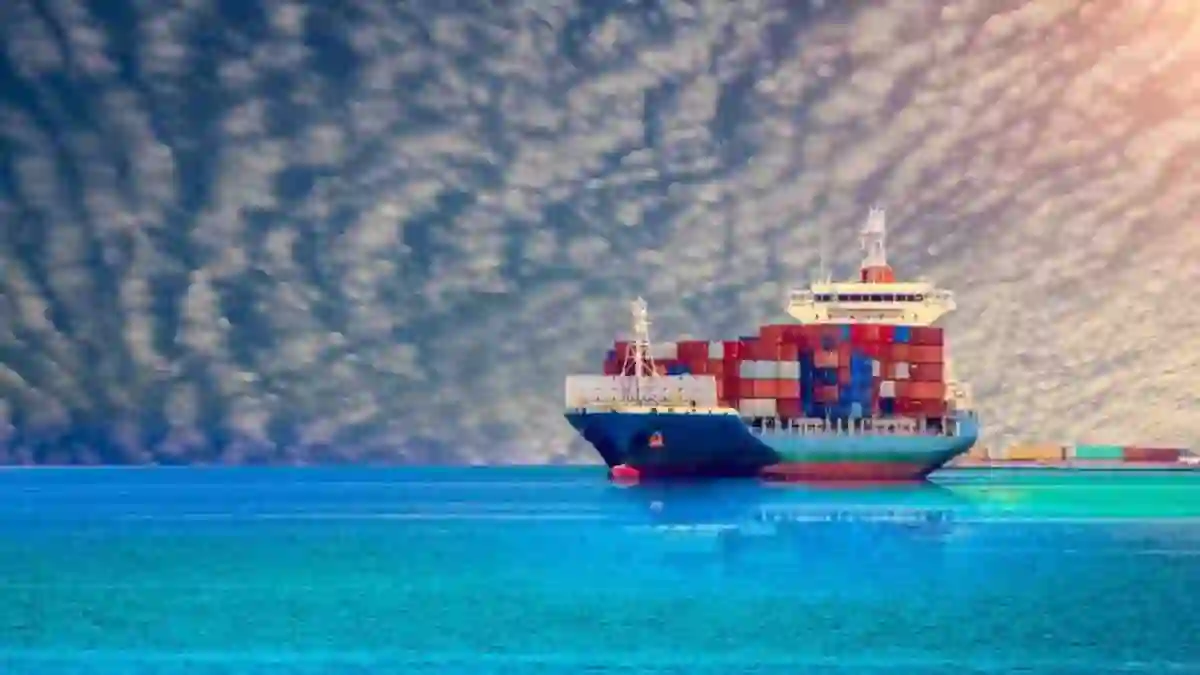
For most of Pakistan’s 75-year history, the Arabian Sea was a backdrop — a place where fishermen worked and ships came and went. The ocean was not policy. It was not strategy. It was not ambition.
That is changing.
At the closing ceremony of Pakistan’s flagship Pakistan International Maritime Exhibition and Conference in November 2025, Maritime Affairs Minister Junaid Anwar Chaudhry declared: “By 2047, we aim to transform Pakistan into a globally recognised blue economy powerhouse driving regional integration and sustainable maritime growth across the North Arabian Sea and Indian Ocean.”
That declaration has been followed — faster than anyone expected — by hard numbers, real cargo, and geopolitical disruption that is forcing the world to look at Pakistan’s coastline in a way it never has before.
The Record That Started a Conversation
Pakistan’s maritime sector posted a record Rs100 billion — $360 million — profit in 2025, following a year of sweeping reforms aimed at improving port efficiency, cost-cutting, and safeguarding marine ecosystems.
That single number changed the terms of debate inside the Ministry of Maritime Affairs. For years, blue economy conversations were theoretical — potential, estimates, projections. A Rs100 billion profit turned it into a performance story.
Karachi Port handled a record 54 million tonnes of cargo in the same period, cutting vessel turnaround time by 24 to 36 hours and saving billions in operational costs. Port Qasim and Karachi reclaimed encroached land and introduced bunkering services for the first time — increasing foreign exchange savings and transshipment traffic.
Decades-old containers and pallets — some sitting on port premises for 50 years — were cleared from Karachi Port Trust, reducing congestion and improving cargo handling. For the first time, Pakistan launched passenger and cargo ferry services. An off-dock terminal in Gwadar on 100 acres was developed, promising to boost trade, tourism and regional connectivity.
The Hormuz Shock: Pakistan’s Unexpected Windfall
Then came February 28, 2026 — and everything accelerated.
When the US-Israeli war on Iran disrupted the Strait of Hormuz and Iranian missile strikes damaged operations at Dubai’s Jebel Ali Port, the global container shipping industry needed alternatives immediately. Pakistan’s ports were there.
In the full year of 2025, Karachi Port processed approximately 8,300 TEUs of transshipment cargo. In just the first 24 days of March 2026, that figure was exceeded — 8,313 containers were handled, representing a 1,423% increase compared to the prior year’s total.
Pakistan has seen a surge in port activity as vessels divert from major Gulf transshipment hubs including Jebel Ali, Fujairah and Khor Fakkan in the UAE and Salalah in Oman. Gwadar port received its first transshipment vessel of May on a Monday, carrying 16,077 metric tonnes of Chinese-origin industrial equipment and pipes originally destined for Kuwait — the fifth such transshipment vessel call since April began.
Around 11,000 transshipment containers were handled at Karachi Port in March 2026, compared to about 8,300 containers during the entire year of 2025. At Port Qasim, daily container handling exceeded 900 units, with total volumes reaching around 4,000 TEUs.
Karachi Port set a monthly record with 111,300 TEUs of transshipment cargo in March. Port Qasim handled 3,485 TEUs with spare capacity, and Gwadar managed its first dedicated transshipment shipment. Reforms with the Federal Board of Revenue replaced 100% scanning with risk management, slashing clearance times and enabling LCL operations for small traders. Exporters at Karachi Port saw charges cut by 60%, and perishable exports were limited to 4% scanning.
The government moved fast. Pakistan revised its transshipment regulations to allow cargo handling at both seaports and airports, providing flexibility that international trade operators had previously lacked. A dedicated feeder service was launched on March 11 connecting Karachi to UAE ports Fujairah and Khor Fakkan.
Read more: Astola Island Off Makran Coast Set For Maldives Style Tourism Transformation
Energy City and Port Qasim’s Next Chapter
The momentum at the ports has given policymakers the confidence to announce the next wave of infrastructure.
Pakistan plans to establish a new Energy City and a multipurpose terminal at Port Qasim, Maritime Affairs Minister Junaid Anwar Chaudhry announced on May 7, 2026, during a meeting with a delegation of port terminal operators in Karachi. The proposed Energy City will include bonded storage facilities for different types of energy products, while multiple locations are currently being considered for the project.
Chaudhry encouraged terminal operators to form consortiums and invest in the Energy City initiative as well as the planned multipurpose terminal at Port Qasim. During the meeting, terminal operators urged reduction in taxes and simplification of the tax system, requesting the government to give port services the status of a regular industry on the lines of the telecommunications sector to make the investment and regulatory environment more conducive.
The Energy City concept mirrors what Gulf states have built around bonded energy logistics zones — allowing cargo in transit to be stored, blended and redistributed without incurring domestic taxes. For Pakistan, which is simultaneously developing its Iran transit corridor and receiving diverted Gulf shipping, an energy-focused bonded zone at Port Qasim could attract the kind of petroleum product transshipment that currently flows through Dubai and Fujairah.
Planning for 2035–2045: New Deep-Sea Ports on the Way
The government is not just managing present volumes. It is planning for a future when today’s ports will not be enough.
Pakistan’s existing ports — Karachi Port, Port Qasim and Gwadar — are expected to reach full capacity between 2035 and 2045 due to rising industrial output, transit trade from Afghanistan and Central Asia, and growing shipping volumes in the wider Indian Ocean. Maritime Affairs Minister Chaudhry has formed a high-level committee to identify locations for new deep-sea ports along Pakistan’s 1,024-kilometre coastline as the country prepares for a century of expanding maritime trade.
The government projects the economy could reach $1 trillion between 2030 and 2035, while Pakistan’s Exclusive Economic Zone spans 240,000 square kilometres — giving it significant potential in shipping, logistics, fisheries and offshore energy. Deep-sea ports are central to Pakistan’s ambitions under CPEC and broader blue economy strategies.
The scale of the planning is historic. Pakistan’s port policy has historically been reactive — building when congestion forced the issue. For the first time, a sitting government is commissioning site studies for ports that will not be needed for another decade.
The Gwadar Structural Reality: Progress and Limits
Gwadar’s surge in transshipment activity is real — and so are the constraints.
One month in 2026 has already surpassed Gwadar’s total container traffic for 2025, with approximately 11,000 containers processed in April. The April container numbers are driven not only by Gwadar’s improved competitiveness but also by the US-Israeli war on Iran, Iran’s closure of the Strait of Hormuz, and the US naval blockade of Iranian ports — a combination that forced cargo operators to seek overland alternatives. The vessels that can currently call at Gwadar are in the Panamax range — up to around 5,000 TEU with a draft of roughly 12 metres — while Ultra Large Container Vessels now operating on Asia-Europe routes carry over 24,000 TEU. Channel depth remains the limiting factor for Gwadar to move from wartime alternative to permanent mainline hub.
Ministry of Maritime Affairs has signed an agreement with China’s Xinning Enterprise to expand Gwadar Port and develop industries in the adjoining Free Zone. The port’s South Free Zone now hosts a 2,000-tonne cold storage facility for seafood exports, while development of a larger North Free Zone is underway.
The structural honesty matters: Gwadar’s current surge is a crisis dividend. Converting it into permanent competitive advantage requires channel dredging, berth expansion, and the kind of inland connectivity that still lags behind the port’s maritime ambitions.
The Fisheries Revolution That Is Overdue
Pakistan’s ocean sits above one of the world’s most productive fishery zones. The numbers, however, have not reflected that for decades.
According to the United Nations Development Programme, Pakistan’s blue economy contributes a meagre 0.4 percent to national GDP — an astonishingly low figure considering the country’s 1,050-kilometre coastline and a 290,000 square kilometre Exclusive Economic Zone. Pakistan’s poor maritime governance, underinvestment, and lack of integrated policy prevent it from securing a share in the global marine economy boom.
The government is now trying to change that calculation systematically.
Pakistan plans to establish a fisheries and aquaculture research centre in Karachi as part of efforts to boost seafood exports and unlock growth in the country’s underdeveloped blue economy. The initiative comes as Pakistan seeks to diversify its export base and generate jobs from its long coastline and marine resources, with the fisheries sector currently contributing less than 0.5 percent to GDP despite significant untapped potential.
In July 2025, the Ministry of Maritime Affairs launched the National Fisheries and Aquaculture Policy 2025–2035, recognising that fisheries and aquaculture currently contribute less than 0.5% of GDP but could unlock $10 billion in value if restructured. China and Thailand together purchased over $291 million worth of Pakistani seafood, highlighting growing traction in global markets. The United States recently renewed its authorisation for Pakistani seafood exports for another four years and granted its fisheries comparable status under the Marine Mammal Protection Act, opening new opportunities for premium pricing and expanded market access.
The National Fisheries and Aquaculture Policy 2025–2035 targets a doubling of seafood exports within one year through upgraded cold-chain logistics, traceability certification and deep-sea fishing capacity.
Read more: Pakistan, Turkiye explore joint ventures in shipbuilding and ferry service
Gwadar’s Fisheries: The $850 Million Opportunity
Gwadar’s emerging blue economy — spanning fisheries, aquaculture, port trade and renewable energy — is positioned as a central pillar of Pakistan’s export strategy for 2025–2035. Sustained investment in marine industries linked to the deep-sea port could generate more than $850 million annually in export revenue. The minister noted that annual catch from Balochistan alone could reach 300,000 tonnes, generating around $645 million in exports if modern processing facilities were established. Currently, 34 seafood processing units operate in Balochistan, though many require upgrades to meet international standards.
The China Overseas Port Holding Company has partnered with a Chinese aquaculture firm to develop deep-sea fish farming near Gwadar, building on seafood exports to China worth $125 million in 2024. The ministry has initiated a 120-acre aquaculture park in Korangi at a cost of PKR 3 billion, with plans to replicate the model along Balochistan’s coast. The pilot park is expected to produce up to 1,200 tonnes annually, generating $7.2 million depending on the species farmed.
The Maritime Fleet: From 10 Ships to 60
A blue economy without ships to carry its cargo is an incomplete proposition. Pakistan’s national fleet has been embarrassingly small for a country with $30 billion in annual trade.
The Pakistan National Shipping Corporation fleet has increased from 10 to 12 ships, with three more expected within two months. Tenders for 12 additional vessels are underway, with the fleet targeted to reach 30 ships by 2026 and 60 within three years.
Pakistan has also granted its first private ferry operator licence, opening sea routes for passenger movement and coastal trade. Direct ferry routes from Gwadar to Oman aim to enhance bilateral trade and connectivity to Central Asia, positioning Pakistan as a regional transit hub.
A Pakistani national fleet of 60 vessels would reduce the estimated $3–4 billion paid annually to foreign shipping companies for cargo transport — one of the largest hidden drains on the country’s foreign exchange.
Gaddani: Cleaning Up the World’s Third-Largest Ship-Breaking Yard
Pakistan’s ship-recycling industry at Gaddani in Balochistan processes some of the world’s largest vessels — but under conditions that have drawn international criticism for decades.
On Gaddani, a Rs12 billion — $43 million — modernisation programme is underway to meet Hong Kong Convention safety and environmental standards, shifting toward cleaner and more regulated recycling capacity.
Regulatory frameworks now meet international standards including those of the International Maritime Organization and the Hong Kong Convention on Ship Recycling. Ship recycling facilities in Gwadar and Gadani are being upgraded, and eco-friendly maritime practices are being introduced to strengthen Pakistan’s maritime resilience.
Meeting Hong Kong Convention standards opens Gaddani to higher-value ships — particularly European-flagged vessels whose owners are legally required to use certified recycling facilities. This is a direct export revenue opportunity disguised as environmental compliance.
The Honest Accounting: What Remains Undone
Pakistan’s blue economy momentum in 2026 is real. But so is the gap between ambition and delivery.
Pakistan’s blue economy contributes barely 0.4% to GDP. Bangladesh’s shipbuilding and shipbreaking sectors generate thousands of jobs and significant export revenue. Iran, with 30 ports, handles 235 million tonnes of maritime traffic and has dedicated $3.7 billion to digitise its commercial ports in 2025. Pakistan’s strategic coastal position enables it to function as a regional transit hub — but Port Qasim suffers from poor logistics operations and underused facilities, with its outdated infrastructure operating below 50% of maximum potential.
Experts estimate that with a smart strategy and sustained investment, the blue economy’s contribution could rise to 10–15% of GDP by 2035. In financial terms, shipping alone could generate $8–10 billion annually, fisheries and aquaculture another $17–18 billion, plus billions more from tourism, ship recycling and coastal renewable energy projects — placing the blue economy’s potential well above $40 billion per year.
Pakistan’s EEZ holds vast offshore deposits of oil, gas and minerals awaiting extraction. The 17 major creeks of the Indus Delta offer significant opportunities for tidal energy generation — estimated at 900 to 1,100 MW. Yet these possibilities remain absent from Pakistan’s primary energy policy. Beyond trade and fisheries, Pakistan’s blue economy holds immense potential in marine renewable energy.
The Maritime@100 plan, the National Fisheries Policy, the Energy City announcement, the deep-sea port committee — these are the right initiatives. Their success will be measured not in announcements but in the seafood export figures, vessel turnaround times, and transshipment TEU counts that follow.
Frequently Asked Questions (FAQs)
Q: What is Pakistan’s blue economy and how much does it currently contribute to GDP?
Pakistan’s blue economy encompasses ports, shipping, fisheries, aquaculture, ship recycling, maritime tourism, and offshore energy resources — all derived from its 1,050-kilometre coastline and 290,000 sq km Exclusive Economic Zone. Despite this vast resource base, the blue economy currently contributes only around 0.4% to GDP — one of the lowest ratios in the region. The government’s Maritime@100 vision targets $100 billion in blue economy value by 2047.
Q: What is the Energy City proposed for Port Qasim?
The Energy City is a planned bonded storage and logistics zone at Port Qasim announced by Maritime Affairs Minister Junaid Anwar Chaudhry on May 7, 2026. It will include bonded storage facilities for different types of energy products — petroleum, LNG and related commodities — allowing cargo to be stored, processed and redistributed without incurring domestic import taxes. Multiple sites are under evaluation. Terminal operators have been invited to form consortiums and invest in the project.
Q: How has the Strait of Hormuz crisis affected Pakistan’s ports?
The closure of the Strait of Hormuz from February 2026 and US strikes on Iran triggered a massive diversion of shipping away from Gulf hubs like Jebel Ali. Karachi Port processed 8,313 transshipment containers in just 24 days of March 2026 — matching its entire 2025 annual total, a 1,423% increase. Gwadar received five transshipment vessel calls in April–May 2026, surpassing its entire 2025 transshipment volume.
Q: What is the National Fisheries and Aquaculture Policy 2025–2035?
Launched in July 2025 by the Ministry of Maritime Affairs, this ten-year policy framework targets a doubling of seafood exports within one year through upgraded cold-chain logistics, traceability certification, and deep-sea fishing capacity. It recognises fisheries’ current contribution of under 0.5% of GDP and sets out a path to unlock an estimated $10 billion in fisheries sector value. The US has renewed Pakistani seafood export authorisation for four years, and Pakistan has been granted comparable status under the Marine Mammal Protection Act.
Q: Is Gwadar ready to be a major transshipment hub?
Gwadar is growing — but faces a critical technical constraint. Its current channel depth of 12.5 metres limits vessel calls to Panamax-class ships carrying up to 5,000 TEUs, while global mainline trade increasingly uses Ultra Large Container Vessels of over 24,000 TEU capacity. The April 2026 surge in container traffic is real but is geopolitically driven — a wartime diversion rather than structural competitiveness. Becoming a permanent major hub requires channel dredging, berth expansion, and improved inland road and rail connectivity.
Q: What new ports is Pakistan planning to build?
The Ministry of Maritime Affairs has formed a high-level committee to identify sites for new deep-sea ports along Pakistan’s coastline. The need arises because Karachi Port, Port Qasim and Gwadar are projected to reach full capacity between 2035 and 2045 as transit trade grows, industrial output expands and Indian Ocean shipping volumes increase. Site selection is under way, with port development central to Pakistan’s long-term ambitions under CPEC and the Maritime@100 vision.

Join the Conversation
Share your thoughts, questions, or feedback below.