
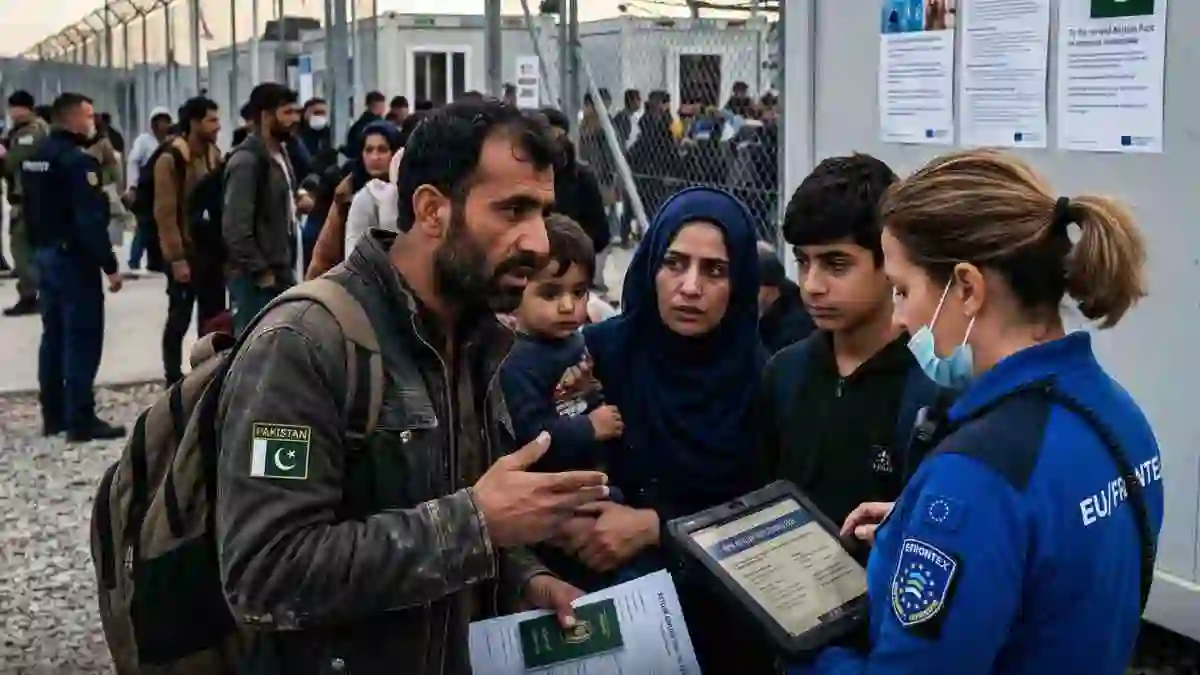
People planning to move to European countries could face stricter checks and faster decisions under a new migration and asylum framework taking effect from June 2026. According to the Bureau of Emigration and Overseas Employment, the new system is being introduced to make the asylum and migration process faster, more organized, and more effective across Europe.
Here is what it means for Pakistanis — whether you are planning to go, are already there, or are applying as a student.
What Is the EU Migration and Asylum Pact?
The New Pact on Migration and Asylum is a set of new European Union rules concerning migration set to take effect in June 2026. The Pact is a set of 10 pieces of binding legislation, adopted in 2024, that overhauls how the EU manages its borders, processes asylum applications, and addresses responsibility-sharing among member states.
On June 12, 2026, the European Union Migration and Asylum Pact will become fully applicable. Adopted in May 2024, the Pact overhauls the EU’s migration and asylum framework. It provides a common framework with stronger external border protection, fair and firm asylum rules, and a balance between solidarity and responsibility. The Commission has made available EUR 3 billion to support the implementation of the Pact and to cater for temporary protection for Ukrainians.
Why Pakistan Is Directly Affected
Pakistan falls into a critical category under the new rules. Nationals from Pakistan have recognition rates around 10%. This is well below the 20% threshold that triggers fast-track border procedures. Asylum seekers from low-recognition countries (Bangladesh, Pakistan, Turkey, Georgia, Morocco) face faster processing at borders, higher chance of rejection, and possible detention during the procedure.
The numbers tell the story. Between October 2023 and October 2024, Pakistani nationals lodged 28,000 applications for international protection in the EU+. After reaching a peak in October 2023, when Pakistanis lodged around 3,400 applications, the monthly figures have followed a downward trend, standing at 1,900 in October 2024.
Over the same period, EU+ countries issued around 20,000 decisions at first instance on Pakistani applications, with just 12% granting refugee status or subsidiary protection. Italy was the main receiving country for Pakistani applications, followed at a distance by France, Greece and Germany.
What Changes for Pakistani Asylum Seekers
The changes are significant and immediate.
Mandatory screening within 7 days. The Pact stipulates that migrants illegally entering the EU will undergo identity, health and security checks, including biometric readings of faces and fingerprints, within seven days, with information stored on the newly created Eurodac database.
Fast-track border procedure. Citizens from nations with an asylum approval rate below 20% — a bracket that historically includes Pakistan — will undergo an expedited screening process. These cases must be legally resolved within 12 weeks inside secure, designated border detention facilities.
Faster deportation. Another major concern is deportation. Under the new framework, European authorities want to increase the return of non-EU nationals who are found staying illegally. That means Pakistanis without valid documents, legal residence, or an approved immigration route could face a higher risk of being sent back.
Mandatory solidarity mechanism. Countries where migrants first arrive will newly be able to relocate a total of up to 30,000 migrants per year to other EU member states. The Pact will institute a “mandatory solidarity mechanism” where all EU countries must either physically host asylum seekers, or assist in other ways such as financially or by providing extra personnel.
A country can pay 20,000 Euros for every migrant it does not accept under the mechanism. For Pakistanis hoping to seek asylum, the process is also likely to become stricter and faster. Instead of long delays, cases may now be decided more quickly, reducing the chances of applicants remaining in Europe for extended periods while waiting for outcomes.
Read more: Pakistan’s Erasmus Mundus Success Story and How You Can Also Study in Europe for Free
What About Pakistani Students Planning to Go to Europe?
Here is the most important distinction: The Pact covers asylum and migration management only. EU Blue Cards, national work permits, study visas, and other labour migration routes are separate systems not affected by the Pact. If you’re a professional considering Europe, the Pact doesn’t affect you unless you plan to claim asylum. In fact, as asylum routes tighten, skilled migration becomes relatively more attractive — faster, more predictable, and with better outcomes.
Pakistani students applying through legitimate visa channels — university admissions, study permits, scholarship programmes like Erasmus or Stipendium Hungaricum — are not impacted by the Pact. The application process, acceptance rates, and post-study work rights in countries like Germany, Finland, Sweden, and Hungary remain unchanged. In 2026, Germany is home to the most Pakistani students in the EU. According to the Wissenschaft Weltoffen report, over 10,000 Pakistanis are admitted to German universities.
However, individual EU member states may separately tighten their own student visa rules. For instance, Sweden’s migration minister has emphasised ensuring that “residence permits for studies are only granted to those who actually intend to study.”
Students should ensure their documentation is genuine, their financial proof is solid, and their intent to study is clearly demonstrated.
What Happens to Pakistanis Already in Europe?
People already in the EU with asylum status are not directly affected. Existing status remains valid. Skilled migrants on work visas are not affected — the Pact covers asylum, not labour migration.
Pakistanis who already hold a valid residence permit, work visa, student visa, or granted asylum status do not face any changes under the Pact. Their legal status remains intact.
However, provisions do not apply to legal migrants to the EU (~3.5 million in 2023) and migrants who arrived legally but overstayed their visas (~700,000 in 2023). Those who have overstayed their visas or are living without documentation face heightened risk under the new return and deportation mechanisms.
The definition of family has been expanded to include families formed during the migration journey, and adult asylum seekers will have the right to work after a maximum of six months, reduced from nine. This is a positive reform for those currently in the asylum process.
The Bigger Picture
Illegal border crossings at the EU’s external borders fell by 26% in 2025, compared to 2024. The EU sees this as early validation of its tougher approach. While the Pact’s entry into application on 12 June 2026 is an important step, it is not the end of the process. Sustained efforts will need to continue well beyond June to operationalise the Pact on Migration and Asylum.
For Pakistanis, the message is clear. Legal routes — study visas, skilled worker permits, Blue Cards — remain open and unaffected. Irregular routes are now riskier, faster to process, and more likely to end in return. The gap between the two paths has never been wider.
Frequently Asked Questions (FAQs)
What do Pakistanis need to know about the 2026 EU Migration Pact?
The new pact enforces strict 7-day border screenings and fast-tracked 12-week deportation processes for irregular migrants. However, it does not restrict legal migration, meaning Pakistanis applying for standard work or study visas will not face these new barriers.
How will the new EU framework affect Pakistani students planning to study there?
Pakistani students will not be affected by the new asylum and migration pact. As long as students apply through legal embassy channels and secure a valid student visa, their entry and studies in Europe remain completely unchanged.
What happens to Pakistanis who are already living in European countries?
Pakistanis living legally in Europe with valid visas or permanent residency will experience no changes to their status1. Conversely, undocumented Pakistanis or visa overstayers face a much higher risk of rapid detention and deportation under the new rules.
Does the new pact stop legal work migration from Pakistan to Europe?
No, the pact actively encourages legal labor mobility while cracking down on irregular crossings. The EU is currently developing a Talent Partnership with Pakistan to recruit skilled workers and provide language and vocational training.


Join the Conversation
Share your thoughts, questions, or feedback below.