
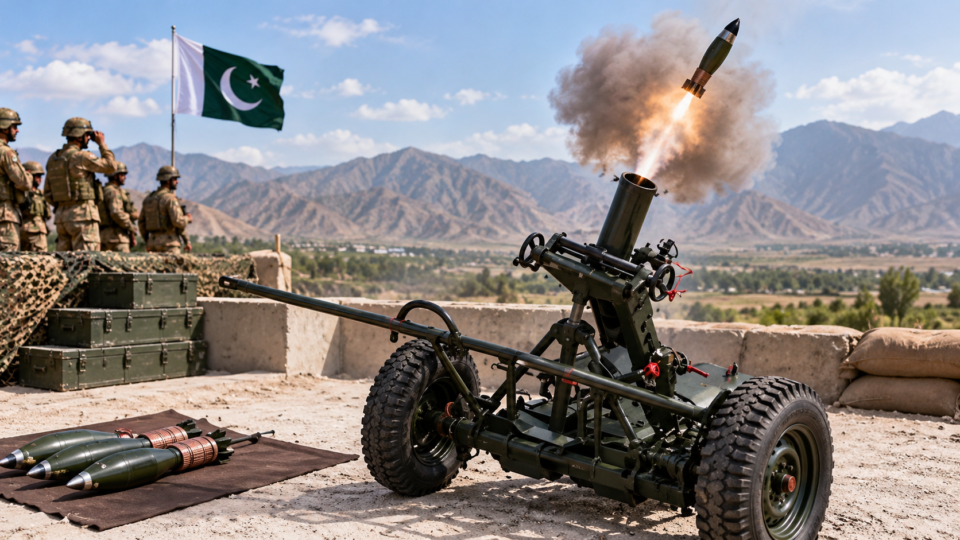
Pakistan is continuing its efforts to strengthen domestic defence production through indigenous research, engineering, and the development of military equipment. The reported development of a locally manufactured extended-range mortar shell capable of reaching distances of up to nine kilometres has drawn attention to the country’s ongoing focus on defence self-reliance. If confirmed, the development would represent another step towards expanding Pakistan’s ability to produce specialised ammunition for its armed forces.
Indigenous defence manufacturing is an important part of Pakistan’s long-term national security strategy. By developing military equipment and ammunition within the country, Pakistan aims to reduce dependence on foreign suppliers, strengthen local technical expertise, and maintain a more reliable supply of essential defence products. The reported mortar-shell development fits within this broader objective, although detailed technical specifications and the project’s official status have not been independently confirmed.
Pakistan Focuses on Indigenous Defence Technology
Pakistan has spent decades building its domestic defence manufacturing capabilities. The country’s defence production sector includes facilities involved in the manufacture of conventional arms, ammunition, military equipment, and specialised components. These facilities support the requirements of the armed forces while also contributing to the development of local engineering and manufacturing expertise.
The country’s defence research institutions also work to develop indigenous solutions for military requirements. Their responsibilities include product design, engineering analysis, quality assurance, testing, and collaboration with domestic manufacturers. Such activities help build technical knowledge within Pakistan and create opportunities for local industry to participate in defence-related projects.
The development of new ammunition is one part of this wider industrial effort. Military ammunition must meet strict performance, safety, durability, and reliability requirements before it can be accepted for operational use. Local research and manufacturing can help Pakistan build experience in specialised production processes and improve its capacity to maintain and supply equipment domestically.
Why Extended-Range Mortar Ammunition Matters
Mortars are indirect-fire weapons commonly used by ground forces to support infantry units. They can engage targets that are difficult to reach with direct-fire weapons, including positions obscured by terrain or other obstacles. Their role in ground operations depends on factors such as the weapon system, ammunition type, operational environment, and the requirements of the mission.
An extended-range mortar shell is intended to travel farther than a comparable standard round under specified conditions. A reported range of nine kilometres would be a notable performance characteristic for the particular ammunition system, but its significance cannot be fully assessed without knowing the mortar calibre, the weapon used to fire it, and the conditions under which the range was measured.
Range alone does not determine the overall effectiveness of military ammunition. Reliability, consistency, compatibility with the intended weapon, safety, and performance during testing are also important considerations. A longer stated range should therefore be understood as one aspect of a broader assessment rather than a complete measure of a system’s capabilities.
The reported development highlights the importance of engineering research in improving existing defence products. However, without verified specifications or official testing details, it would be premature to draw firm conclusions about the shell’s comparative performance or its operational deployment.
Reducing Dependence on Imported Defence Supplies
One of the principal objectives of indigenous defence production is to reduce reliance on international supply chains. Imported military equipment can be affected by changing market conditions, export restrictions, diplomatic developments, delivery delays, and fluctuations in procurement costs. Domestic manufacturing can provide greater control over production schedules and help maintain the availability of essential supplies.
Local ammunition production can also support the development of specialised technical skills. Engineers, technicians, researchers, and quality-control professionals contribute to the design, testing, manufacturing, and inspection processes required for dependable defence products. Building this expertise strengthens the country’s industrial knowledge and may support the development of other engineering capabilities.
Nevertheless, self-reliance does not mean that every component or raw material must immediately be produced domestically. Advanced manufacturing often depends on specialised materials, equipment, testing facilities, and technical knowledge. A sustainable strategy requires investment in research, workforce training, industrial infrastructure, and quality management.
For Pakistan, progress in these areas can support the gradual expansion of local defence production while helping manufacturers improve the consistency and reliability of their products.
Role of Research and Manufacturing Institutions
The development of indigenous military equipment generally requires cooperation among research organisations, defence establishments, engineers, and manufacturing facilities. Research teams assess technical requirements, examine design options, and conduct engineering evaluations before a product can advance through the development process.
Manufacturing organisations then play a role in translating approved designs into products that meet the required standards. Quality assurance and controlled testing are essential because military equipment must function reliably under demanding conditions. Documentation, inspection, and formal acceptance procedures help establish whether a product meets the requirements set by its intended users.
Pakistan’s defence production framework has emphasised local manufacturing, technology development, and cooperation between public and private industry. These efforts can strengthen the country’s ability to develop equipment that meets domestic requirements while building a broader industrial base.
In the case of the reported nine-kilometre mortar shell, publicly verified information identifying the developer, test results, production status, or formal induction into service remains limited. Confirmation of these details would help establish the development’s precise significance.
Economic Benefits of Domestic Defence Production
Indigenous defence projects can generate benefits beyond their immediate military purpose. Manufacturing facilities require skilled workers, engineers, technicians, maintenance personnel, and supporting services. These activities can create employment opportunities and encourage the development of specialised industrial capabilities.
Local suppliers may also benefit when manufacturers source suitable materials, components, and technical services within the country. Over time, this can help build industrial networks and create opportunities for smaller businesses to participate in specialised manufacturing activities.
Investment in research and development can further strengthen engineering education and technical training. Practical experience in materials science, manufacturing processes, quality assurance, and product testing can help develop a skilled workforce capable of contributing to other industrial sectors.
However, the economic value of any individual defence project depends on its scale, production requirements, investment costs, and long-term sustainability. The reported mortar-shell development should not be assumed to have generated specific employment, export revenue, or financial savings without supporting information.
Testing, Reliability, and Quality Assurance
Military ammunition must undergo appropriate evaluation before its performance can be established. Testing helps assess whether a product meets its intended specifications and whether its manufacturing quality remains consistent. Reliability and safety are particularly important because failures can place military personnel and nearby communities at risk.
A claim about a particular maximum range does not, by itself, establish that a product has completed all required trials or entered regular production. There is a difference between an early-stage prototype, a product undergoing evaluation, an approved design, and ammunition formally accepted for operational use.
Clear information about these stages is important when assessing announcements concerning new defence technology. Official confirmation of successful trials, acceptance procedures, and production status would provide a stronger basis for evaluating the reported nine-kilometre capability.
For Pakistan’s domestic defence industry, continued attention to quality standards and independent verification can help ensure that locally developed products meet the expectations of their intended users.
Strengthening Pakistan’s Long-Term Defence Capabilities
Pakistan’s focus on indigenous defence technology reflects a broader effort to develop local expertise and maintain reliable access to essential military equipment. Advances in manufacturing, materials, engineering, and quality control can contribute to this objective over time.
The reported extended-range mortar shell is relevant to this wider discussion because ammunition development forms an important part of the defence manufacturing sector. If the reported capability is officially confirmed, it could demonstrate progress in a specialised area of domestic production. Its actual contribution, however, would depend on verified performance, production readiness, compatibility, and the requirements of the armed forces.
Continued investment in research, technical education, manufacturing infrastructure, and quality assurance will remain important to the development of Pakistan’s defence industry. Cooperation between research institutions, government organisations, and domestic manufacturers can also help turn technical expertise into dependable products.
Conclusion
The reported development of an indigenous nine-kilometre extended-range mortar shell has renewed attention on Pakistan’s efforts to strengthen defence self-reliance. Domestic production of ammunition can help reduce reliance on external suppliers, build engineering expertise, and support the country’s wider defence manufacturing capabilities.
At the same time, the specific range and development status of this mortar shell require further official confirmation. Verified testing information and details about production or induction into service would be necessary to establish the full significance of the reported achievement.
Pakistan’s broader drive towards indigenous defence production remains focused on building local technical capacity, improving manufacturing capabilities, and supporting the long-term requirements of its armed forces. Progress in these areas will depend on sustained research, reliable testing, industrial investment, and transparent confirmation of new technological developments.




Join the Conversation
Share your thoughts, questions, or feedback below.