
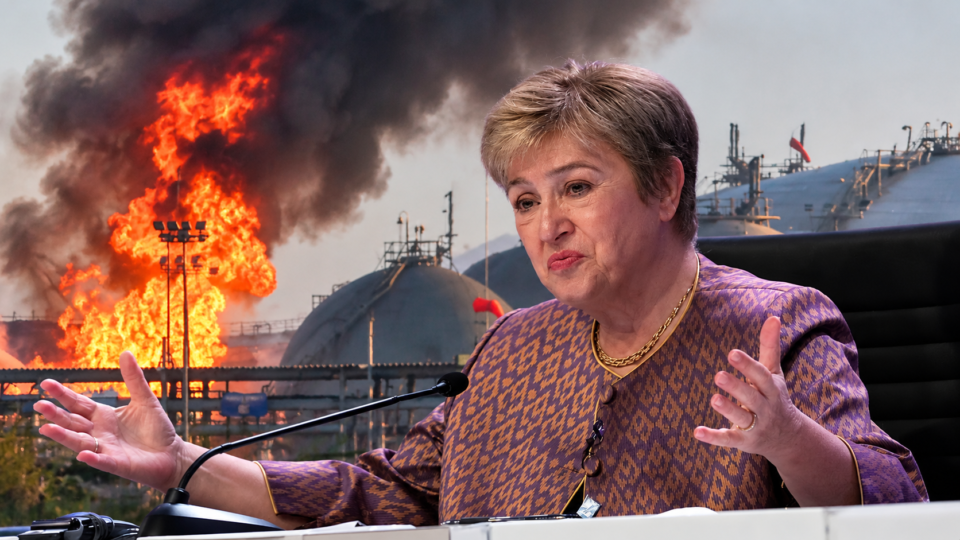
Yemen’s Iran-aligned Houthi rebels have stepped up strikes on Saudi facilities. On Tuesday, an administrative building at oil giant Saudi Aramco’s Dhahran headquarters was hit and caught fire. According to reports, the blaze started on one floor and spread upward, seriously damaging the top levels of the building, including the CEO’s office. Saudi officials said there were no reported deaths, though the Houthi claim marks a sharp escalation in conflict. Earlier that weekend, a Houthi strike on Riyadh’s airport killed around a dozen people and forced the airport to shut down. The group has said it will continue targeting oil and transport sites in retaliation for the Saudi-led campaign in Yemen.
IMF Warning
At the IMF’s annual meetings in Bangkok, Managing Director Kristalina Georgieva warned that attacks on Saudi Arabia’s oil sector could have global fallout. “The Saudi economy is important for the region and the world,” she said, and such disruptions have “potentially negative spillovers for everybody, everywhere.” The IMF report notes that the energy shock from the Middle East conflict is a major downside risk. Rising commodity prices from the conflict have already driven global inflation higher. Economists say that if the violence continues, it could undermine global growth by keeping energy and commodity prices elevated.
Economic Impact
Markets reacted quickly to the news. International oil benchmarks jumped, with Brent crude trading above $100 per barrel. Higher fuel costs tend to feed through into consumer prices worldwide, raising inflation. Disruptions to shipping in the region have already pushed up insurance and transport costs. In turn, higher energy prices can slow economic growth by making goods and production more expensive. Many analysts warn that a prolonged conflict could squeeze supply chains for oil and gas, and by extension other industries. Policymakers fear that persistent price spikes will erode household budgets and business investment globally.
Market Reactions
In response, investor sentiment turned cautious. Gulf stock markets fell, with Saudi Arabia’s benchmark index down about 1.7% on news of the Aramco attack. Aramco’s own share price dipped around 1–2%, and major banks and oil-related stocks also slid. Elsewhere in the region, markets were mixed: Dubai and Abu Dhabi saw small gains on unrelated news, while Qatar’s index dipped modestly. Globally, traders logged volatile moves. Energy-linked shares and emerging-market assets came under pressure, while safe-haven assets like the U.S. dollar and gold saw gains. Bond yields in advanced economies ticked up slightly as inflation worries grew. Overall, analysts say the strikes have raised the risk premium for oil and global markets, reflecting fear that the Middle East conflict could spill into broader economic problems.
Policy and Outlook
In light of the crisis, experts say governments and central banks must stay vigilant. The IMF has urged countries to repair fiscal imbalances and keep a tight focus on inflation. Central banks in many countries are prepared to tighten monetary policy if runaway energy prices push inflation above targets. Saudi authorities, for their part, have stressed that oil export pipelines (including the line to the Red Sea port of Yanbu) are operating to keep global supply stable. The kingdom is also drawing on its strategic reserves to smooth any disruptions. Still, if attacks continue, world leaders may consider coordinated measures: for example, releasing oil stockpiles, expanding alternative energy supplies, or adjusting interest rates to curb inflationary pressure. For now, officials say Saudi oil flow has not been cut off, but markets remain on edge as the situation develops.

Join the Conversation
Share your thoughts, questions, or feedback below.