
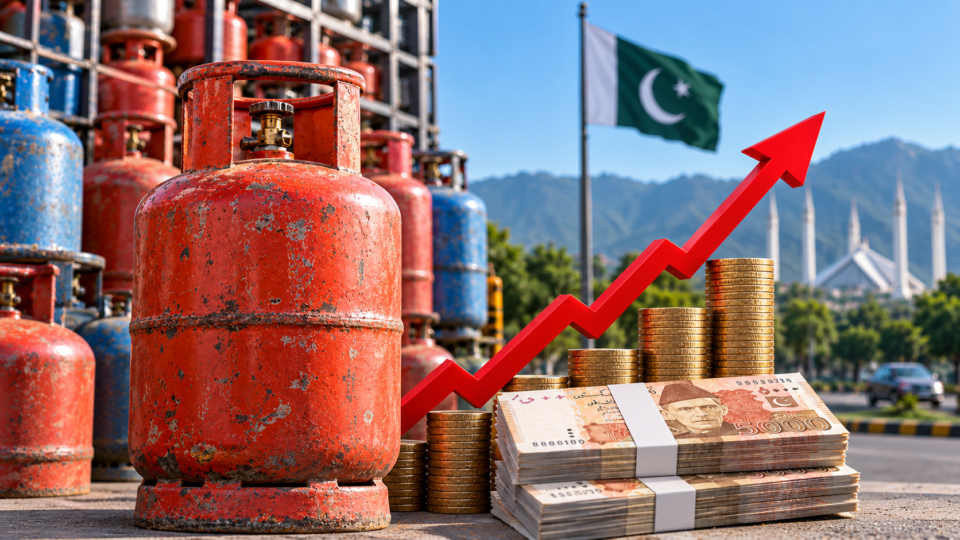
Pakistan may consider introducing a daily pricing mechanism for liquefied petroleum gas (LPG) as supply shortages and rising market prices put additional pressure on households and businesses. The proposal comes amid reports of sharp increases in LPG prices across several parts of the country, with commercial cylinders becoming increasingly expensive and consumers facing difficulties obtaining affordable fuel. LPG industry representatives have called for a more flexible pricing system that reflects changing supply conditions, import costs, and market pressures.
The development comes at a time when Pakistan is approaching the winter season, when demand for LPG typically increases. Many households depend on the fuel for cooking and heating, particularly in areas where piped natural gas is unavailable or supplies are unreliable. Restaurants, hotels, small businesses, and commercial kitchens also rely on LPG for daily operations. Any sustained increase in its price can therefore affect household budgets, business expenses, and the overall cost of living.
LPG Industry Calls for Daily Price Adjustments
Pakistan’s LPG industry is seeking changes to the existing pricing mechanism to respond more quickly to fluctuations in supply and demand. Under the current system, the Oil and Gas Regulatory Authority (OGRA) generally notifies LPG prices on a monthly basis. Industry representatives have argued that rapidly changing market conditions can create a gap between officially notified prices and the prices consumers encounter in the open market.
A daily pricing mechanism could allow prices to be reviewed more frequently in response to changes in supply availability, import costs, transportation expenses, and market demand. Supporters of the proposal believe a more flexible system could help the industry respond to sudden disruptions rather than waiting for the next monthly notification.
However, introducing daily pricing would require a clear regulatory framework. The government would need to determine how prices are calculated, which costs can be included, how changes are communicated to consumers, and how compliance is monitored. Without effective oversight, more frequent adjustments could create uncertainty for households and businesses that depend on predictable fuel costs.
As of October 22, 2026, a nationwide daily LPG pricing system should be treated as a proposal rather than a confirmed policy change. The existing monthly notification system remains the basis for official LPG price regulation unless the relevant authorities announce a formal revision.
LPG Prices Rise Sharply Amid Supply Shortages
Reports from Pakistan’s open markets indicate that LPG prices have increased significantly in recent days, with sellers attributing the surge to reduced supplies and difficulties in obtaining imported fuel. Industry representatives have reported disruptions affecting supplies from Iran, adding pressure to an already sensitive market as winter demand approaches.
Some market reports indicate that LPG prices have reached approximately Rs500 per kilogram in parts of Punjab and Khyber Pakhtunkhwa, while prices in certain hilly areas have reportedly approached Rs600 per kilogram. These figures reflect reported open-market conditions rather than the official maximum price notified by the regulator.
The difference between officially notified rates and prices reported by sellers highlights the challenges facing Pakistan’s LPG market. When available supplies fall below demand, consumers may encounter higher prices, inconsistent availability, and additional transportation costs. The impact can be particularly serious in remote areas where fuel distribution is more expensive and alternative energy sources are limited.
Nevertheless, reported market prices can vary considerably by location, cylinder size, transportation arrangements, and availability. Consumers should distinguish between verified official rates and prices quoted by individual sellers.
Official LPG Price Remains Below Reported Open-Market Rates
For October 2026, OGRA set the notified maximum consumer price of LPG at Rs279.34 per kilogram. The official price for a standard 11.8-kilogram domestic cylinder was calculated at approximately Rs3,296.23.
The October notification represented an increase of approximately eight per cent compared with September. The price of the standard domestic cylinder rose by Rs244.14, reflecting changes in the international LPG benchmark and associated costs.
The notified price and the prices reported in the open market are significantly different. At Rs500 per kilogram, an 11.8-kilogram domestic cylinder would cost approximately Rs5,900 before any additional charges. At Rs600 per kilogram, the same quantity would cost approximately Rs7,080.
Commercial cylinders can be substantially more expensive because they contain considerably more LPG. A larger cylinder’s total cost can therefore exceed Rs10,000 even when its price per kilogram is below the highest reported open-market rates.
This distinction is important because the headline figure of a cylinder crossing Rs10,000 does not necessarily mean that every household cylinder has reached that price. The cost depends on the cylinder’s capacity and the rate charged per kilogram.
The gap between the notified price and reported market rates has also raised questions about enforcement, supply availability, and the ability of regulators to ensure that consumers receive LPG at lawful prices.
Why LPG Supplies Have Come Under Pressure
Pakistan’s LPG market depends on a combination of domestic production and imported supplies. Changes in either source can affect availability and prices, particularly when demand rises during the colder months.
Disruptions to cross-border supply routes can create additional difficulties for importers and distributors. Industry representatives have linked the recent price surge to reduced LPG supplies from Iran and related logistical challenges. However, the full contribution of these disruptions to nationwide shortages and retail prices requires further verification.
Import costs are another important factor. International prices, freight charges, insurance, exchange-rate movements, and port or transportation expenses can all influence the cost of bringing LPG into Pakistan. When these costs increase at the same time as domestic demand rises, pressure on the market can intensify.
Distribution also plays an important role. LPG must be transported from production facilities, import terminals, or storage locations to distributors and retailers before reaching consumers. Remote communities may face higher delivery expenses because of distance, difficult terrain, and limited transport infrastructure.
A shortage at any point in the supply chain can affect local availability. Even when fuel remains available elsewhere in the country, distribution difficulties may cause prices to rise in particular cities or regions.
Addressing the current situation will therefore require attention to supply availability, import arrangements, transportation, storage, and effective market regulation.
Winter Demand Could Increase Pressure on Consumers
LPG demand in Pakistan generally increases during winter as households require more fuel for cooking and heating. Demand can rise from approximately 4,000 to 4,500 tonnes per day during ordinary periods to around 6,000 to 7,000 tonnes per day during peak winter conditions, according to industry estimates.
This seasonal increase places additional pressure on suppliers to maintain sufficient stocks and distribute fuel efficiently. If supplies remain restricted while consumption rises, consumers may face further price increases and difficulties obtaining cylinders.
The effects can be particularly serious in northern and mountainous areas, where temperatures fall sharply and access to alternative energy sources may be limited. Households in these regions may depend heavily on LPG for essential daily needs.
Restaurants, hotels, tea shops, and other businesses also face higher operating costs when LPG becomes more expensive. Businesses that cannot easily switch to another energy source may have to absorb the additional expense or increase the prices of their products and services.
Higher fuel costs can eventually affect consumers beyond the LPG market itself. When restaurants and small businesses pay more for energy, some of those additional expenses may be passed on through higher prices for food and other services.
For households already dealing with rising living costs, a further increase in cooking fuel expenses could place additional pressure on monthly budgets.
How Daily LPG Pricing Could Affect Consumers
A move towards daily LPG pricing could change how quickly official prices respond to market developments. Under a more frequently adjusted system, prices might rise when supply becomes more expensive and decline when costs ease.
Supporters of such a mechanism argue that more frequent adjustments could help bring official prices closer to actual supply costs. This could provide distributors with clearer signals about replacement costs and reduce the time between changes in the market and changes in notified prices.
However, the effects on consumers would depend on the design of the system. Daily pricing could also make household fuel expenses less predictable, particularly during periods of international price volatility or supply disruption.
Families that purchase LPG regularly may find it harder to plan their budgets if prices change frequently. Small businesses could face similar challenges when estimating monthly operating costs.
For that reason, any reform would need to balance the industry’s requirement to respond to changing costs with consumers’ need for affordability and transparency. A clear formula, public price announcements, and effective oversight would be important safeguards.
The government would also need to decide whether daily adjustments would apply throughout the supply chain or only at particular stages. The structure of the mechanism would influence how price changes reach retailers and consumers.
Most importantly, a change in pricing frequency would not automatically solve a physical shortage. If insufficient LPG is available, more frequent price adjustments alone may not restore supply or guarantee affordable fuel.
Importance of OGRA’s Regulatory Role
OGRA plays a central role in regulating LPG prices and overseeing relevant aspects of the sector. Its monthly notifications establish maximum consumer prices based on the applicable pricing formula and cost components.
These calculations include the producer price, applicable taxes, and permitted margins for marketing, distribution, and transportation. The notified maximum is intended to provide a regulatory benchmark for the supply chain and protect consumers against excessive charges.
When reported retail prices rise substantially above the notified maximum, the difference raises concerns about enforcement and the availability of fuel at regulated rates. Consumers may struggle to determine whether a seller’s quoted price reflects legitimate additional costs, a local supply shortage, or unlawful overcharging.
Effective monitoring is therefore important, particularly when market conditions are unstable. Authorities may need to examine complaints, verify retail prices, and take appropriate action where violations are established.
At the same time, enforcement must be supported by adequate supply. Price controls alone cannot guarantee that retailers will have sufficient LPG to meet local demand if distribution networks are experiencing shortages.
Any proposal to introduce daily pricing would need to clarify how OGRA’s existing responsibilities would change and what protections would remain in place for consumers.
Impact on Restaurants and Small Businesses
The increase in LPG prices is not limited to domestic households. Commercial users, including restaurants, hotels, bakeries, food stalls, and catering businesses, depend on the fuel to prepare food and operate equipment.
For these businesses, LPG is a recurring operating expense. When prices rise sharply, their costs can increase within a short period, affecting profit margins and day-to-day operations.
Smaller businesses may have limited financial reserves and fewer opportunities to negotiate supply contracts. They can therefore be particularly vulnerable to sudden price changes or interruptions in fuel availability.
Some businesses may respond by reducing operating expenses, adjusting menus, changing suppliers, or increasing the prices charged to customers. Others may have limited alternatives because their equipment is designed to operate on LPG.
If higher energy costs persist, the impact could extend to the wider food and hospitality sector. Consumers may eventually pay more for meals and other services as businesses attempt to recover their increased expenses.
A stable and transparent LPG market would help commercial users plan their costs more effectively. Reliable supply arrangements and predictable regulatory decisions could also reduce uncertainty for businesses operating on tight margins.
What the Government May Need to Consider
Any decision to introduce daily LPG pricing would involve several policy considerations. The government would need to assess whether the current monthly system can respond adequately to market volatility and whether more frequent revisions would improve supply and pricing transparency.
One option could involve reviewing the existing formula and strengthening the process through which international costs, domestic production, and distribution expenses are reflected in official prices. Another would be to examine whether more frequent adjustments are necessary during periods of exceptional market disruption.
The government could also consider improving public access to official price notifications and strengthening monitoring of distributors and retailers. Clear communication would help consumers distinguish between regulated prices, proposed policy changes, and temporary market fluctuations.
Supply security is equally important. Maintaining sufficient stocks, diversifying supply sources, improving storage capacity, and addressing transportation bottlenecks could help reduce the effects of sudden disruptions.
Any policy change should also consider the circumstances of low-income households and communities that rely heavily on LPG. Fuel affordability is an important issue because cooking energy is an essential household requirement.
Ultimately, the effectiveness of a daily pricing system would depend on whether it improves transparency and market responsiveness without creating excessive uncertainty for consumers.
What Happens Next?
The immediate priority for Pakistan is to address the reported shortage and ensure that sufficient LPG reaches households and businesses as winter approaches. Regulators and relevant government departments will need to assess market conditions, review supply arrangements, and determine whether additional measures are necessary.
The industry’s proposal for daily pricing may form part of the broader discussion about how LPG prices should respond to changing market conditions. However, a formal announcement, revised regulatory framework, or official notification would be needed before consumers could regard daily pricing as an established policy.
Consumers should also pay attention to the difference between the officially notified price and local market quotations. The price of a cylinder depends on its size, while the amount charged by individual sellers may vary according to availability and location.
For households and businesses, the key concerns remain affordability, reliable supply, and transparency. A pricing reform would need to address these concerns alongside the industry’s operating requirements.
Conclusion
Pakistan may consider introducing daily LPG pricing as the industry responds to reported supply shortages and sharp increases in open-market prices. The proposal comes at a critical time, with winter approaching and demand for cooking and heating fuel expected to rise.
The official October 2026 price for an 11.8-kilogram domestic cylinder was approximately Rs3,296.23, while reports of much higher open-market rates highlight the gap between notified prices and the amounts some consumers may be asked to pay. Larger commercial cylinders can exceed Rs10,000, depending on their capacity and the price per kilogram.
A daily pricing mechanism could allow official rates to respond more quickly to changes in supply costs, but it would not automatically resolve shortages or guarantee lower prices. The effectiveness of any reform would depend on its regulatory structure, market transparency, supply availability, and protection for consumers.
For now, daily LPG pricing remains a proposal rather than a confirmed nationwide policy change. The next steps by the government and regulators will determine whether Pakistan adopts a revised pricing system or relies on improvements to the existing monthly mechanism to address the current market pressures.




Join the Conversation
Share your thoughts, questions, or feedback below.