
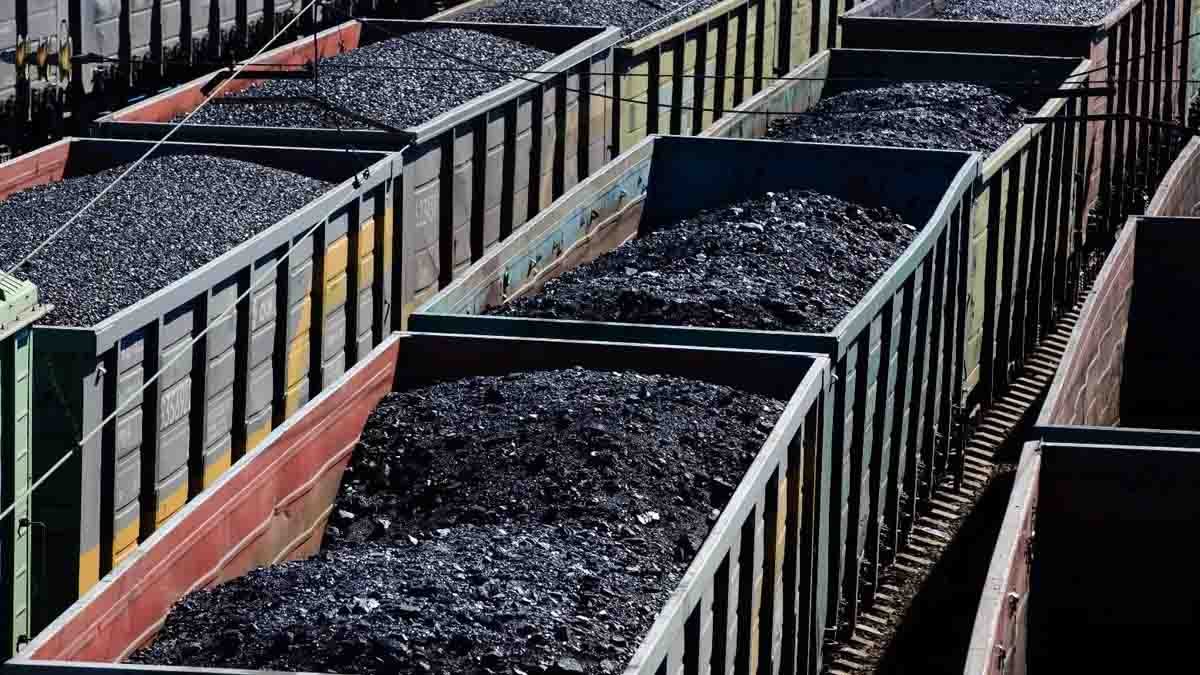
Pakistan is building a 105-kilometre railway line to connect its vast Thar coal mines to the national railway network and Port Qasim in Karachi. The meeting, chaired by Federal Minister for Finance and Revenue Muhammad Aurangzeb, reviewed the strategic rail project. The Thar Coal Rail Connectivity Project aims to facilitate the transportation of indigenous coal from Thar to power plants and industrial consumers, enhancing energy security and optimizing utilization of local resources.
With a completion deadline set for July 2026, officials disclosed that 75 percent of the earthwork has already been completed, while construction of culverts, underpasses, railway structures and station facilities is progressing steadily.
Project Overview
The Thar Coal Railway is an infrastructure project focused on linking the Thar coal deposit to Pakistan’s Railway network. Funding for this project is expected to be secured soon, with the overall project cost amounting to Rs 58.240 billion. The financing will follow an equal cost-sharing approach through the Public Sector Development Programme and the Annual Development Plan.
Pakistan Railways and FWO are jointly executing the project, with NESPAK providing consultancy and design services. The project has undergone several timeline revisions — from an initial March 2023 target, to December 2024, then October 2025, December 2025, and now July 2026.
Route and Two-Segment Structure
The project consists of two distinct segments connecting the Thar coalfield to the port.
Segment I — Islamkot to New Chhor
The Thar Coal connectivity project aims to construct a 105-kilometer long new single-line railway track infrastructure from Thar Coal Mines to New Chhor Station. This segment runs through Sindh’s Umerkot district and links Thar Coal Block-II to the existing Hyderabad–Khokhrapar branch line at New Chhor.
Segment-I connecting the Thar coalfield to the main railway network is expected to be completed by mid-2026.
Segment II — Bin Qasim to Port Qasim
The project also includes a nine-kilometre railway extension from Bin Qasim to Port Qasim, along with the development of a dedicated coal unloading facility at the port.
The construction will include a 24.58-kilometer loop-line and an 18-kilometer double line track extending from Bin Qasim railway station to Port Qasim, with additional 4.20 kilometers of loop-lines designed to handle significant freight volumes.
However, Segment-II — including the branch line and coal unloading facility at Port Qasim — has yet to enter construction.
Read more: Pakistan’s ports set for major reforms to speed up cargo movement
Railway Stations Along the Route
The project will see the establishment of seven new railway stations along the route, with two major stations at Thar coal mines and new Chhor station, and five intermediate stations to facilitate efficient coal transport.
The stations along the route include Islamkot, Sain Soore Badshah, Khan Sahab Somo, Mominabad, Muhammadabad, Arbab Nagar, Sain Talib-ul-Moula, and New Chhor.
Construction Progress
Sindh Energy Secretary Shahab Qamar Ansari conducted a comprehensive site visit at Chore near Umerkot to review progress on the Thar coal railway project. The officials inspected work on the 105-kilometre railway line linking the Thar coal mines with Bin Qasim.
The Thar Coal Railway Line Connectivity Project is poised to usher in a new era of energy security and industrial growth in Sindh and across Pakistan, Secretary Energy Sindh Shahab Qamar Ansari said.
Chief Minister Syed Murad Ali Shah has emphasised that the railway line will connect the Thar coal mines with the national railway network and Port Qasim, enabling seamless and cost-effective coal transportation.
Funding and Cost
According to the Central Development Working Party (CDWP), along with laying the Thar Coal track, the Bin Qasim Railway Station will be connected to Port Qasim. This entire project will cost approximately 58.24 billion Pakistani Rupees. However, the Working Party has already approved 55.97 billion Rupees for it. Both the federal and Sindh governments will contribute equally to these expenses.
In February 2026, the Economic Coordination Committee (ECC) of the Cabinet approved Rs 6.61 billion as a Technical Supplementary Grant (TSG) for the Thar Coal Rail Connectivity Project, reinforcing the government’s commitment to strengthening energy infrastructure and reducing dependence on imported fuels.
The ministry is seeking Rs 79 billion in the PSDP 2025-26 for four major projects, which includes continued funding for the Thar Coal railway.
Coal Transport Capacity and Economic Impact
Upon completion, the rail network is expected to have the capacity to transport 10 million tons of coal annually, shifting the country’s power generation reliance from imported to domestic coal sources. This strategic move is projected to save the national exchequer approximately $1.5 billion annually in fuel import costs.
The new rail link from Islamkot to Chhor will facilitate coal transportation across the country, supporting key industries like cement and textiles by providing a more cost-effective fuel alternative.
Pakistan possesses a staggering 175 billion tons of coal reserves in Tharparkar alone, equivalent to 50 billion tons of oil equivalent (TOE) — surpassing the oil reserves of Saudi Arabia and Iran combined, according to the Sindh Engro Coal Mining Company (SECMC).
Why This Railway Line Matters
Currently, coal transportation relies heavily on trucks, which proves to be an expensive and time-consuming method, unsuitable for large-scale bulk supply increases.
The overarching vision behind this endeavor is to transition 4-5 thermal power projects currently reliant on imported coal to Thar coal, thereby reducing the nation’s import bills. Pakistan currently spends approximately $2 billion annually on coal imports.
The project has been designed to provide reliable and efficient railway infrastructure to break the geographical barriers of Thar coal and enable its transportation across the country and to provide environment friendly mode of coal transportation. If transported through railway, the environmental pollution will be minimal besides reducing traffic congestion on roads.
Key Challenges
The project has faced persistent timeline slippages. The original March 2023 directive from Prime Minister Shehbaz Sharif was missed. Subsequent deadlines of December 2024 and October 2025 also passed without completion.
While Segment-I connecting the Thar coalfield to the main railway network is expected to be completed by mid-2026, Segment-II — including the branch line and coal unloading facility at Port Qasim — has yet to enter construction. This means full mine-to-port coal transportation capability remains further away.
Funding constraints have complicated progress. This project is not part of this fiscal year’s Public Sector Development Programme (PSDP), and there is no allocation in the budget for it was the initial ECNEC concern in 2023, though subsequent approvals have since been issued.
What Comes Next
With 75% of the earthwork done and a July 2026 deadline for Segment I, the Thar Coal railway is closer to reality than it has ever been. The ECC’s Rs 6.61 billion TSG approval signals continued government commitment.
However, the Segment II delay — the Port Qasim extension and coal unloading facility — means that even after Segment I opens, coal will not reach the port by rail until additional construction is completed. For Pakistan’s energy sector, which currently spends $2 billion annually on coal imports, the stakes could not be higher.




Join the Conversation
Share your thoughts, questions, or feedback below.