
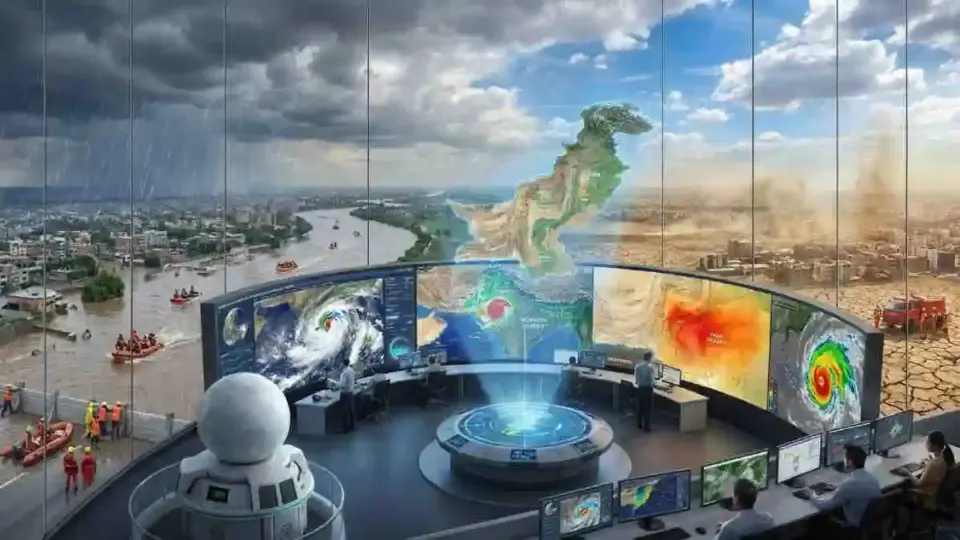
Pakistan is moving to upgrade its weather forecasting and disaster management systems as floods, droughts, heatwaves and extreme rainfall become a growing threat to lives, crops and infrastructure.
Under the Annual Plan 2026-27, the government has allocated Rs 1.6 billion to the Pakistan Meteorological Department to improve forecasting systems, disaster risk management and climate-related data infrastructure. The plan includes new investment in hydromet services, weather radar, rainfall enhancement research and early warning capability.
What Pakistan Is Funding
The largest allocation is Rs 1 billion for the Modernisation of Hydromet Services in Pakistan project. This project aims to upgrade hydrometeorological infrastructure, improve forecasting accuracy and strengthen climate data systems across the country.
The government has also allocated Rs 344 million for the proposed National Centre for Rainfall Enhancement, which is expected to support water security, climate adaptation and agricultural productivity. Weather surveillance radar projects in Multan and Sukkur have received Rs 195 million and Rs 5 million, respectively, to improve real-time weather monitoring and early warning systems.
Why This Matters Now
Pakistan is one of the countries most exposed to climate-related disasters. The Annual Plan notes that major floods in 2010, 2011, 2014, 2022 and 2025 caused heavy human and economic losses, damaging infrastructure and livelihoods across the country. It also cites World Bank estimates that Pakistan suffers average annual losses of around $2 billion from floods and earthquakes. 1
The cost of inaction is rising. According to the same planning estimates, disaster-related losses could rise to $250 billion by 2030 and $1.2 trillion by 2050, with damage in priority sectors reaching up to 30% of GDP in a peak disaster year.
From Disaster Response to Early Action
The new investment comes as Pakistan is trying to shift from reacting after disasters to acting before they hit.
In June 2026, Pakistan announced its first National Anticipatory Action Strategy, which uses forecasts and risk analysis to trigger early funding and protective action before climate hazards strike. The World Food Programme said this marks a shift from responding to disasters after the damage to reducing losses before communities are exposed.
This approach has already shown results. During the 2025 floods in Khairpur, Sindh, WFP and FAO provided anticipatory cash assistance of PKR 50,000 per household to 15,000 vulnerable people three days before peak flooding, helping families buy essentials, evacuate safely and protect livestock.
Read more: Pakistan Plans AI-Powered Overhaul of Agriculture Research With China
Better Forecasting Can Save Lives and Money
Accurate weather forecasting is not just a technical issue. It directly affects farmers, city governments, power companies, transport networks and ordinary families.
For farmers, better rainfall and drought forecasts can guide crop planning, irrigation and pesticide use. For cities, improved early warnings can reduce urban flooding losses. For mountain communities, better weather and hydrological monitoring can help prepare for flash floods, landslides and glacial lake outburst floods.
NDMA’s 2026 planning documents also show that Pakistan is moving toward more trigger-based disaster response, where warnings are linked with timely action before communities face avoidable loss.
Technology Will Play a Bigger Role
Pakistan is also expanding cooperation with China on climate resilience and disaster preparedness. The cooperation includes artificial intelligence-based forecasting, satellite monitoring, intelligent early warning systems, hazard mapping and cloud-based meteorological systems.
This is important because Pakistan’s disaster risks are no longer limited to river floods. The country faces heatwaves, droughts, GLOFs, landslides, earthquakes, smog, cyclones and extreme rainfall. Better satellite data, AI models and local weather stations can help authorities detect risks earlier and issue targeted warnings.
Climate Budget Concerns Remain
The investment is welcome, but it comes with a warning.
The Ministry of Climate Change and Environmental Coordination is set to receive around Rs 2.48 billion under FY2026-27, with funding focused on forestry, biodiversity conservation, afforestation and ecosystem restoration. However, lawmakers have raised concerns that climate-related budget allocations have declined compared to the previous fiscal cycle.
That means Pakistan is improving specific weather and early warning systems, but the wider climate financing gap remains large.
Bottom Line
Pakistan’s Rs 1.6 billion investment in weather forecasting and disaster management is a necessary step in the right direction.
Modern radars, hydromet systems, rainfall research, satellite monitoring and anticipatory action can help reduce deaths, crop losses, infrastructure damage and emergency costs. But the real test will be implementation.
If warnings reach people on time — and if local administrations act before disaster strikes — Pakistan can save both lives and billions in losses.
FAQs
How much has Pakistan allocated for weather forecasting upgrades?
Pakistan has allocated Rs 1.6 billion to the Pakistan Meteorological Department under the Annual Plan 2026-27.
What is the biggest project under this investment?
The largest allocation is Rs 1 billion for the Modernisation of Hydromet Services in Pakistan project.
Which cities will get weather radar funding?
Weather surveillance radar projects in Multan and Sukkur have received funding under the plan.
What is anticipatory action?
Anticipatory action means using forecasts and risk data to release funds and take protective steps before a disaster hits.
Why does Pakistan need better forecasting?
Pakistan faces repeated floods, droughts, heatwaves, landslides and extreme rainfall. Better forecasting can reduce losses and help communities prepare earlier.
Will this stop floods completely?
No. Forecasting cannot stop floods, but it can reduce damage by improving warnings, evacuation, planning and emergency response.




Join the Conversation
Share your thoughts, questions, or feedback below.