
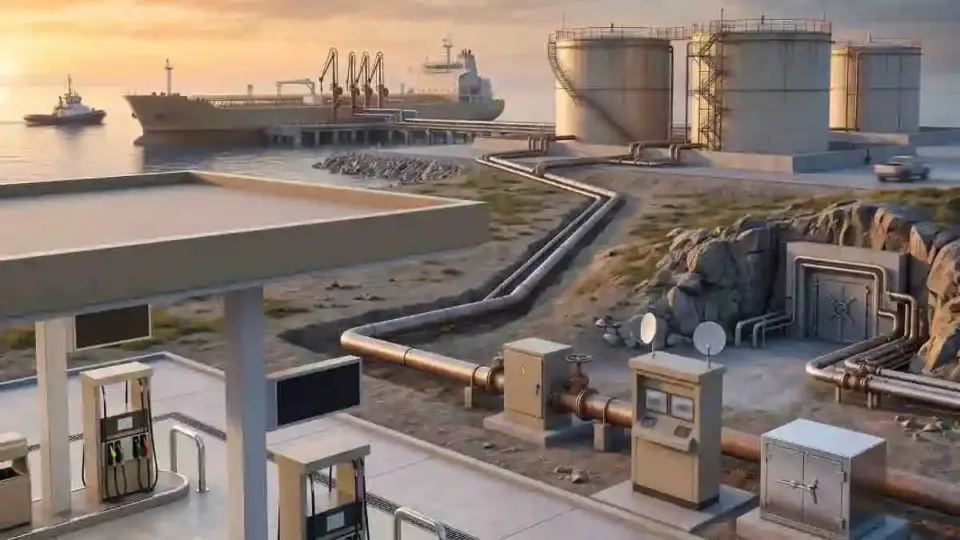
Pakistan has approved the long-awaited Lahore-Peshawar oil pipeline project, clearing the way for a major upgrade in how petrol and diesel move across the country.
The project, officially known as the Machike-Thallian-Tarru Jabba White Oil Pipeline, will connect the fuel hub at Machike near Lahore to Tarru Jabba near Peshawar through Thallian near Islamabad/Rawalpindi. Once completed, it will close the missing link in Pakistan’s south-to-north fuel transportation corridor from Karachi to Khyber Pakhtunkhwa.
What Pakistan Has Approved
The approved pipeline is being described as a final link in the national oil supply chain. Reports put the main pipeline length at nearly 435 kilometres, while some official and project references describe the full route as around 477 kilometres when connected segments and linkages are included.
The pipeline will run in two major sections:
- Machike to Thallian
- Thallian to Tarru Jabba
It will also include connectivity options for key fuel infrastructure points such as Attock Refinery, Chakpirana and Faqirabad, strengthening the fuel network for Punjab, Islamabad-Rawalpindi and Khyber Pakhtunkhwa.
Why This Pipeline Matters
Pakistan has relied heavily on oil tankers to move refined fuel from the south to northern markets. That system is expensive, slow and exposed to road accidents, congestion, theft, adulteration and transit losses.
The new pipeline aims to shift a major part of long-distance white oil transport away from roads and into a secure underground system. White oil refers mainly to refined petroleum products such as motor gasoline and high-speed diesel.
For consumers, this may not mean an immediate petrol price cut at the pump. Fuel prices still depend on global oil rates, exchange rates, taxes and petroleum levies. But over time, cheaper and more reliable transport can reduce logistics costs and improve supply stability.
Capacity: 7 Million Tons, Expandable to 10 Million
The pipeline is expected to carry an initial capacity of around 7 million tons per year, expandable to 10 million tons. That makes it a major piece of national energy infrastructure rather than a small regional project.
This matters because demand in northern Pakistan has continued to grow, while the transport system has remained heavily dependent on tanker movement. A dedicated pipeline can help ensure a more predictable fuel supply to Islamabad, Rawalpindi, Peshawar and nearby districts.
Will Oil Tankers Disappear From Roads?
No — but their role will change.
Tankers will still be needed for last-mile delivery from depots to petrol pumps. However, the long-haul movement of petrol and diesel over hundreds of kilometres could reduce sharply once the pipeline becomes operational.
That is why tanker drivers and transporters are worried about job losses. The concern is real. Road fuel transport supports thousands of drivers, helpers, mechanics, workshops, roadside businesses and small contractors.
But the pipeline will also create new jobs in construction, pipeline operations, maintenance, safety monitoring, storage, pumping stations and technical services. The challenge for the government will be to manage the transition so tanker workers are not simply pushed out without alternatives.
Read more: Pakistan Approves 435km White Oil Pipeline to Complete Karachi-to-Peshawar Fuel Corridor
Who Is Behind the Project?
The project is being developed by a consortium involving Frontier Works Organisation, Pakistan State Oil and Inter-State Gas Systems, under a project company known as Frontier Oil Company. Azerbaijan’s state-owned energy company SOCAR holds a 25% stake in the venture.
The Special Investment Facilitation Council played a central role in securing approvals and resolving regulatory bottlenecks that had delayed the project for years.
Energy Security Is the Bigger Story
This project is not only about saving money on transport. It is also about energy security.
Pakistan imports much of its fuel through southern ports. Any disruption in road logistics, political protests, highway closures, accidents or supply-chain delays can affect fuel availability in upcountry areas.
A complete pipeline corridor from Karachi-linked networks to Peshawar gives the country a safer and more reliable internal fuel movement system. It also reduces dependence on thousands of tanker trips that currently expose the supply chain to operational and safety risks.
Environmental and Safety Benefits
Oil tanker movement carries obvious risks: road accidents, fuel spills, fire incidents and emissions from heavy vehicles. Moving more fuel by pipeline can reduce those risks.
Dawn reported that the project is expected to lower fuel losses, reduce distribution costs and minimize environmental and safety hazards associated with heavy oil tankers on public roads.
That makes the project important not only for the energy sector but also for road safety and environmental management.
What Happens Next?
The approval clears the way for execution, but the real test will be construction speed, financing discipline and regulatory follow-through.
Pakistan has a long history of announcing infrastructure projects that later face delays. To make this pipeline successful, authorities must ensure:
- Timely land and route clearances
- Transparent project financing
- Strong safety and environmental controls
- Protection against cost overruns
- Coordination between federal and provincial departments
- Fair transition planning for tanker workers
If implemented properly, the pipeline could become one of Pakistan’s most important energy logistics upgrades in decades.
Bottom Line
Pakistan’s approval of the Machike-Thallian-Tarru Jabba oil pipeline completes the missing Lahore-Peshawar link in the country’s fuel transport corridor.
It will not remove every oil tanker from the road, and it will not instantly reduce petrol prices. But it can make fuel movement safer, cheaper, cleaner and more reliable over time.
For Pakistan’s energy security, that is a major step forward.
FAQs
What is the Lahore-Peshawar oil pipeline project?
It is the Machike-Thallian-Tarru Jabba White Oil Pipeline, designed to transport petrol and diesel from near Lahore toward Peshawar through Thallian.
How long is the pipeline?
The main section is reported at around 435km, while full route references mention about 477km including connected segments and options.
What products will it carry?
It will carry refined petroleum products, mainly motor gasoline and high-speed diesel.
Will oil tankers disappear from roads?
No. Tankers will still be used for last-mile delivery, but long-distance tanker movement toward northern Pakistan could reduce significantly.
Will petrol become cheaper?
Not immediately. However, lower transport costs and fewer transit losses can help reduce supply-chain costs over time.
Who is developing the project?
The project involves FWO, PSO, ISGS and Frontier Oil Company, with Azerbaijan’s SOCAR holding a 25% stake.
Why is this important for Pakistan?
It improves energy security, reduces road-based fuel transport risks, lowers logistics losses and completes a key south-to-north fuel corridor.




Join the Conversation
Share your thoughts, questions, or feedback below.