
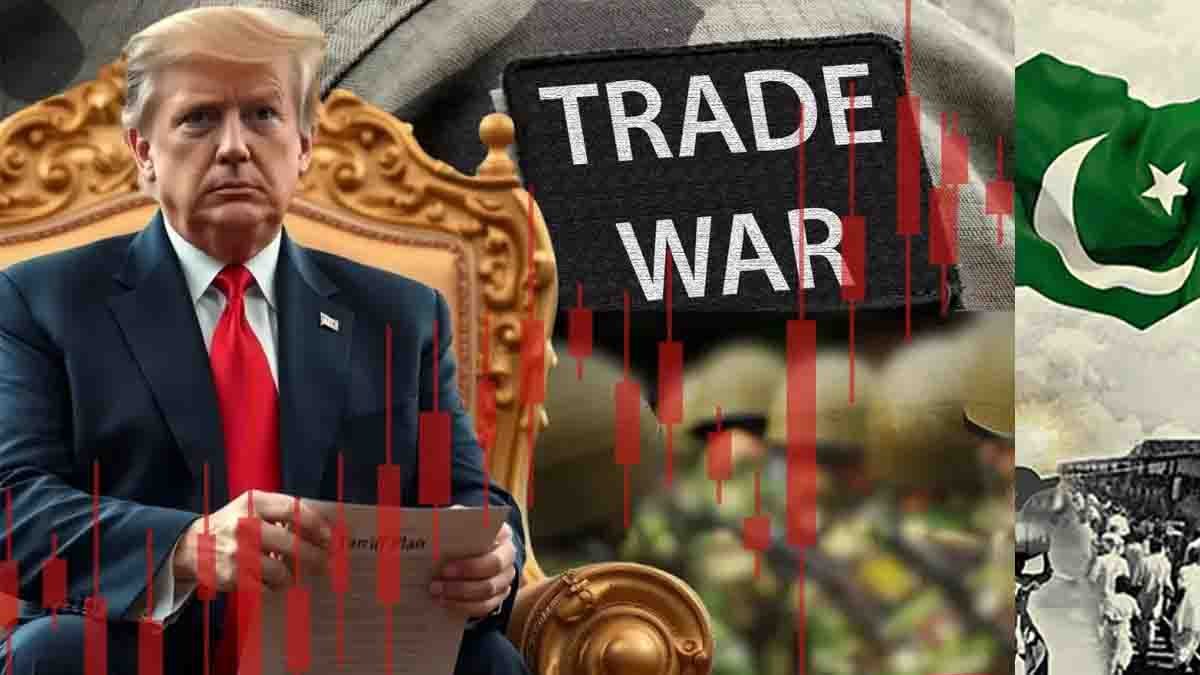
The United States tariff on Pakistani goods has changed three times in less than a year — from 29% to 19% to the current 10% — making this one of the most volatile periods in bilateral trade history. On April 3, 2025, the United States imposed a 29% reciprocal tariff on Pakistani exports, signalling a significant shift in bilateral trade relations. What followed was a diplomatic sprint that produced a historic trade deal, a Supreme Court ruling that invalidated the tariffs entirely, and a replacement tariff regime that expires in July 2026.
For Pakistan, whose $6 billion in annual exports to the US makes it the country’s largest single-country market, each twist has carried enormous economic consequences.
Timeline of US Tariffs on Pakistan
| Date | Event | Tariff Rate |
|---|---|---|
| April 2, 2025 | Liberation Day announcement | 29% reciprocal |
| April 9, 2025 | 90-day pause on country-specific tariffs | 10% baseline |
| July 5, 2025 | Framework agreement reached | 10% (during pause) |
| August 1, 2025 | Trade deal finalized, new rates imposed | 19% |
| February 20, 2026 | Supreme Court strikes down IEEPA tariffs | 0% (briefly) |
| February 24, 2026 | Section 122 global tariff takes effect | 10% |
Liberation Day and the 29 Percent Tariff
US President Donald Trump has imposed 29 percent reciprocal tariff on Pakistan, besides over 185 countries and territories, saying that Islamabad charges 58 percent tariff on goods imported from the United States. The announcement came during a White House Rose Garden ceremony Trump called “Liberation Day.”
The new tariff, which includes a 10% baseline and an additional 29% reciprocal charge, effectively overrides Pakistan’s previous Generalized System of Preferences (GSP) status. This change raises the average tariff on Pakistani goods from 4–5% to 39%.
The proposed 29% US import tariffs will reduce Pakistan’s exports to the US by 20–25% (USD 1.1–1.4 billion annually), disproportionately harming the products with the largest share in the export basket. Textiles account for approximately 80% of Pakistan’s exports to the US, making the sector especially vulnerable.
In 2024, Pakistan collected USD 3.9 billion in tariffs on total imports of USD 47 billion—an effective tariff rate of 8%. In contrast, US imports, totaling USD 1.8 billion, generated only USD 85 million in tariffs, indicating a lower rate of 4%. The US claim of a 58% average tariff rate appears inconsistent with these figures.
Read more: Pakistan, United States set to finalise their long-awaited trade deal soon
The 90-Day Pause
After prices of U.S. assets including equities, the US dollar, and bonds declined significantly on the morning of April 9, Trump announced on Truth Social that “reciprocal” tariffs above 10%, which had gone into effect that morning, would be paused for 90 days for all countries except China.
During the pause, Pakistan’s goods faced only the 10% baseline tariff, giving the government a window to negotiate. The Trump Administration announced a 90-day pause on nearly all of the country-specific reciprocal tariffs on April 9, 2025, reducing these tariffs to the 10 percent baseline while the U.S. and its trading partners negotiated new bilateral trade agreements. This pause was initially set to expire on July 9, 2025, but was extended to Aug. 1, 2025, providing additional time to finalize deals with key partners.
Pakistan-US Trade Deal
Pakistan was among the few countries that secured a bilateral trade agreement before the August 1 deadline. The Pakistan–United States trade deal was concluded with a bilateral deal in Washington D.C. after intensive negotiations in July 2025, involving Pakistan’s Finance Minister Muhammad Aurangzeb and Foreign Minister Ishaq Dar, alongside U.S. Trade Representative Jamieson Greer and Commerce Secretary Howard Lutnick.
On 30–31 July 2025, President Donald Trump publicly confirmed the agreement via social media, calling it a “historic” energy partnership. Prime Minister Shehbaz Sharif hailed it as a “landmark deal” enhancing their enduring partnership.
The deal went beyond trade. A central pillar of the agreement is U.S.–Pakistan cooperation to explore and develop Pakistan’s underexplored oil reserves—particularly in offshore Balochistan and onshore regions such as Sindh, Punjab and Khyber Pakhtunkhwa. Secondary aspects of the agreement include cooperation in sectors like mining, IT, cryptocurrency, and digital infrastructure.
Tariff Reduced to 19 Percent
United States President Donald Trump has introduced tariffs on exports from dozens of trading partners, including a 19 per cent tariff on Pakistani goods — revised from the previous 29pc — a day after the two countries finalised a trade agreement.
“As per the outcome of these talks, a tariff of 19pc will be applicable for Pakistani exports to the US market,” it said. “In particular, this tariff level is expected to support Pakistan’s export potential, especially in key sectors such as textiles, which remain the backbone of the country’s export economy,” the ministry highlighted.
Pakistan gained relative advantage over several regional neighbours under the new US tariff regime, with its 19% rate lower than India’s 25%, Bangladesh’s 20%, Iraq’s 35%, Vietnam’s 20%, and Indonesia’s 19%. The 31-percentage-point gap between Pakistan’s 19% and India’s eventual 50% tariff was seen as a significant competitive advantage.
The Pakistan Stock Exchange (KSE-100) rallied—rising by 978 points—as investors welcomed the trade and energy partnership.
Supreme Court Strikes Down IEEPA Tariffs
The tariff landscape shifted dramatically again in February 2026. The U.S. Supreme Court on February 20, 2026, held that the International Emergency Economic Powers Act (IEEPA) does not authorize the president to impose tariffs, affirming the U.S. Court of Appeals for the Federal Circuit’s August 2025 ruling.
The 6-3 ruling in Learning Resources, Inc. v. Trump invalidated the legal basis for all reciprocal tariffs imposed on Liberation Day. With more than $170 billion in IEEPA-related tariffs collected to date, a significant potential refund opportunity now exists across impacted industries.
For Pakistan, this meant the 19% IEEPA-based tariff was no longer legally valid. Before the court ruling, Pakistani goods faced a 19 percent tariff in addition to an existing 10 percent duty, bringing the total to 29 percent. On February 20, the court invalidated those tariffs introduced under an emergency law.
The 10 Percent Section 122 Replacement
Trump moved within hours of the ruling to impose replacement tariffs. After the decision of the Supreme Court, Trump announced a global tariff of 10% under Section 122 of the Trade Act of 1974, to remain in effect for 150 days, until July 24, 2026.
In response to the ruling, the US administration invoked Section 122 of the US Trade Act and introduced a new 10% tariff on all imports from all countries, with the option to increase the rate to 15%. Section 122 measures are limited to 150 days and will expire on 24 July 2026, unless extended by US Congress.
This means Pakistan currently faces a flat 10% tariff — the lowest rate since before Liberation Day. However, Section 232 tariffs on steel and aluminum remain in force under separate legal authority.
Impact on Pakistan’s Exports
Despite the tariff volatility, Pakistan’s exports to the US have shown resilience. In FY25, Pakistan exported goods worth $6 billion to the US. During the first seven months of FY26, exports stood at $3.69 billion, compared with $3.56 billion in the corresponding period of the previous year.
Exporters said that while existing orders from the US remain in place, uncertainty over tariff policy is affecting new contracts. They cautioned that the impact may become clearer in the next fiscal year.
The new 19% US tariff places Pakistani exporters in a relatively advantageous position compared to some of their regional competitors. For instance, India faces a 25% tariff, while Bangladesh and Sri Lanka each contend with 20% tariffs. With the Section 122 tariff now applying equally to all countries at 10%, this differential advantage has temporarily disappeared.
What Comes Next
The current 10% Section 122 tariff expires on July 24, 2026, creating a critical deadline. The court’s ruling and the president’s immediate deployment of Section 122 both demand that Congress do its job. By requesting an extension vote in 150 days, Trump could ask Congress to authorize tariffs explicitly. However, both the House and the Senate have passed bills disapproving of the IEEPA tariffs and would be unlikely to comply.
The US administration still has full authority to rely on Section 232 of the Trade Expansion Act (national security) and Section 301 of the US Trade Act (unfair trade practices), both of which remain legally valid as tools to drive tariff policy and could be expanded.
For Pakistan, the immediate concern is whether the trade deal negotiated under the IEEPA framework — including the energy partnership and critical minerals cooperation — survives the legal invalidation of the tariffs that prompted it. The even pattern of tariffs may help the economies that wish to renegotiate the so-called deals they struck when much higher IEEPA tariffs were in force.
What began as a trade shock has become a constantly shifting landscape. Pakistani exporters must prepare for multiple scenarios — from continued 10% tariffs, to potential new Section 301 investigations, to the possibility that Congressional gridlock results in tariff expiry. The only certainty is continued uncertainty.
Join the Conversation
Share your thoughts, questions, or feedback below.