
Pakistan’s stock market is entering a new phase — and the clearest signal is the return of IPO activity.
The Securities and Exchange Commission of Pakistan approved 10 Initial Public Offerings for listing on the Pakistan Stock Exchange during the first half of 2026. Out of these, nine companies successfully completed their offerings, raising more than Rs 20 billion through public issues. The book-building process for LSE SPAC-II is also scheduled to take place in the coming days.
This is more than a market statistic. It shows that Pakistani companies are once again using the stock exchange to raise growth capital, while investors are getting access to new sectors beyond the usual banking, cement, fertilizer and oil stocks.
Why This IPO Wave Matters
For years, Pakistan’s capital market struggled with a thin pipeline of new listings. Many strong family-owned businesses avoided the stock exchange because of documentation requirements, disclosure rules, valuation concerns and fear of losing control.
That mindset may now be changing.
The latest IPO approvals cover a broad mix of sectors, including manufacturing, petroleum, dairy, Islamic finance, poultry, real estate and technology. That variety matters because it gives investors exposure to businesses that are closer to Pakistan’s real economy — food, fuel, housing, industry and digital growth.
A stronger IPO pipeline also helps PSX become a true capital-raising platform instead of just a secondary market where existing shares are traded.
Big Names, Big Numbers
Several new listings attracted strong investor interest.
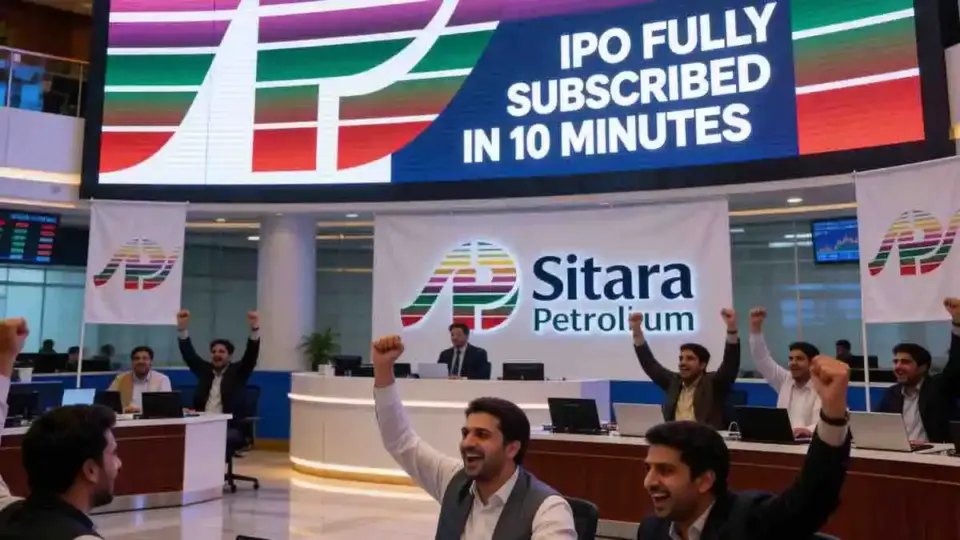
Service Long March Tyres Limited raised Rs 7.77 billion to establish a passenger car tyre manufacturing plant in Nooriabad. Sitara Petroleum raised Rs 4.83 billion, with its IPO reportedly fully subscribed in just eight minutes and demand reaching seven times the shares on offer. Ghani Dairies raised Rs 3.44 billion and became Pakistan’s first listed corporate dairy farm, while Wahdat Poultry raised nearly Rs 1 billion for business expansion.
The response to Pak-Qatar General Takaful was also notable. It became Pakistan’s first listed non-life Takaful company and attracted strong demand from institutional investors, along with more than 13,000 retail investors.
These numbers show that investors are not only chasing old blue-chip names. They are willing to back new growth stories when the business case is clear.
What It Means for Retail Investors
For ordinary investors, more IPOs mean more choice.
Instead of buying only established listed companies, investors can now participate at the point where a company first enters the market. This can create opportunities for capital gains, dividend growth and long-term wealth creation.
But IPOs are not guaranteed profits.
A new listing can perform well if the company is priced fairly, uses proceeds wisely and delivers earnings growth. It can also disappoint if the offer price is too high, the business model is weak, or post-listing performance fails to meet expectations.
Before applying for any IPO, investors should read the prospectus and check:
- Company revenue and profit history
- Debt levels
- Use of IPO proceeds
- Sponsor track record
- Offer price compared with earnings
- Industry risks
- Dividend policy
- Lock-in conditions for sponsors
- Post-listing growth plan
The smartest investor does not buy an IPO only because it is oversubscribed. Oversubscription shows demand, not guaranteed value.
Read more: Turn Rs 50,000 Into Wealth in 2026! Guide to Start Smart Investing in Pakistan Stock Exchange
Why Companies Are Coming to PSX Again
The 2026 IPO wave reflects a deeper shift in how Pakistani companies are thinking about capital.
Bank borrowing has become expensive and restrictive for many businesses. Equity financing allows companies to raise funds without taking on interest-heavy debt. For expansion projects, new plants, technology upgrades or working capital, a public listing can provide long-term funding with better visibility.
SECP has also been working to simplify the listing process and reduce approval bottlenecks. The regulator has said it remains committed to making capital raising easier for companies and stock market investing more accessible for the public.
In June 2026, SECP also relaxed IPO requirements for established businesses, allowing partnerships, LLPs and carved-out business divisions to use historical profitability records to qualify for public offerings. The reform was designed to reduce listing barriers, encourage corporatization and broaden access to capital markets.
SPACs and REITs Show Market Maturity
The IPO story is not limited to traditional companies.
Pakistan has also seen movement in SPACs and REITs, which shows that the market is becoming more diverse. Pakistan’s first LSE SPAC-I was listed, while LSE SPAC-II received SECP approval. The LSE SPAC-II offering includes 20 million ordinary shares, with 2 million shares reserved for retail investors at Rs 10 each.
Real estate investment options are also expanding. Signature Residency REIT and JS Rental REIT were listed during the period, giving investors access to professionally managed property-linked investment products.
This is important because mature capital markets do not depend on one product. They offer common shares, REITs, sukuk, ETFs, SPACs and other vehicles for different types of investors.
Market Infrastructure Is Improving Too
Pakistan’s capital market has also moved to a faster settlement system.
The transition from T+2 to T+1 settlement officially took effect on February 9, 2026, meaning eligible trades now settle on the next trading day. NCCPL said the reform was implemented with PSX, CDC and other capital market institutions.
For investors, this improves liquidity and reduces settlement risk. For the broader market, it brings PSX closer to global best practices and makes the system more efficient.
What This Means for the Future of PSX
If this IPO momentum continues, PSX could become a much more important part of Pakistan’s economy.
A deeper stock market can help businesses raise money, reduce dependence on banks, improve corporate governance, document the economy and give ordinary Pakistanis more ways to invest in national growth.
But the next phase will depend on trust.
If newly listed companies deliver results, communicate honestly and use IPO money properly, more private firms will follow. If weak listings damage investor confidence, the pipeline can dry up again.
That is why regulators, sponsors, brokers, advisers and companies all have a shared responsibility. Pakistan does not just need more IPOs. It needs good IPOs.
Bottom Line
The approval of 10 IPOs in the first half of 2026 is a major confidence signal for Pakistan’s capital market.
With more than Rs 20 billion raised, new sectors entering PSX, SPACs and REITs gaining traction, and settlement systems improving, Pakistan’s stock market is slowly becoming a broader investment platform.
For investors, the opportunity is real — but selectivity is essential.
For PSX, the message is bigger: if Pakistan can protect investor confidence and keep quality companies coming to market, this IPO wave could mark the start of a stronger, deeper and more modern capital market.
FAQs
How many IPOs did SECP approve in the first half of 2026?
SECP approved 10 IPOs for listing on the Pakistan Stock Exchange during the first half of 2026. Nine completed their offerings and raised more than Rs20 billion.
What does this mean for PSX investors?
It gives investors access to more sectors, more companies and more early-stage public investment opportunities. However, investors still need to study each IPO carefully before applying.
Which sectors were included in the new IPO wave?
The IPOs covered manufacturing, petroleum, dairy, Islamic finance, poultry, real estate and technology.
Are IPOs always profitable?
No. IPOs can generate strong returns, but they can also fall after listing if pricing is expensive, business performance is weak or market conditions change.
Why are more companies listing now?
Companies are using PSX to raise long-term equity capital, while SECP reforms have made the listing process easier and more accessible.
What should investors check before buying an IPO?
They should review the prospectus, valuation, profits, debt, use of proceeds, sponsor history, industry outlook and risk factors before investing.



Join the Conversation
Share your thoughts, questions, or feedback below.