
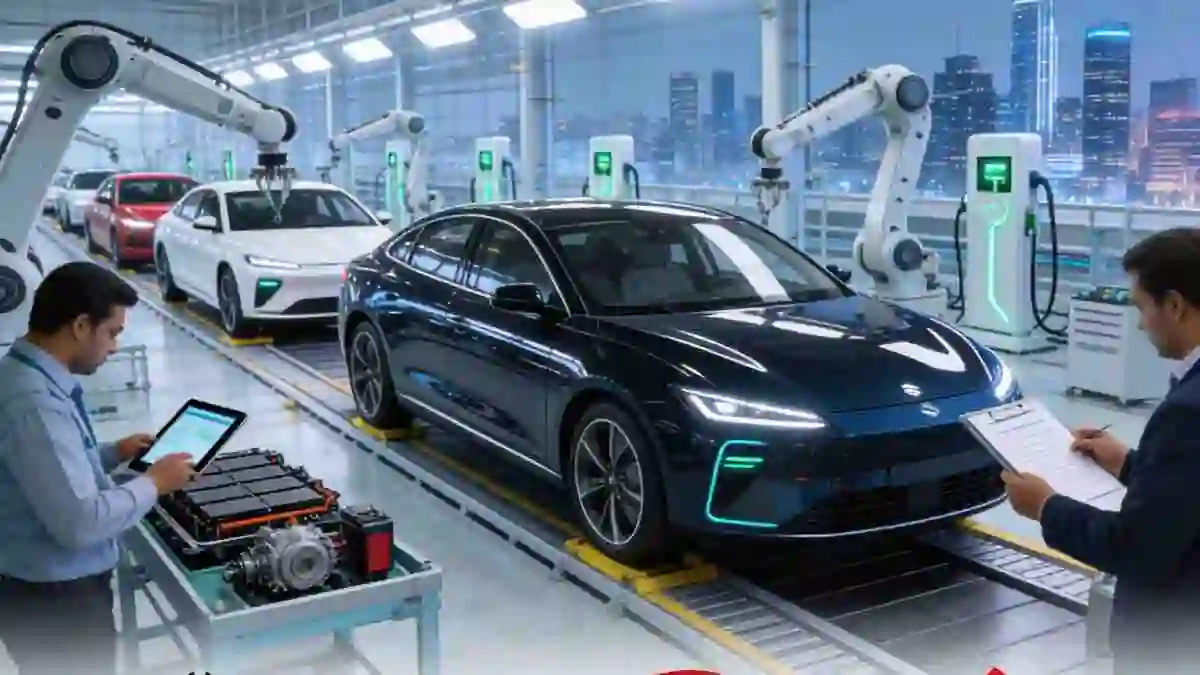
Pakistan is taking decisive steps to modernize its transportation sector and reduce its dependence on fossil fuels. The government is actively reviewing its automotive policy to speed up the adoption of electric vehicles (EVs).
On June 8, 2026, the deputy prime minister’s office announced a renewed focus on the national EV transition. This updated policy aims to lower the nation’s fuel import bill, stimulate local manufacturing, and promote cleaner energy.
The global shift toward electric mobility has forced Pakistan to rethink its automotive strategy. Policymakers recognize that clinging to traditional combustion engines will harm the economy and the environment.
Government Aims to Cut Fuel Imports and Boost Manufacturing
By prioritizing electric vehicles, Pakistan hopes to stabilize its foreign exchange reserves. Millions of dollars leave the country annually to pay for imported oil.
Transitioning to locally powered EVs offers a sustainable solution to this economic drain. Electrifying the transport sector will ease the persistent pressure on the national balance of payments.
The new policy also heavily emphasizes localized auto production. Pakistan does not want to replace imported oil with imported electric cars. The government wants vehicles built locally.
Read more: Pakistan to target 30% EVs by 2030 with the new national electric vehicle policy
Inside the New Energy Vehicle (NEV) Policy 2025–2030
The backbone of this green transition is the New Energy Vehicle (NEV) Policy 2025–2030. This comprehensive roadmap sets ambitious targets for the domestic automotive industry.
Ambitious Sales Targets and Economic Goals
Under the new policy, the government expects 30 percent of all new vehicle sales to be electric by 2030. Officials project that two million EVs will be operating on Pakistani roads by the end of the decade.
Achieving this target will deliver massive financial benefits. The government estimates that hitting the 2030 goal will save over $1 billion in oil imports. This translates to a reduction of two billion liters of imported fuel.
Long-term goals are even more aggressive. The policy targets 50 percent EV sales by 2040 and a complete shift to zero-emission vehicles by 2060.
Subsidies Driving Consumer Demand
To make electric vehicles affordable, the government has launched a massive subsidy program. Everyday citizens face high initial costs when switching to EVs, making state intervention crucial.
Consumers buying electric two-wheelers receive a subsidy of up to PKR 80,000. Buyers of electric three-wheel rickshaws enjoy subsidies of PKR 400,000. For four-wheelers, the government offers a subsidy of up to PKR 15,000 per kilowatt-hour.
The first phase of the rollout provided subsidies for 40,000 vehicles. Recent expansions added 77,000 more units to the program. An additional 250,000 vehicles will enter the subsidy pipeline later this year.
Read more: Everything you need to know about Pakistan’s biggest Auto Show
Charging Infrastructure Expands Across Major Cities
A lack of charging stations often discourages drivers from buying electric cars. To solve this, Pakistan is rolling out a massive nationwide charging network.
The government plans to install 3,000 public EV charging stations by 2030. To ensure stability, authorities have set a fixed charging tariff of PKR 39.70 per kilowatt-hour.
New regulations force the integration of charging stations into everyday locations. Existing petrol stations must install at least one EV charger, while newly built stations must include two.
Islamabad Leads the Green Transition
The capital city of Islamabad is leading by example. The Capital Development Authority (CDA) recently partnered with Chinese investors to build a citywide EV charging ecosystem.
Updated building codes now require commercial properties to dedicate at least three percent of their parking space to EV chargers. This forces urban developers to prioritize sustainable mobility.
Authorities are also planning dedicated EV lanes and exploring electric tram systems. These urban innovations will reduce traffic congestion and slash greenhouse gas emissions in the capital.
Boosting Local Industry and Creating Jobs
The government has already issued 61 licenses for manufacturing two- and three-wheel EVs. Officials have mandated a 90 percent localization goal for electric vehicles within two years.
This push for local manufacturing will create an estimated 15,000 new jobs. The state is launching skill development programs to train workers for this modern industry.
Developing a local battery manufacturing supply chain remains a top priority. Building batteries domestically will significantly reduce vehicle costs and secure the national supply chain.
Empowering Citizens Through Green Mobility
The electric vehicle transition also promotes social inclusion. Commuting in heavily populated cities has long been a challenge for women.
The government has dedicated a 25 percent quota for women in its newly launched EV scheme. Regional programs, like the Pink Electric Scooters Scheme, aim to empower women with safe, affordable transport.
Rising fuel prices and growing environmental awareness continue to push consumers toward EVs. With strong government backing and strategic international partnerships, Pakistan is steering toward a cleaner, greener future.
Frequently Asked Questions (FAQs)
What is Pakistan’s target for electric vehicle sales?
Pakistan aims for 30 percent of all new vehicle sales to be electric by 2030. The long-term goal is to achieve 100 percent zero-emission vehicle sales by 2060.
Are there subsidies available for buying an EV in Pakistan?
Yes, the government provides up to PKR 80,000 for electric motorcycles and PKR 400,000 for electric rickshaws. Subsidies for four-wheelers are available at up to PKR 15,000 per kilowatt-hour.
How is Pakistan improving its EV charging infrastructure?
The government plans to install 3,000 public EV charging stations by 2030. Additionally, new regulations require commercial buildings and fuel stations to install mandatory EV charging points.
Will the EV policy create local jobs?
Yes, the policy prioritizes local manufacturing with a 90 percent localization goal within two years. This shift is expected to create over 15,000 new green jobs in the automotive sector.

Join the Conversation
Share your thoughts, questions, or feedback below.