
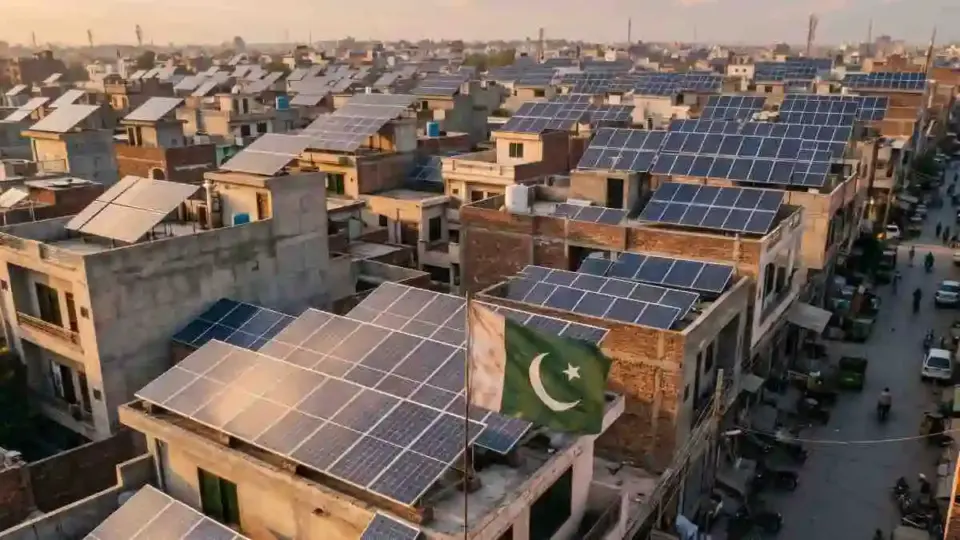
A 5KW rooftop solar system has become one of the smartest household investments in Pakistan — but only if buyers understand the real numbers.
In 2026, a standard 5KW on-grid solar system without batteries costs roughly Rs. 660,000 to Rs. 750,000, depending on panel brand, inverter quality, structure, wiring, net-metering filing, and installation work. A realistic middle figure for calculation is Rs. 700,000.
Why 5KW Is the Sweet Spot for Pakistani Homes
A 5KW system is usually enough for a 3–4 bedroom home using fans, lights, refrigerator, washing machine, water pump, and 1–2 inverter ACs during daytime. Market estimates show a 5KW system commonly produces around 585 to 679 units per month, depending on city, roof direction, shading, and installation quality.
For simple math, we will use 650 units per month as the average generation.
The Real 28-Month Payback Calculation
The highest residential slab in Pakistan is around Rs. 47.20 per unit before extra adjustments, while consumers using 500–700+ units often face high effective bills because fuel adjustments, taxes, and other charges push real costs even higher.
But Pakistan’s 2026 solar rules have changed the game. Under the new net billing system, exported electricity is no longer valued like imported electricity. PIDE notes that surplus solar exports are now purchased at the National Average Energy Purchase Price, around Rs. 10–11 per unit, instead of near-retail rates.
So the key is self-consumption — using your solar power during the day instead of exporting too much.
Realistic Monthly Math
| Item | Calculation | Value |
|---|---|---|
| Installed 5KW system cost | — | Rs. 700,000 |
| Monthly solar generation | — | 650 units |
| Daytime self-use | 75% of 650 | 488 units |
| Export to grid | 25% of 650 | 162 units |
| Value of self-used units | 488 × Rs. 47.20 | Rs. 23,034 |
| Value of exported units | 162 × Rs. 10.50 | Rs. 1,701 |
| Total monthly benefit | — | Rs. 24,735 |
| Payback period | 700,000 ÷ 24,735 | 28.3 months |
That means a properly used 5KW system can recover its cost in about 28 months.
The Catch: Usage Timing Matters
This 28-month payback only works if the household shifts major loads to daytime. Run the washing machine, water pump, iron, charging, and one inverter AC while the sun is producing power.
If your home is empty during the day and most electricity is used at night, your payback becomes slower because exported solar is credited at only around Rs. 10–11 per unit under net billing. IEEFA’s modelling also shows that lower export credits increase payback periods when more solar power is sent to the grid instead of consumed directly.
Should You Add Batteries?
For pure payback, no.
Batteries are useful for load-shedding backup, but they increase the system price sharply. A 5KW hybrid system with lithium battery can push the total cost close to Rs. 950,000–1,250,000, which delays payback.
If your goal is maximum savings, choose on-grid solar first. If your goal is backup power, then consider hybrid.
Final Verdict
Yes, a 5KW rooftop solar system in Pakistan can pay for itself in around 28 months in 2026 — but the winning formula is clear:
Buy at the right price, avoid unnecessary batteries, use power during sunlight hours, and reduce exports.
Solar is no longer just an environmental choice in Pakistan. For middle-class households fighting high electricity bills, it is now a financial survival strategy.
FAQs
Is a 5KW solar system enough for a Pakistani home?
Yes, for many 3–4 bedroom homes with controlled AC usage, a 5KW system is enough.
How many units does a 5KW system produce monthly?
Usually around 585–679 units per month, depending on city and installation quality.
Can it really pay back in 28 months?
Yes, if the system costs around Rs. 700,000 and the household uses most solar power during the day.
Is net billing still profitable?
Yes, but self-consumption matters more than export. Use solar directly instead of sending too much to the grid.
Should I buy batteries with a 5KW system?
Only if you need backup during load-shedding. For fastest payback, on-grid without batteries is better.




Join the Conversation
Share your thoughts, questions, or feedback below.