
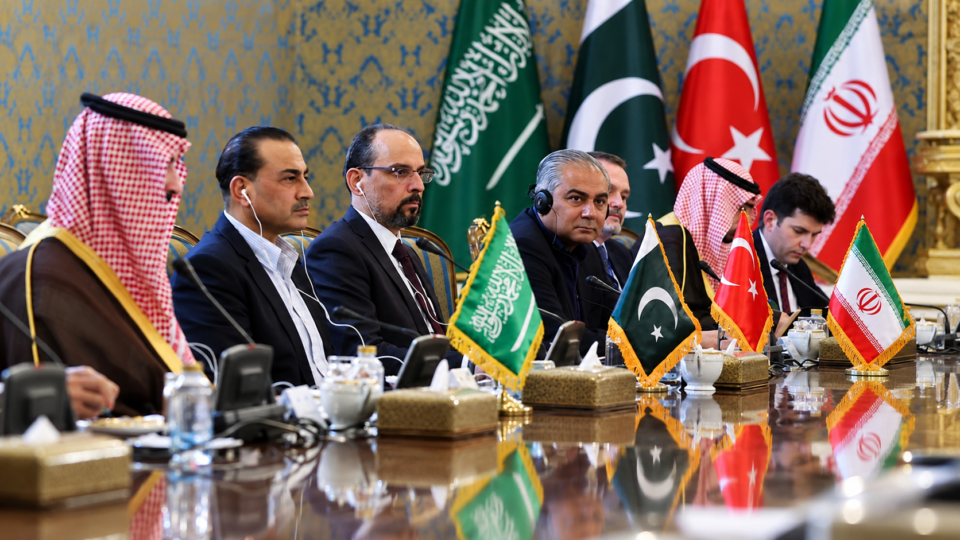
Pakistan’s Chief of Army Staff and Chief of Defence Forces, Field Marshal Syed Asim Munir, held high-level regional security talks in Tehran on October 26, 2026, alongside senior officials from Iran, Saudi Arabia and Türkiye. The meeting brought together representatives of four important regional countries at a time when tensions across the Middle East have raised concerns about further military escalation, economic disruption and threats to regional stability.
The discussions involved Iran’s Supreme National Security Council Secretary Mohsen Rezaei, Saudi Defence Minister Prince Khalid bin Salman and Türkiye’s intelligence chief Ibrahim Kalin, alongside Pakistan’s army chief. The delegations discussed regional security and the importance of cooperation among neighbouring countries. The meeting concluded with an understanding to continue dialogue aimed at strengthening cooperation, peace and security across the region.
The diplomatic engagement is significant for Pakistan because of its relationships with Iran, Saudi Arabia and Türkiye, as well as its interest in preventing a wider regional conflict. Islamabad has maintained diplomatic contacts with several regional and international partners while seeking ways to reduce tensions and encourage negotiations. The Tehran meeting also provided an opportunity for the four countries to discuss security challenges that could affect their borders, economies, energy supplies and wider political relationships.
Who Participated in the Tehran Security Meeting?
The meeting brought together senior military, defence and national security representatives from Pakistan, Iran, Saudi Arabia and Türkiye. Each country has different security priorities, but all have an interest in preventing instability from spreading further across the Middle East.
Field Marshal Asim Munir — Pakistan
Field Marshal Syed Asim Munir represented Pakistan at the talks. His visit formed part of Islamabad’s broader diplomatic engagement with regional countries as tensions involving Iran, the United States, Israel and other regional actors continued to create uncertainty.
Pakistan has strategic interests in maintaining stability along its western border, protecting trade and energy routes, and preserving its relationships with important regional partners. Relations with Iran are particularly important because the two countries share a border, while Pakistan also maintains close ties with Saudi Arabia and Türkiye.
Pakistan’s participation therefore placed it in a position to exchange views with the other delegations on regional security and possible diplomatic approaches. The meeting also reflected Islamabad’s interest in encouraging regional countries to discuss their differences directly.
Mohsen Rezaei — Iran
Iran was represented by Mohsen Rezaei, secretary of the country’s Supreme National Security Council. The meeting was hosted in Tehran, where Iranian officials have emphasised the importance of regional countries developing their own approaches to security.
Iran has faced significant military and diplomatic pressure amid the wider conflict involving the United States and Israel. The conflict has also affected regional relations, energy infrastructure and maritime transport, increasing the importance of discussions with neighbouring and influential countries.
Tehran has argued that sustainable regional security requires cooperation among countries in the region. The meeting offered Iran an opportunity to discuss its concerns with Pakistan, Saudi Arabia and Türkiye and explore whether continued dialogue could help prevent further escalation.
Prince Khalid bin Salman — Saudi Arabia
Saudi Arabia was represented by Defence Minister Prince Khalid bin Salman. The kingdom has faced growing security concerns amid attacks attributed to Yemen’s Houthi movement and the broader regional confrontation.
Saudi Arabia is an important economic and energy centre, making the security of its infrastructure, ports, airports and oil facilities a major regional concern. Attacks on these assets can affect not only Saudi Arabia but also international energy markets and global trade.
The Saudi delegation’s participation highlighted Riyadh’s interest in diplomatic efforts that could help contain regional tensions. The talks also brought Saudi Arabia into direct discussions with Iran, a country with which it has experienced significant rivalry and periods of diplomatic engagement.
Ibrahim Kalin — Türkiye
Türkiye was represented by Ibrahim Kalin, head of the country’s National Intelligence Organization. Türkiye has an important strategic position linking Europe, Asia and the Middle East and has frequently sought a diplomatic role in regional disputes.
Ankara has security, economic and political interests across the region. Developments involving Iran, Saudi Arabia and other Middle Eastern countries can influence Türkiye’s trade routes, border security, energy supplies and regional relationships.
Kalin’s participation added a national security and intelligence perspective to the discussions. Türkiye’s involvement also demonstrated that the meeting was not limited to military cooperation but formed part of a wider effort to discuss regional stability.
Why Were the Four Countries Meeting in Tehran?
The talks took place as regional tensions continued to threaten stability across the Middle East. The conflict involving the United States and Israel against Iran has created concerns about further military action, attacks on infrastructure and disruptions to international shipping.
The situation has also affected countries beyond the immediate conflict zone. Saudi Arabia has faced security threats linked to attacks attributed to the Houthis in Yemen, while restrictions and confrontation around the Strait of Hormuz have raised concerns about energy transportation and international commerce.
Against this background, the Tehran meeting provided an opportunity for the four countries to discuss shared security challenges. The delegations considered the importance of regional cooperation and the need to maintain communication at a time when military escalation could have consequences for several countries.
The meeting was also held amid calls for regional countries to take a greater role in shaping security arrangements. Supporters of regional diplomacy argue that countries directly affected by instability should maintain communication and explore practical steps to prevent disputes from developing into wider conflicts.
However, the meeting should not be interpreted as evidence that all four countries have resolved their differences. Iran, Saudi Arabia, Pakistan and Türkiye have different strategic priorities, and progress will depend on whether dialogue can produce practical measures accepted by the participants.
Pakistan’s Role in Regional Diplomacy
Pakistan has important reasons to support diplomatic efforts aimed at reducing tensions between Iran and other regional powers. It shares a border with Iran and has longstanding relationships with Saudi Arabia and Türkiye. Instability involving any of these countries could affect Pakistan’s security, economic planning and diplomatic position.
Islamabad has also sought to facilitate communication between Washington and Tehran. Pakistan’s geographical position, regional relationships and diplomatic contacts can provide opportunities to encourage dialogue, although the outcome of such efforts depends on decisions made by the parties directly involved.
A wider conflict could create several challenges for Pakistan. Disruptions to energy supplies and maritime transport may affect fuel costs, trade and economic activity. Increased instability near Pakistan’s western border could also create security concerns and place additional pressure on border management.
Diplomatic engagement can help Pakistan communicate its concerns and support efforts to prevent further escalation. It can also strengthen its relationships with regional partners while allowing Islamabad to advocate for peaceful solutions.
The Tehran meeting was therefore relevant not only to the immediate security situation but also to Pakistan’s broader foreign policy interests. Nevertheless, a single meeting cannot guarantee progress, and continued discussions would be necessary to turn diplomatic intentions into concrete outcomes.
Saudi Arabia, Iran and Türkiye Seek Ways to Reduce Tensions
Relations between Iran and Saudi Arabia have historically been affected by regional rivalries, security concerns and competing political interests. Although diplomatic engagement has offered opportunities for improved communication, the two countries continue to have different views on several regional issues.
Türkiye also has its own interests in the Middle East, including security, trade, energy and regional influence. Its involvement in diplomatic discussions can create additional opportunities for communication, but it does not remove the disagreements that exist among regional governments.
Pakistan maintains important relationships with all three countries. This position makes regional diplomacy particularly significant for Islamabad, which has an interest in avoiding a situation in which regional divisions create pressure to take opposing sides.
The four-country meeting brought these different perspectives into one diplomatic setting. Its participants had an opportunity to discuss regional challenges and agree that dialogue should continue.
The significance of the meeting lies in the willingness of the countries to maintain contact despite their differing positions. Continued communication can help reduce misunderstandings, identify common interests and create opportunities for future negotiations.
The Makkah Joint Defence Agreement and Regional Security
The Tehran meeting also attracted attention because Pakistan, Saudi Arabia and Türkiye signed the Makkah Joint Defence Agreement in August 2026. The agreement established a framework for defence cooperation among the three countries.
The pact provides that an armed attack against one member is to be treated as an attack against all three, according to the agreement’s stated terms. It reflects the participating countries’ interest in coordinating their responses to security threats and strengthening their defence relationships.
The Tehran discussions brought the three countries associated with the agreement into a four-country meeting with Iran. This was important because the regional security situation involves overlapping relationships, concerns and rivalries that cannot easily be addressed through one bilateral relationship alone.
The meeting did not mean that Iran had joined the defence agreement or that the four countries had established a new mutual defence arrangement. Instead, it provided a separate diplomatic forum for discussing regional security and cooperation.
Any future developments will depend on further consultations, the policies of the participating governments and the extent to which they can agree on practical steps to prevent escalation.
Strait of Hormuz and Global Energy Security
The Strait of Hormuz remains a critical concern in the wider regional crisis. The narrow maritime passage connects the Persian Gulf with the Gulf of Oman and is one of the world’s most important routes for oil and liquefied natural gas shipments.
Disruption to shipping through the strait can affect energy supplies, transport costs and international markets. Even the threat of a prolonged disruption can create uncertainty for governments, energy companies and businesses that rely on stable fuel supplies.
For Pakistan, the security of maritime energy routes is particularly important because the country depends on imported energy to meet a substantial share of its requirements. Higher international fuel costs or interruptions to supply can place pressure on the economy, businesses and household budgets.
Regional diplomacy can help address these concerns by encouraging communication, reducing the risk of miscalculation and supporting efforts to keep important shipping routes safe. However, the Tehran meeting did not publicly establish a final settlement for the disputes affecting the strait.
Any lasting improvement would require continued engagement by the countries involved in the wider conflict, along with practical arrangements to address security concerns and restore confidence in maritime transport.
Houthi Attacks Add Urgency to Regional Discussions
The talks also took place amid growing concerns about attacks attributed to Yemen’s Houthi movement against Saudi interests and infrastructure. Such attacks increase the risk that a conflict involving Iran and other regional actors could spread into additional areas.
Saudi Arabia has faced security threats involving energy infrastructure, airports and other important facilities. Attacks against these targets can affect civilian safety, commercial activity and the confidence of international businesses operating in the region.
The situation has also created concerns about the relationship between developments in Yemen and the wider confrontation involving Iran, the United States and Israel. As the conflict expands across different locations, regional governments face greater pressure to protect infrastructure and prevent further escalation.
For Pakistan, the growing instability presents both diplomatic and economic concerns. Wider insecurity can affect energy prices, international transport and the stability of important trading partners.
The Tehran meeting provided a setting in which these broader regional challenges could be discussed. Continued dialogue may help the participating countries explore ways to prevent further escalation, although the success of such efforts will depend on developments beyond the meeting itself.
What Was Agreed at the Meeting?
The main publicly reported outcome was an agreement among the participants to continue dialogue to strengthen cooperation among the four countries, particularly in relation to regional peace and security.
The meeting demonstrated that Pakistan, Iran, Saudi Arabia and Türkiye were prepared to maintain communication at a time of heightened regional tension. It also created an opportunity to exchange views on security challenges affecting the Middle East.
However, the public statement did not announce a detailed peace agreement, a ceasefire, a new four-country defence pact or a comprehensive settlement of the disputes driving the wider conflict.
The distinction is important because diplomatic meetings can serve different purposes. Some are designed to negotiate binding agreements, while others establish communication channels and identify areas where further discussions may be useful.
In this case, the commitment to continue dialogue was a clear outcome, but the practical results remain to be seen. Further meetings, diplomatic consultations and concrete proposals would be needed before the talks could be described as having delivered a broader regional settlement.
Possible Impact on Pakistan’s Economy and Security
Regional stability is closely connected to Pakistan’s economic and security interests. Higher energy prices can increase transport and production costs, place pressure on inflation and affect the country’s import bill.
Disruptions to shipping routes can also influence the movement of goods and the cost of international trade. Businesses that rely on imported fuel, raw materials or overseas markets may face additional uncertainty when regional tensions rise.
Security concerns are another important factor. Pakistan must protect its borders and maintain stable relationships with neighbouring and regional countries. Diplomatic engagement can help reduce the likelihood of developments that might create additional security challenges.
The Tehran meeting could support these objectives if it leads to sustained communication and practical cooperation. However, its economic benefits should not be overstated before there is clear evidence of reduced tensions, improved shipping conditions or other measurable changes.
For Pakistan, the immediate value of the meeting lies in maintaining diplomatic channels and supporting efforts to prevent a wider regional crisis.
What Happens Next?
The next stage will depend on whether the participating countries follow the meeting with further consultations and practical initiatives. Continued dialogue could provide opportunities to discuss regional security arrangements, diplomatic de-escalation and cooperation on shared challenges.
The countries will also need to address the issues driving the wider conflict, including military confrontation, attacks on infrastructure and disagreements over maritime security. These questions involve interests that extend beyond the four delegations and may require broader international engagement.
Pakistan’s role will depend on its ability to maintain communication with regional partners while supporting approaches that reduce the risk of escalation. Saudi Arabia, Iran and Türkiye will also need to assess whether continued engagement can produce outcomes consistent with their security priorities.
For now, the agreement to continue dialogue represents a diplomatic step rather than a final resolution. Its longer-term importance will become clearer if the discussions lead to further meetings, concrete proposals or a reduction in regional tensions.
Conclusion
Pakistan Army Chief Field Marshal Asim Munir joined senior Iranian, Saudi and Turkish officials in Tehran on October 26, 2026, for talks focused on regional security and stability. The meeting brought together Iran’s Mohsen Rezaei, Saudi Defence Minister Prince Khalid bin Salman and Türkiye’s intelligence chief Ibrahim Kalin in a diplomatic effort taking place amid heightened tensions across the Middle East.
The four countries agreed to continue dialogue aimed at strengthening regional cooperation, peace and security. Their discussions came as concerns grew over the wider conflict, threats to Saudi infrastructure and possible disruptions to energy shipments through the Strait of Hormuz.
For Pakistan, the talks were important because regional stability directly affects its security, economic interests and relationships with neighbouring and partner countries. Continued diplomacy could help reduce misunderstandings and create opportunities for further cooperation.
However, the meeting did not produce a publicly announced comprehensive peace agreement or resolve the wider conflict. The next steps will depend on continued engagement and whether the countries can translate their commitment to dialogue into practical results.
The Tehran talks mark an important diplomatic contact among four regional powers. Their lasting significance will depend on what follows and whether continued discussions help prevent further escalation.
Join the Conversation
Share your thoughts, questions, or feedback below.