
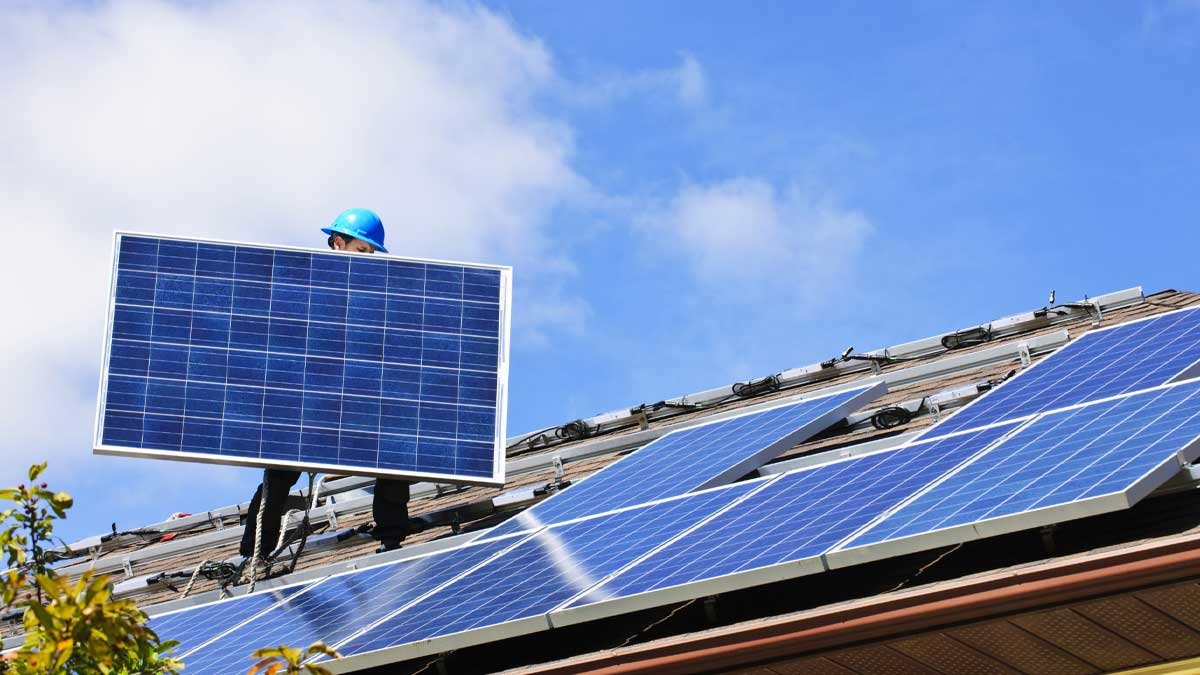
Islamabad’s federal school solarization drive has moved beyond a one-day announcement. The first phase has already shifted 100 federal schools to solar power, using rooftop panels and battery backup to reduce outages and cut dependence on grid electricity. What began as a rural school energy project is now part of a wider effort to modernize Federal Directorate of Education campuses across the capital.
First phase is complete
The project began in 2024 through a partnership between the Ministry of Federal Education and Professional Training and the National Radio Telecommunication Corporation. Early reporting said 100 schools in rural Islamabad would be solarized within about eight weeks, while ministry procurement documents described the work as a complete solar solution for 100 schools and colleges under FDE.
By January 2025, the government said 100 federal schools had been converted to solar power. The schools were fitted with solar panels and backup batteries. Then education secretary Mohyuddin Wani described the rollout as phase one and said the remaining federal educational institutions would be taken up in the next financial year.
Why the project matters
The solar plan addresses a basic problem in public education: schools lose teaching time when electricity fails or energy costs rise. In Islamabad, that matters at scale because FDE oversees 432 federal educational institutions and serves more than 243,000 students from prep to post-graduate level. Reliable power supports lighting, fans, digital tools, and basic classroom continuity, especially in hot months and in under-served areas.
Read more: Sindh upgrades 2,000 primary schools to improve access to education
The original school rollout was also built around energy security inside the campus, not only climate messaging. That detail became more important in 2025, when Pakistan’s solar policy entered a period of uncertainty. In March 2025, the ECC approved proposed changes to net-metering rules for new consumers, including a lower buyback rate of Rs10 per unit, before the government later widened consultations. For Islamabad’s schools, however, the direct benefit remained stable on-site supply backed by batteries.
School upgrades widened in 2025
On May 21, 2025, the federal minister inaugurated renovation work tied to 167 schools in Islamabad. The ministry described that project as part of a broader push to improve access, quality, and equity in both rural and urban ICT institutions. That matters because it places the solar story inside a wider program of school renewal instead of treating it as a stand-alone electricity fix.
The Prime Minister’s Education Initiatives portal later reinforced that direction. It listed solarization among active ministry initiatives and said upcoming projects include solarizing schools on a wider scale. The same portal said the 167-institution renovation drive was targeted for completion by June 30, 2025.
Renovation and digital works
Other project documents show that the school energy story and the digital learning story began to overlap. MoFEPT tender material for 50 upgraded IT labs in FDE schools said renovation of labs and corridors, including solarization items installation, would continue in phase 2 through June 2025.
That direction remained visible later in the year. On August 28, 2025, FDE inaugurated a new computer lab at IMCB F-10/3, and officials said more support would go to science and IT facilities across ICT institutions. The message was clear: better school infrastructure now means power, connectivity, and technology working together.
Funding and oversight
The solarization drive also moved into formal planning. The ministry’s PSDP 2025-26 page shows Rs900 million allocated for “Provision of basic education facilities” in ICT under FDE, while FDE’s planning wing says the broader basic facilities project has been approved by CDWP.
By late 2025, parliamentary records were also referring to solar systems and solar plants installed in federal schools, colleges, and universities. That does not prove every remaining campus has already been solarized, but it does show the issue had moved from a one-off announcement into formal public-sector tracking.
What comes next
The clearest current takeaway is this: the 100-school phase is real and complete, but the government has not publicly issued one clear completion list for every remaining FDE institution in Islamabad. What it has done is keep solarization inside a larger modernization agenda that now includes school renovation, digital labs, innovation planning, and new infrastructure spending.
That makes the story stronger than the original version. It is no longer just about panels on rooftops. It is about how federal schools in Islamabad are being reshaped around reliable power, better facilities, and technology-ready classrooms.




Join the Conversation
Share your thoughts, questions, or feedback below.