
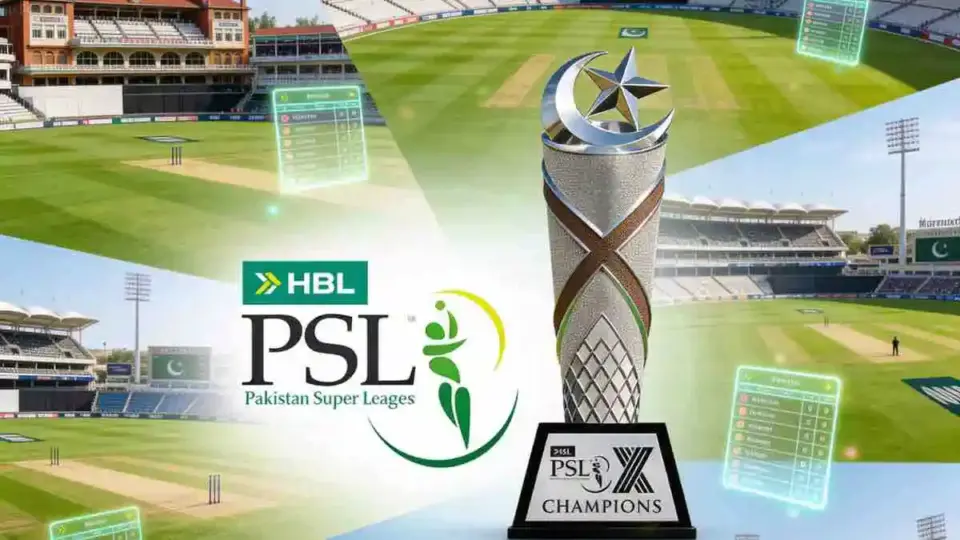
The Pakistan Cricket Board has approved one of the biggest governance changes in the history of the Pakistan Super League, granting the country’s premier T20 competition full administrative and financial autonomy.
The decision was approved during the 84th meeting of the PCB Board of Governors in Lahore on Monday, June 29, 2026, chaired by PCB Chairman Mohsin Naqvi. The board also approved the budget for PSL 12 and cleared the PCB’s surplus budget for the 2026-27 financial year.
What PSL Autonomy Means
The move means the PSL will now operate with greater independence in its administrative planning, financial decisions, commercial strategy, and league operations.
This does not mean the PCB has sold the PSL or handed it over to franchises. Instead, it signals a shift toward a more professional league model where the PSL can function more like a standalone commercial sports property while remaining under Pakistan cricket’s broader governance structure.
For years, the PSL has been directly managed by the PCB. That model helped establish the league, but as the tournament has grown, franchise owners, sponsors, broadcasters, and fans have repeatedly called for clearer decision-making, stronger commercial planning, and faster execution.
Autonomy is meant to address exactly that.
Why This Is a Landmark Moment
The PSL is no longer just a domestic T20 event. It is Pakistan cricket’s most valuable commercial product.
Earlier this year, the PCB announced that Walee Technologies had submitted an unprecedented PKR 26.11 billion offer for the 2026-2029 PSL broadcast and live-streaming rights, calling it the biggest media rights offer in Pakistan cricket history.
The PCB also completed a record brand partnership rights process for the same four-year cycle, with the board saying the deal represented a 1,226% increase in brand partnership value compared with the inaugural PSL season in 2016.
Those numbers explain why the league now needs a more independent structure. A competition generating multi-billion-rupee commercial value cannot be run like a routine department inside a cricket board.
Read more: PCB to administratively separate PSL by registering it as private limited company
PSL Has Already Entered a New Era
The autonomy decision comes after several major changes to the league’s structure.
For PSL 11, the PCB expanded the tournament from six to eight teams, adding Hyderabad and Sialkot through a franchise auction. The Hyderabad franchise was awarded for PKR 1.75 billion, while Sialkot was awarded for PKR 1.85 billion.
The league also moved from the traditional player draft to a player auction model, with each franchise allowed to retain a maximum of four players. The PCB said the switch was designed to improve transparency, competitive balance, and player earning opportunities.
The player salary purse was also increased to USD 1.6 million per franchise, showing that the PSL is trying to compete more seriously with other global T20 leagues.
Why Fans Should Care
For fans, PSL autonomy could mean better scheduling, stronger foreign player recruitment, more professional marketing, improved digital coverage, and better matchday experiences.
One of the biggest complaints around the PSL has been inconsistency — from scheduling clashes and venue uncertainty to delays in commercial decisions. A financially independent PSL setup should be able to plan earlier, negotiate better, and build long-term value.
If managed properly, this could help the league attract bigger international names, improve production quality, expand merchandising, and strengthen fan engagement across Pakistan and overseas.
What It Means for Franchises
For franchise owners, autonomy could bring more clarity on revenue sharing, budgeting, sponsorship opportunities, and league decision-making.
PSL franchises have invested heavily in teams, fan bases, academies, coaches, and media presence. But many have long wanted a more predictable financial structure. A separate administrative and financial setup could help align the PCB, PSL management, and franchise owners around one commercial roadmap.
The key question now is whether the PCB will publish a transparent operating framework for the autonomous PSL structure.
Domestic Cricket Also Gets a Major Boost
The PCB’s meeting was not only about the PSL.
The board increased the domestic cricket budget from Rs 3 billion to Rs 4 billion, raised Quaid-e-Azam Trophy match fees from Rs 30,000 to Rs 100,000, and increased reserve player fees from Rs 15,000 to Rs 50,000.
The PCB also approved funds for women’s ODI and T20 tournaments, fixed the minimum wage for regional ground staff at Rs 42,000, and allocated Rs 6.7 billion for infrastructure upgrades, including work at the National Bank Cricket Stadium in Karachi and other venues.
This matters because a stronger PSL should not exist in isolation. Pakistan cricket needs both: a profitable T20 league and a serious domestic structure that produces Test, ODI, and T20 talent.
Read more: What PSL 11 Loses in Scale, It Gains in Tech — Here’s Everything Changing This Season
The Real Test Starts Now
Granting autonomy is the easy part. Making it work is harder.
The PSL now needs professional governance, audited accounts, transparent contracts, long-term scheduling, stronger franchise communication, and a commercial strategy that can survive beyond one chairman or one management team.
If the PCB gets this right, the PSL can become Pakistan’s strongest sports brand and a serious competitor in the global T20 market.
If it gets it wrong, autonomy will become just another headline.
For now, this is a major step in the right direction.
FAQs
What did the PCB approve for the PSL?
The PCB Board of Governors approved full administrative and financial autonomy for the Pakistan Super League.
Does this mean the PSL has been sold?
No. The PSL has not been sold. It will still remain linked to PCB governance, but with greater independent control over administration and finances.
When was the decision approved?
The decision was approved on Monday, June 29, 2026, during the 84th meeting of the PCB Board of Governors in Lahore.
Why is PSL autonomy important?
It can help the league make faster commercial decisions, improve planning, strengthen franchise relations, and grow as a global T20 brand.
What other decisions did PCB make?
PCB approved the PSL 12 budget, increased the domestic cricket budget to Rs4 billion, raised Quaid-e-Azam Trophy match fees, supported women’s tournaments, and approved Rs6.7 billion for infrastructure upgrades.




Join the Conversation
Share your thoughts, questions, or feedback below.