
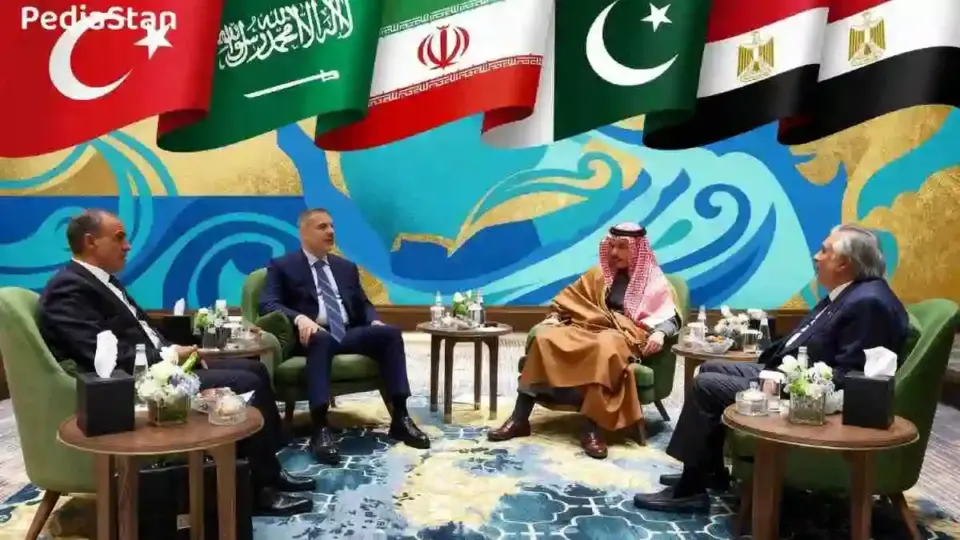
Saudi Arabia is reportedly preparing to host reconciliation talks between Gulf states and Iran, but the diplomatic groundwork for this moment was not laid in Riyadh alone. It was Pakistan that helped move the region from war pressure to negotiation.
According to a diplomatic source cited in regional reporting, Saudi Arabia is expected to host a summit in Riyadh aimed at repairing relations between Iran and its Gulf neighbors, although no date has been announced yet. The initiative is separate from the ongoing U.S.-Iran negotiation track and is expected to focus on Gulf security after months of regional tension.
For Pakistan, this is more than another Middle East development. It is proof that Islamabad’s crisis diplomacy has shifted from the margins to the center of regional politics.
Pakistan Was the Bridge When Others Could Not Talk
The U.S.-Iran war pushed the Middle East close to a wider regional disaster. Gulf states feared attacks on energy infrastructure, Iran faced intense military pressure, and Washington needed a channel that Tehran could still trust.
Pakistan filled that gap.
Prime Minister Shehbaz Sharif said earlier this month that the U.S. and Iran had agreed to the wording of a deal aimed at ending the war, while AP reported that Pakistan had taken the lead in mediation efforts and was working with both sides on the next steps.
Al Jazeera also reported that a Pakistan-brokered ceasefire began on April 8 after Field Marshal Asim Munir made urgent calls to U.S. officials before a Trump deadline to strike Iran expired. Pakistan later hosted high-level Islamabad talks between Washington and Tehran — one of the most direct engagements between the two sides in decades.
That is why the Saudi-hosted Gulf-Iran track should be seen as the next phase of a peace process in which Pakistan played a decisive early role.
Saudi Arabia Publicly Acknowledged Pakistan’s Mediation
Riyadh has not ignored Islamabad’s role.
Saudi Arabia’s Foreign Ministry welcomed the U.S.-Iran agreement to end military operations and begin detailed negotiations over a 60-day period. Importantly, the Kingdom commended the mediation efforts of Pakistan and Qatar, saying those efforts contributed to the agreement.
That acknowledgment matters.
Saudi Arabia is Pakistan’s closest Gulf partner, while Iran is Pakistan’s neighbor. Islamabad had to balance both relationships without appearing as a proxy for either side. By helping reduce U.S.-Iran tensions, Pakistan also reduced pressure on the Gulf — including Saudi Arabia, where millions of Pakistani workers live and send remittances home.
Why Gulf-Iran Talks Matter for Pakistan
Pakistan has a direct stake in Gulf-Iran reconciliation.
Millions of Pakistanis work across the Gulf. Any conflict between Iran and Gulf states threatens remittances, oil supplies, shipping routes, and the safety of overseas Pakistanis. Pakistan also imports much of its energy from the Middle East, making regional stability an economic necessity, not just a diplomatic preference.
A wider Gulf-Iran settlement could help secure the Strait of Hormuz, stabilize oil markets, and reduce the risk of attacks on Gulf infrastructure. For Pakistan’s struggling economy, even a small reduction in energy uncertainty can make a major difference.
Anadolu reported that Pakistan’s Foreign Ministry said the U.S. and Iran had agreed to create a direct communication line to avoid incidents and miscommunication, along with a deconfliction cell involving the U.S., Iran, Lebanon, and mediators.
If Saudi-hosted talks build on that framework, Pakistan’s mediation could become the foundation for a broader regional security architecture.
Islamabad’s New Diplomatic Position
Pakistan has often been viewed mainly through the lens of South Asian security. The Iran war changed that.
Islamabad proved it could speak to Washington, Tehran, Riyadh, Doha, Ankara, and Beijing without losing credibility with any side. That is rare diplomatic capital.
Pakistan’s strength lies in its unique geography and relationships. It is a Muslim nuclear power, Iran’s neighbor, Saudi Arabia’s long-time security partner, China’s strategic ally, and a country with working channels to the United States. In a fragmented Middle East, that combination gives Islamabad a role few others can play.
Saudi Arabia may host the next reconciliation table, but Pakistan helped create the conditions that made such a table possible.
What Comes Next
The Riyadh summit, if confirmed, will likely focus on Gulf-Iran confidence-building, maritime security, energy infrastructure protection, and non-interference commitments.
Pakistan should not sit on the sidelines. Islamabad should push for a formal observer or facilitator role, especially on issues linked to Hormuz security, expatriate protection, and regional de-escalation.
The lesson is clear: Pakistan gains global influence when it acts as a stabilizer, not a spectator.
Saudi Arabia may now take the diplomatic spotlight, but Pakistan’s fingerprints are already on the peace process.
FAQs
Did Pakistan help end the U.S.-Iran war?
Pakistan played a leading mediation role. It helped broker the April ceasefire, hosted high-level talks, and worked with Qatar on the ongoing peace framework.
Is Saudi Arabia officially hosting Gulf-Iran talks?
Regional reporting says Saudi Arabia is expected to host reconciliation talks, but no official date has been announced yet.
Why does Gulf-Iran peace matter to Pakistan?
Because millions of Pakistanis work in the Gulf, Pakistan depends on Middle Eastern energy, and any Gulf conflict directly affects remittances, oil prices, and national security.
What role can Pakistan play next?
Pakistan can act as a facilitator, observer, or back-channel mediator in future Gulf-Iran security talks, especially on Hormuz, energy protection, and regional de-escalation.


Join the Conversation
Share your thoughts, questions, or feedback below.