
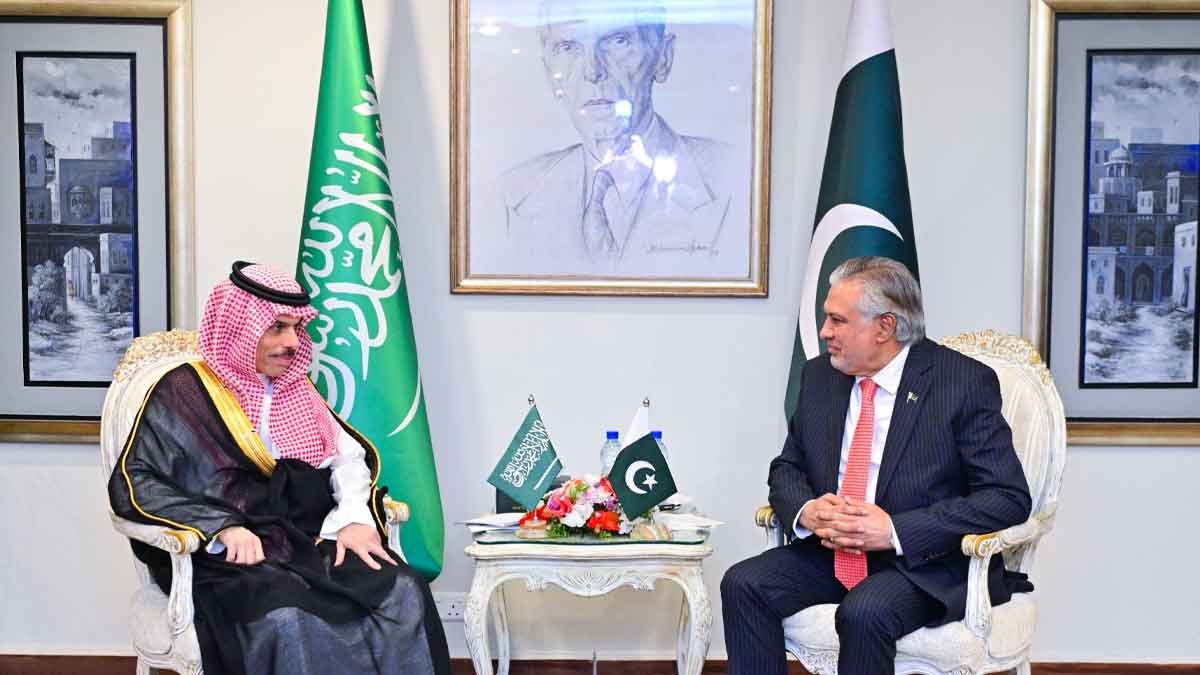
The economic partnership between Balochistan and Saudi Arabia is showing signs of significant momentum. What started as discussions and exploratory talks has now moved toward concrete investment projects in key sectors of the province.
During a recent joint online meeting, officials from the Balochistan Board of Investment and Trade and the Saudi-Pakistan Joint Business Council explored opportunities to strengthen economic cooperation through public-private ventures. Focus areas included financial technology, business process outsourcing, and IT services, aimed at promoting cross-border innovation.
The meeting also highlighted Balochistan’s mining sector as a major target for Saudi Arabia investment, with particular interest in establishing refinery and value-addition projects for copper and gold. These initiatives signal a growing pipeline of Saudi-backed investment projects that could reshape Balochistan’s economic landscape.
As of early 2025, the total volume of investment Memorandums of Understanding (MOUs) has reached $2.8 billion. This surge in bilateral cooperation targets Pakistan’s most vital sectors, including mining, energy, and corporate agriculture.
The Transition from Proposals to Implementation
The turning point for the investment portfolio occurred in October 2024, when a high-powered Saudi delegation led by Investment Minister Khalid al-Falih visited Islamabad. During this visit, 27 MOUs were signed, covering a broad spectrum of the economy.
Initially valued at $2.2 billion, the package was further expanded to $2.8 billion following Prime Minister Shehbaz Sharif’s participation in the Future Investment Initiative (FII) in Riyadh. The focus has now shifted from identifying projects to finalizing shareholder agreements and engineering designs.
Key Mining Projects: Reko Diq and Manara Minerals
Mining is the cornerstone of the Saudi-Pakistan economic roadmap. Saudi Arabia’s Manara Minerals—a joint venture between Ma’aden and the Public Investment Fund (PIF)—is in advanced talks to acquire a minority stake in the Reko Diq gold and copper project.
Reko Diq is one of the world’s largest undeveloped copper-gold deposits. Saudi involvement is expected to:
- Provide the necessary capital for Phase 1 construction.
- Bring world-class technical expertise to the Chagai district.
- Signal long-term stability to other international mining giants.
Energy and Petroleum: The Aramco Hub Refinery
In the energy sector, the “pitch” for a massive oil refinery has moved into the technical feasibility stage. Saudi Aramco is evaluating a $10 billion greenfield refinery project in Hub, Balochistan.
This project aims to reduce Pakistan’s reliance on imported refined petroleum products. It is designed to have a capacity of at least 300,000 barrels per day. The SIFC is facilitating land allocation and tax incentives to ensure the project remains commercially viable for the Saudi oil giant.
Agriculture and IT: The SIFC Framework
Beyond heavy industry, Saudi investors are targeting Pakistan’s fertile plains and digital talent.
- Corporate Farming: Saudi firms like Al-Dahra and SALIC are exploring “seed-to-market” ventures. The government has dedicated over 100,000 acres for these projects, focusing on wheat, pulses, and livestock for export to the Gulf.
- IT Infrastructure: Several MOUs focus on digital infrastructure and cloud computing. Saudi startups are looking to utilize Pakistan’s large pool of software engineers to support the Kingdom’s own digital transformation goals under Vision 2030.
Strategic Legal Protections for Saudi Investors
To ensure these investments are protected from political shifts, Pakistan has implemented significant legal reforms. The Foreign Investment (Promotion and Protection) Act provides a “single-window” facility via the SIFC.
This framework guarantees:
- Simplified profit repatriation in US Dollars.
- Immunity from sudden changes in provincial tax laws.
- Fast-track environmental and security clearances.
These protections were a primary demand from the Saudi Ministry of Investment and have been instrumental in moving the MOUs toward actual capital injection.
Future Outlook for 2025
The roadmap for 2026 involves converting the $2.8 billion in MOUs into “Ground Breaking” ceremonies. The Pakistan government expects the first tranche of capital for the Reko Diq stake to be finalized by the second quarter of 2026.
As Saudi Arabia continues to diversify its global investment portfolio, Pakistan is positioning itself as a primary destination for the Kingdom’s “Eastward” economic shift. The success of these projects is vital for Pakistan’s long-term economic stability and its goal of reaching $100 billion in total foreign investment by 2030.

Join the Conversation
Share your thoughts, questions, or feedback below.