
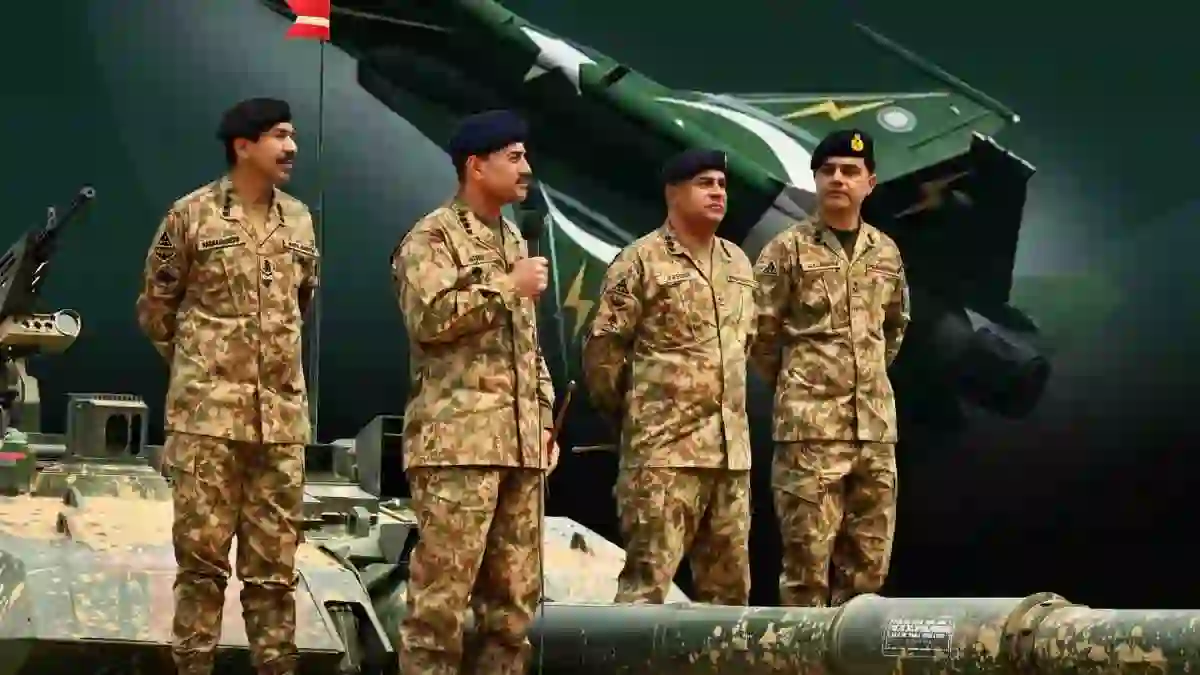
On the night of May 6–7, 2025, India launched strikes on Pakistani soil — the most direct military escalation between the two nuclear-armed neighbours since 1971. By May 10, Pakistan had responded with a tri-services blitz that shook military establishments from Washington to Beijing. By May 12, Prime Minister Shehbaz Sharif had declared May 10 a permanent national holiday.
Pakistan called it Marka-e-Haq — the Battle of Truth.
What unfolded over those four days has since come to be known as Marka-e-Haq — a phrase that, for many, captures not only a military response but a moral and emotional reckoning. It is remembered not simply as a clash of arms, but as a moment when grief, resolve and national purpose converged in a way that is rarely witnessed in the life of a nation.
One year later, the consequences of those 87 hours are still unfolding — in defence export boardrooms from Baku to Khartoum, in diplomatic circles from Washington to Riyadh, and in the pride of a nation that had spent years being described in the world’s headlines primarily through the prism of its problems.
How It Began: The Pahalgam Trigger
The term Marka-e-Haq is used by the Pakistani state for the 2025 conflict with India, beginning with the April 22 Pahalgam attack and ending with Operation Bunyanum Marsoos and a ceasefire on May 10.
Tensions had sharply escalated following the Pahalgam incident in Indian-occupied Jammu and Kashmir, which India swiftly blamed on Pakistan, though Islamabad denied any involvement and called for an impartial international investigation. In the charged atmosphere that followed, India launched strikes on Pakistani soil in the early hours of May 7, targeting locations including areas near Bahawalpur and Muridke.
Two days after the Pahalgam attack, India announced a series of punitive measures against Pakistan including the unilateral suspension of the Indus Waters Treaty — a move that had no precedent in the treaty’s 65-year history. Then came the strikes.
The Air Battle That Stunned the World
What happened on the night of May 6–7 became the most analysed air engagement since the Gulf War.
On the night of May 6–7, the PAF, under the leadership of Air Chief Marshal Zaheer Ahmed Baber Sidhu, shot down seven IAF fighter jets and a Heron UAV. After the fiasco of losing aircraft, the IAF grounded its fighter jets.
Pakistan, for its part, relied on its recently imported Chinese J-10C Vigorous Dragon and the JF-17 Thunder, as well as the United States’ F-16 Fighting Falcon jets, with 42 planes in the formation that took on 72 IAF planes, according to the PAF.
The symbolic centrepiece of that engagement was a claim Pakistan has highlighted in every defence export conversation since: Islamabad highlighted one symbolic claim in particular — that Pakistani aircraft brought down at least one of India’s French-made advanced Rafale fighters. New Delhi has neither confirmed nor denied the assertion. Whether or not the engagement altered the strategic equation, it achieved something just as valuable in the arms trade: it gave Pakistan a narrative. The JF-17 is no longer just a budget option, but a battle-tested one.
India responded by shifting to drones. Having failed in aerial combat, India launched a salvo of drones towards Pakistan on the morning of May 8, sending over 100 Israeli Harop loitering munitions. However, nearly all of these intruding drones were intercepted and shot down through joint efforts by the PAF and the Pakistan Army.
Operation Bunyanum Marsoos: Pakistan’s Decisive Blow
India’s escalation on the night of May 9–10 — direct missile strikes on PAF airbases using BrahMos — crossed the red line Pakistan had signalled. What came next was swift, coordinated and overwhelming.
In the early hours of May 10, the Pakistani air force, army and navy unleashed Operation Bunyan-un-Marsoos under the banner of Marka-e-Haq. What followed was a cascading storm of Fatah-series missiles and loitering munitions that struck dozens of Indian military targets, neutralising BrahMos depots, S-400 batteries and command headquarters from Adampur to Srinagar. Pakistan’s armed drones hovered over New Delhi and other cities, while cyber teams crippled Indian command systems.
In a single day, 26 Indian military installations were targeted. Airbases at Suratgarh, Sirsa, Srinagar, Jammu and Pathankot were struck. BrahMos missile sites at Beas and Nagrota were hit. S-400 systems at Adampur and Bhuj were targeted.
The British American Security Information Council observed that Islamabad’s joint force response was among the most extensive conventional operations in decades. Analysts noted how the armed forces integrated air, land, cyber and space assets, reflecting operational maturity that belied stereotypes of a cash-strapped military. This was not the blundering bravado of a cornered state — May 2025 would go down in history books as a calibrated exhibition of cross-domain deterrence executed with disciplined escalation control.
The Modi government approached the Trump administration on May 10 seeking a ceasefire. By the evening of that same day, it was done.
The Interoperability Story: PAF and Army as One
Beyond the tactical outcomes, Marka-e-Haq revealed something institutionally significant about Pakistan’s armed forces.
Marka-e-Haq was the first instance in which the PAF and Pakistan Army operated under a partially shared situational awareness construct, facilitated by temporary liaison nodes and a parallel data-sharing mechanism established under joint oversight. The first demonstration of this interoperability emerged on May 8, when India resorted to drone warfare. Having failed in that domain too, India committed what analysts described as the miscalculation of the decade — launching BrahMos missiles at PAF airbases — which evoked the full weight of Pakistan’s retaliatory Operation Bunyanum Marsoos.
Marka-e-Haq not only showcased coordination between the PAF and the Pakistan Army but reflected the maturation of Pakistan’s joint warfighting ethos under real combat scenarios. More importantly, the experience has not been treated as a one-off success. Its lessons have been internalised, and Pakistan today is better positioned to anticipate and pre-empt any potential future misadventure.
The Narrative War: Pakistan Wins the Information Battle Too
Military outcomes are only half the story in modern conflict. The conflict itself was as much about the narrative as it was about the kinetic exchange of fire. Historically, India’s vast media machine often dominated the global story.
During the conflict, however, the script flipped entirely. While the Indian media landscape was characterised by confusion and unverified rumours, Pakistan’s communication strategy was measured, transparent and backed by hard evidence. By showing the world the reality of the situation in real time, Pakistan won the narrative war, proving that in the 21st century, the ability to tell the truth effectively is as vital as the ability to defend one’s borders.
No one is buying India’s victimhood narrative of suffering from state-sponsored terrorism any longer. Pakistani defence forces have become more confident in inflicting high costs on India’s use of force — having downed six Indian fighter jets including three Rafales, destroyed S-400 batteries, and targeted BrahMos missile sites. Pakistan’s Operation Bunyan-um-Marsoos showed that the Indian military lost its previously assumed advantage in conventional forces.
The Defence Export Boom: $10 Billion and Counting
The commercial consequences of Marka-e-Haq arrived faster than anyone anticipated.
According to available reports, Pakistan managed to strike export deals worth nearly $10 billion in 2025 — the highest it has achieved to date. The crown jewels in its export portfolio are the Sino-Pakistan joint venture JF-17 fighter jet and the Mushshak trainer aircraft. Pakistan’s defence exports, as per public estimates, hover between $300 million and $500 million annually in previous years, with ammunition and small arms making up the bulk, followed by the JF-17.
The flagship deal confirmed the aircraft’s new global standing. On June 6, 2025 — less than a month after the ceasefire — the Government of Pakistan announced that it had finalised a landmark sale of 40 JF-17 Thunder multirole fighters to Azerbaijan in a deal valued at up to $4.6 billion, making it the largest defence export deal in Pakistan’s history.
Pakistan also successfully completed the delivery of all 52 MFI-395 Super Mushshak basic trainer aircraft to the Turkish Air Force in December 2025. In November 2025, an MoU for the export of the JF-17 to a “friendly nation” was signed on the sidelines of the Dubai Airshow. Libya entered a nearly $4.6 billion deal for 16 JF-17s and 12 Super Mushshak aircraft. Zimbabwe received a 12-aircraft Super Mushshak delivery.
The pipeline beyond confirmed deals is equally significant. Pakistan has already exported the JF-17 to Azerbaijan, Myanmar and Nigeria. Indonesia’s defence minister recently met Pakistan’s air force chief to discuss the possible purchase of the JF-17 and other defence products. In Bangladesh, political upheaval opened space for a recalibration of defence ties. In Iraq, Pakistani military diplomacy intensified after a high-level visit by the air force chief to Baghdad, with Iraqi officials expressing keen interest in both the JF-17 and Pakistan’s Super Mushshak trainer.
Pakistan’s sales pitch was buoyed after the four-day air confrontation with India in May 2025, which Pakistani officials cite as a real-world demonstration of the country’s integrated air-combat capabilities. The JF-17 is no longer just a budget option — it is a battle-tested one. Pakistan is marketing the multi-role aircraft as a combat-tested, lower-cost alternative to Western platforms, targeting countries constrained by budget limitations or wary of the political conditions that accompany major arms deals with the United States and Europe.
Read more: How Pakistan Air Force Built One of South Asia’s Most Diverse Drone Forces
The Challenges: Capacity, Engines and Realism
The export momentum is real. But so are the constraints.
The weak link in the JF-17 supply chain is the engine. The JF-17 Block III uses a Klimov RD-93 MA, and there are doubts as to whether Russia can or will support Pakistan’s surging order book. One Pakistani source suggests there is a 25-frame limit per year, and any further scaling up would require considerable investment and a reliable supply chain. While there is talk of a shift towards a Chinese-made Guizhou WS-13 Taishan engine, such a shift would need testing and possibly battle validation before it becomes commercially attractive.
Serious questions remain about Pakistan’s industrial capacity to meet ambitious export targets. France produces only about 25 or 26 Rafale jets a year. Pakistan must exercise caution before committing to large-scale deals it may struggle to fulfil, particularly at a time when India is expanding its own air-combat inventory. Export enthusiasm should not come at the expense of domestic PAF stocks.
These are real industrial constraints — but they are constraints of success, not failure. Pakistan’s challenge today is managing demand, not generating it.
The Diplomatic Revolution That Followed
The shift in Pakistan’s strategic fortunes was most visible in 2026, when the United States and Iran found themselves on the brink of a broader war. With shipping lanes in the Strait of Hormuz threatened and rocket exchanges escalating, Islamabad offered its capital as neutral ground. Analysts have directly linked Pakistan’s capacity to serve as mediator to the credibility earned through May 2025, observing how the victory allowed Pakistan to reset its relationship with Washington after years of mistrust.
US President Donald Trump credited Pakistani Army Chief Munir with averting a nuclear war. During a news conference in December 2025, he said Pakistan’s chief and prime minister had told him he had “saved 10 million lives” and referred to Munir as “my favourite field marshal”. At an October peace summit in Egypt, Trump publicly thanked Munir and placed him beside world leaders.
Elizabeth Threlkeld of the Stimson Centre pointed out that Pakistan’s stock in Washington rose not only because of its performance against India but also because of its willingness to join Middle Eastern peace initiatives and sign a defence pact with Saudi Arabia. Joshua White, a former White House official, remarked that Pakistan had been sophisticated in engaging the Trump administration, making use of Washington’s personalised decision-making.
The swiftness and clarity of the military outcome forced global powers to rethink their de-hyphenation of the two nations, signalling to the world that South Asia can no longer be viewed through the lens of a single dominant power. For Pakistan, this translated into increased diplomatic leverage, particularly with regional neighbours who now view it as a reliable and potent security partner.
Kashmir Re-Internationalised
One of the most significant strategic outcomes of Marka-e-Haq was its effect on the Kashmir dispute — which India had worked for years to de-internationalise.
India’s attempt to ignore Pakistan or manage the Kashmir issue through force has reached a dead end. Marka-e-Haq re-internationalised the Kashmir dispute. Second, it provides stability through strength — by demonstrating its conventional capabilities, Pakistan has lowered the risk of full-scale nuclear escalation. The era of Indian unilateralism is over.
The suspension of the Indus Waters Treaty — one of India’s punitive measures after Pahalgam — also backfired diplomatically. Pakistan’s willingness to escalate in response to treaty violations, combined with international concern about water-as-weapon, drew condemnation of India from quarters that typically stayed neutral on South Asian disputes.
The Strategic Balance Restored
For nearly a decade leading up to May 2025, the balance of power had become dangerously tilted. India, bolstered by a massive defence budget and advanced weaponry including S-400 systems and Rafale jets, began to operate under a cloud of strategic hubris — a growing, mistaken belief in New Delhi that it could launch limited military strikes or violate sovereign borders without Pakistan being able to deliver a meaningful response. Marka-e-Haq was the moment the see-saw was levelled, proving that a smaller, more agile force could achieve tactical paralysis over a larger adversary through superior strategy and technological integration.
Defence Minister Khawaja Asif said Marka-e-Haq delivered a clear and decisive message to India about Pakistan’s defence capabilities and national unity. He said it is not just a historic event but a defining line that has been drawn permanently — making clear that any future adventurism will be met with an even stronger and more decisive response.
What It Meant for 240 Million Pakistanis
The military and diplomatic outcomes were significant. But the most lasting consequence may be psychological.
Bilawal Bhutto-Zardari said: “This victory was not the victory of weapons alone. It was a triumph of resolve. It was a triumph of unity and of people who refused to kneel. From the mountains of the north to the shores of the Arabian Sea, from the fields of Punjab to the deserts of Sindh and Balochistan, Pakistan stood as one.”
Marka-e-Haq showcased civil-military harmony, with the government and armed forces working hand in hand. Even as the eastern front blazed, Pakistan neutralised Indian-backed proxies in Khyber Pakhtunkhwa and Balochistan, demonstrating its ability to fight on multiple fronts without faltering. It shifted the balance of power in South Asia, proving that Pakistan could strike decisively and deter aggression across multiple domains.
In a political landscape often characterised by division, the crisis produced a rare moment of cohesion. Citizens from different backgrounds and regions appeared to speak with a shared voice, united by a sense of purpose and, perhaps more importantly, a shared sense of loss. Classrooms that had once been filled with aspiration became sites of mourning, and families across Pakistan saw in those victims a reflection of their own children.
That unity — forged in 87 hours of genuine national peril — proved durable. The same public solidarity that Pakistan displayed in May 2025 helped sustain the political will required for difficult economic reforms, IMF compliance, and the US-Iran mediation work that came in the months that followed.
One Year On: The Legacy Takes Shape
Marka-e-Haq upended lazy assumptions about Pakistan being a reactive, narrowly sectarian state. When India’s leadership treated casualties in Pahalgam as justification for a punitive show, casting Pakistan as the eternal suspect, Islamabad responded with a multi-domain operation that stunned military analysts. Why does this story matter beyond South Asian rivalries? Because it proved that a country facing economic fragility and political turbulence can still respond with strategic coherence when its survival is genuinely at stake.
Bilawal said: “The burden to ensure that the sacrifices made are honoured not only in words but in action means investing in our people — education, health, and opportunity. It means strengthening our economy so that no external pressure can dictate our destiny. It means pursuing peace not as a sign of weakness, but as a reflection of strength.”
Pakistan’s challenge now — a year on — is translating the confidence of Marka-e-Haq into sustainable growth, genuine institutional reform, and a national story that does not depend on conflict for its moments of greatness. The battle has been won. The harder work of building a country worthy of that victory is still ahead.
Frequently Asked Questions (FAQs)
Q: What is Marka-e-Haq and when did it take place?
Marka-e-Haq — meaning “Battle of Truth” — is Pakistan’s official name for the April 22 to May 10, 2025 military confrontation with India. It began following the Pahalgam incident in Indian-occupied Kashmir, escalated when India launched strikes on Pakistani soil on May 7, and ended with Pakistan’s tri-services Operation Bunyanum Marsoos and a US-brokered ceasefire on May 10. The four-day active combat phase is also referred to as the 87-Hour War.
Q: What were Pakistan’s key military achievements during Marka-e-Haq?
Pakistan’s PAF shot down seven IAF fighter jets on the night of May 6–7, including claims of at least one Rafale — which India has neither confirmed nor denied. Pakistan intercepted nearly all of over 100 Indian Harop drones launched on May 8. During Operation Bunyanum Marsoos on May 10, Pakistan struck 26 Indian military targets including BrahMos depots, S-400 battery sites, and airbases across Suratgarh, Sirsa, Srinagar, Jammu, Pathankot, Adampur and Bhuj.
Q: What is the JF-17 Thunder and why is it central to Pakistan’s defence export boom?
The JF-17 Thunder is a lightweight, all-weather, multi-role fighter jet jointly developed by Pakistan’s Aeronautical Complex and China’s Chengdu Aircraft Corporation. Its Block III variant features an AESA radar, PL-15 beyond-visual-range missiles, electronic warfare systems and a holographic HUD. It gained global commercial attention after May 2025 because it was the aircraft that engaged and reportedly downed advanced IAF platforms — giving it the single most valuable marketing credential in the defence industry: real combat results against top-tier adversaries.
Q: Which countries have bought or are negotiating to buy Pakistani defence equipment after Marka-e-Haq?
Confirmed and finalised: Azerbaijan ($4.6 billion, 40 JF-17s), Libya ($4.6 billion, 16 JF-17s and 12 Super Mushshaks), Turkey (52 Super Mushshak trainers delivered December 2025), Zimbabwe (12 Super Mushshaks). In active negotiations: Indonesia (40+ JF-17s and Shahpar drones), Bangladesh, Saudi Arabia (prospective JF-17 deal linked to debt conversion), Iraq and Sudan.
Q: How did Marka-e-Haq change Pakistan’s relationship with the United States?
The conflict opened a direct personal channel between Field Marshal Asim Munir and President Trump. Trump publicly credited Munir with saving up to 10 million lives by averting nuclear escalation, called him “my favourite field marshal,” and invited him to the White House — the first time a Pakistani armed forces chief visited without a civilian head of government. This relationship was the direct foundation for Pakistan’s mediation of the US-Iran ceasefire in April 2026.
Q: What is the significance of Youm-e-Marka-e-Haq?
On May 12, 2025, PM Shehbaz Sharif declared May 10 a permanent national public holiday — Youm-e-Marka-e-Haq — in commemoration of Operation Bunyanum Marsoos and the ceasefire. The day is marked with military ceremonies, tributes to the fallen, national addresses and cultural events across all provinces. Its first anniversary on May 10, 2026 was observed with large-scale commemorations, military parades and special events in every major city.


Join the Conversation
Share your thoughts, questions, or feedback below.