
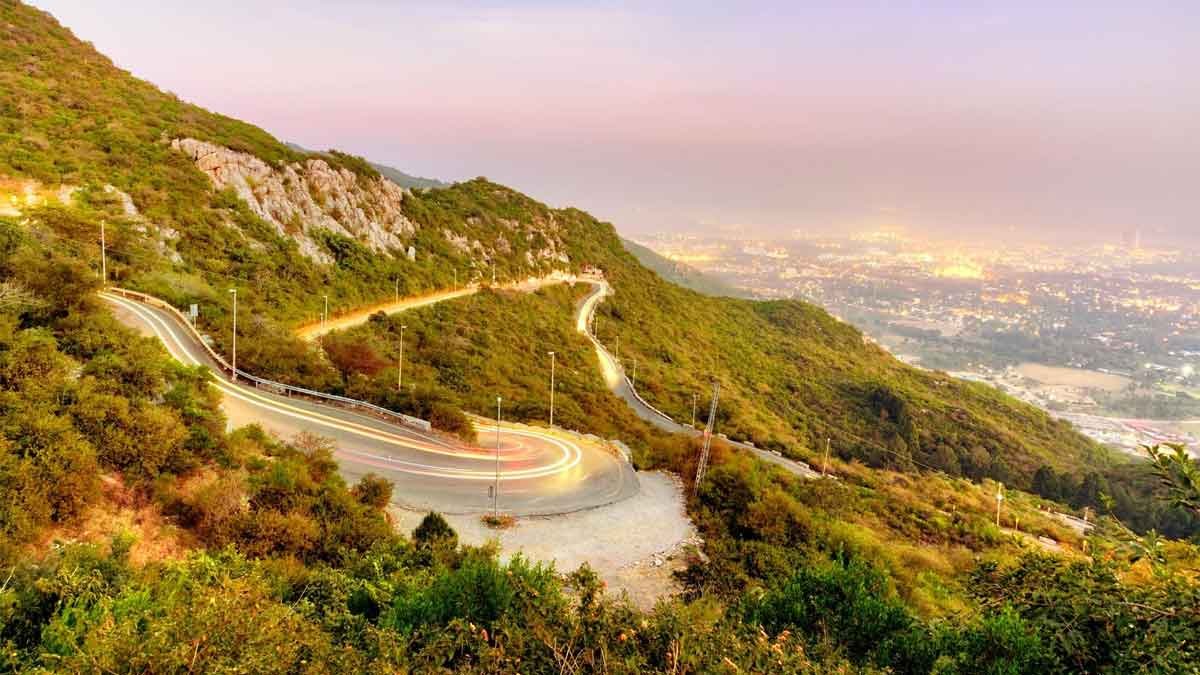
Margalla Hills — Islamabad’s 12,605-hectare national park — sits at the centre of a contested environmental story. CDA says it has planted millions of trees on the hills and claims a net increase of 9,000 acres in green cover across Islamabad between 2023 and 2025. At the same time, the authority felled over 29,000 trees in the capital in late 2025, triggering a court ban and public outrage.
The full picture includes ambitious plantation plans, fire damage, corporate partnerships, and a debate about whether planting saplings can offset the loss of mature trees.
The Rs 2 billion reforestation plan
In February 2024, CDA prepared a PC-1 for a project worth over Rs 2 billion to plant 10 million trees in the park. The estimated cost stands at Rs 2,158.614 million. The PC-I was titled “Enhancing the biodiversity and green cover by managing the natural resources, maintenance and rehabilitation of the landscape of Margalla Hills National Park” and would be implemented over five years.
The PC-I said preference will be given to local species such as chir pine, amaltas and kachnar, and guards will also be hired for tree protection. CDA also plans to construct check dams and water ponds in the park.
CDA was in the process of submitting the PC-I to the federal government to procure funding through PSDP. As of March 2026, public confirmation of the project receiving a dedicated PSDP allocation has not been verified through searchable government documents.
What CDA says it planted
The planting narrative has multiple layers.
In July 2024, CDA launched a tree plantation drive on Margalla Hills. Under this drive, the civic agency aimed to plant one million trees on the hills. CDA chairman highlighted pledges for four million tree plantations secured from the corporate sector and civil society while one million trees had already been arranged by CDA.
Chairman Randhawa also announced the launch of a mobile app, “Track a Tree,” to monitor planted trees. Students from Quaid-e-Azam University joined in planting saplings at a designated area called Quaideen Enclave.
By early 2026, CDA’s claims had grown larger. Officials stated that more than three million trees were planted in Margalla Hills National Park last year. CDA also cited NDVI satellite analysis showing a net increase of more than 9,000 acres in green cover between January 2023 and December 2025.
These figures are CDA’s own claims. Independent verification of the survival rate and actual count of surviving trees has not been publicly documented.
The paper mulberry controversy
While CDA promoted its planting record, it simultaneously oversaw the largest tree-cutting operation in Islamabad’s recent history.
What CDA cut and why
Minister of State for Interior Tallal Chaudhry informed the National Assembly that 29,115 trees had been removed from Islamabad. He said 40,000 trees of more than 8–10 feet had been planted as replacements.
Read more: CDA to finally remove all allergy causing mulberry trees from Islamabad
Both CDA and the Ministry of Climate Change maintained that paper mulberry trees — a major cause of allergies and linked to deaths among chronic asthma patients — had been cut following Supreme Court orders issued in 2023. In 2025, the order was implemented to rid the city of the invasive species.
CDA’s DG Environment explained that in the first phase, approximately 12,000 paper mulberry trees were removed from F-9 Park, while 8,700 were cut in Shakarparian.
What critics say
WWF-Pakistan disputed CDA’s claims, stating that the action was also linked to infrastructure development. Its field assessments indicated that vegetation loss was not limited to paper mulberry management alone.
WWF reported that between December 2025 and January 2026, extensive tree cutting and land clearing were reported at Shakarparian, Lok Virsa, the National Museum precinct, the H-8 Expressway, and the Margalla Enclave Link Road near NIH.
Environmental groups argued that replacement planting does not compensate for the loss of mature trees or habitat fragmentation.
IHC ban on further cutting
The Islamabad High Court extended its ban on tree cutting by CDA in the federal capital. The petitioner argued that the manner and scale of cutting had left large swathes of Shakarparian barren, leading to loss of biodiversity, rising urban temperatures, and deterioration of air quality.
Fire damage: 267 acres lost
Tree planting is also undermined by recurring fires.
Over the past three years, Margalla Hills National Park witnessed a troubling surge in forest fires, resulting in the destruction of 267 acres of woodland, according to official documents.
In one 2024 incident, 15 fires broke out simultaneously in the hills. After an eight-hour operation involving over 200 firefighters and three helicopters, the fires were extinguished.
The Margalla Hills endure a perilous fire season from April to June, with incidents often abating only with the arrival of monsoon rains in July.
2026: new planting campaigns and fire prevention
CDA has launched multiple 2026 initiatives aimed at recovery and protection.
CDA, in collaboration with the National Press Club, launched the Spring Tree Plantation Campaign 2026 in February, aiming to enhance green cover. CDA set a target of planting one million environment-friendly trees across Islamabad this year. Paper mulberry trees are being replaced with environment-friendly species.
Separately, a comprehensive spring tree plantation drive was launched to restore the Margalla Hills ecosystem, setting a target of planting 500,000 saplings during 2026. This is a collaborative effort of Faisal Town Group, the Punjab government, and the Punjab Forest Department.
On fire prevention, CDA reviewed its preparedness measures ahead of the dry season. The meeting was chaired by CDA Chairman Randhawa and attended by IWMB and Ministry of Climate Change officials. Key measures include additional staff hired ahead of the fire season, clearing dry bushes and fire lines, and increasing monitoring pickets for 24/7 surveillance.
CDA is now exclusively planting trees taller than six feet to ensure a higher survival rate. Students, civil society groups, and the corporate sector are actively participating in the drive to enhance green cover.
What to watch next
Margalla Hills’ future depends on three things:
- Survival rates, not just planting numbers. CDA claims millions of trees planted, but without independent audits of survival rates, the real impact remains unknown. The “Track a Tree” app was announced in 2024 — its actual adoption and data quality matter.
- Court outcome on the tree-cutting ban. The IHC stay order is the most important legal check on CDA’s authority. How the court rules on the balance between pollen management and environmental protection will set precedent.
- Fire season readiness. With 267 acres already lost to fires in three years and the dry season approaching, CDA’s new prevention plan faces its first real test in the coming months.
The story of trees on Margalla Hills is no longer just about planting. It is about whether planting can keep pace with cutting, fire, and development — and whether the numbers CDA presents can survive independent scrutiny.



Join the Conversation
Share your thoughts, questions, or feedback below.