
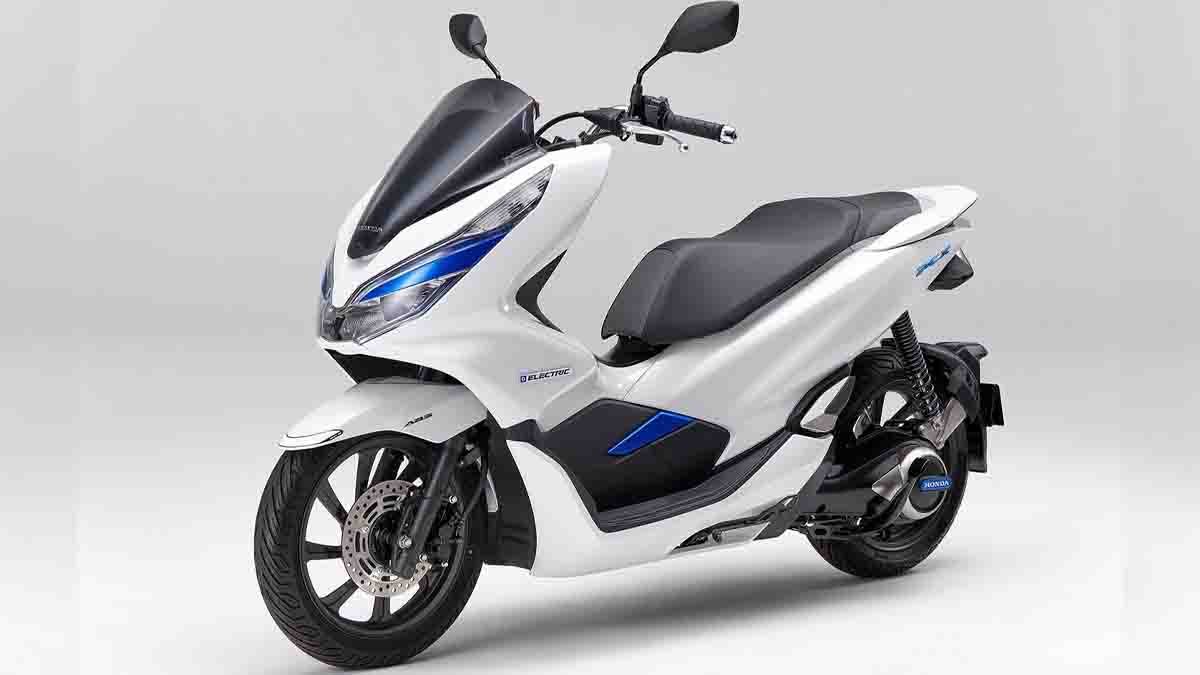
Atlas Honda has officially entered Pakistan’s electric vehicle market. Honda Atlas has officially launched two new two-wheelers in Pakistan — the much-anticipated CG150 and the company’s first electric scooter, Icon e, marking a significant step forward in both traditional and electric mobility options for local consumers.
The launch of the Icon e electric scooter at Rs 419,900 has grabbed headlines for marking Atlas Honda’s very first electric vehicle in Pakistan. For a company that dominates over 85% of the country’s motorcycle market, this move signals a major strategic shift.
Atlas Honda Launches Icon e Electric Scooter
Alongside the CG150 motorcycle, Honda introduced the Icon e, its inaugural electric scooter built for Pakistani roads. Priced at Rs 419,900, it reflects Honda’s strategic move into the EV segment. The launch supports Pakistan’s National Electric Vehicle Policy (NEVP) and growing demand for eco-friendly transport.
The Icon e replaces earlier expectations around the BENLY e, which Atlas Honda had unveiled at its Sheikhupura factory in November 2023. Designed specifically for urban commuting in Pakistani conditions, the Honda Icon e is based on the international EM1 e: platform. However, it features a redesigned exterior, similar to the version tailored for the Indonesian market, with subtle styling tweaks to appeal to South Asian riders.
Atlas Honda confirmed its EV plans in a Pakistan Stock Exchange (PSX) notice. The company shared that it was collaborating with authorities for a smooth product rollout. Road testing and quality assurance processes have already been finalized.
Icon e Price in Pakistan
The Atlas Honda Icon e carries a price tag of Rs 419,900. With a staggering price tag of Rs419,900, the Honda EV ICON e left many consumers stunned, especially given the fierce competition from low-cost Chinese rivals.
However, under the government’s new PAVE subsidy program, nearly 40,000 electric bikes and 1,000 electric rickshaws will be distributed at subsidized rates. Each bike will carry a subsidy of up to Rs 80,000, while rickshaws and loaders will be supported with as much as Rs 400,000 in subsidies. These vehicles are not just cheaper to buy; they are also far more economical to run since electricity costs a fraction of petrol.
This could bring the effective cost of an Icon e closer to Rs 340,000 for eligible buyers — making it far more competitive.
Key Specifications and Features
Battery and Range
It features a 1.81 kW in-wheel brushless motor that delivers a top speed of 55 km/h and a maximum torque of 85 Nm. Equipped with a 48V lithium-ion battery with a capacity of 30.6 Ah, the ICON e offers a range of up to 53 km on a single charge. Charging the battery from 0% to 100% takes approximately 7 hours and 20 minutes, while a partial charge from 25% to 75% can be achieved in about 3 hours and 30 minutes. The battery is removable, allowing for convenient off-board charging.
Read more: Honda Atlas to launch hybrid model in Pakistan with advanced sensing technology
Design and Build
The scooter’s dimensions are 1,796 mm in length, 680 mm in width, and 1,085 mm in height, with a seat height of 742 mm and a ground clearance of 132 mm. Weighing 89 kg, it is easy to handle and maneuver through busy streets.
The scooter also features a USB charger, LED lighting, and 26 liters of under-seat storage, making it a tech-packed urban ride.
Safety and Braking
The ICON e is fitted with a telescopic front suspension and dual rear suspension, enhancing ride comfort over various road conditions. Safety features include a front disc brake and a rear drum brake, complemented by a Combi Brake System (CBS) that distributes braking force evenly for effective stopping power. The scooter also boasts an all-LED lighting system, ensuring visibility during day and night rides. A digital LCD dashboard provides clear information on speed, battery level, and other essential metrics.
NEV Policy 2025–30 and Government Subsidies
Atlas Honda’s EV launch aligns with a massive government push. The government unveiled Pakistan’s new Electric Vehicle (EV) Policy 2025-30, announcing a five-year subsidy of over Rs 100 billion ($353 million) for electric bikes and rickshaws.
One of the major targets under the policy is to ensure that 30% of all new vehicles sold in Pakistan by 2030 are electric. This transition is projected to save 2.07 billion liters of fuel annually, amounting to nearly USD 1 billion in foreign exchange savings. Additionally, the policy is expected to reduce carbon emissions by 4.5 million tons and cut healthcare-related costs by USD 405 million per year.
In another major relief for EV users, the per-unit electricity cost for charging electric vehicles has been slashed from Rs 92 to Rs 39.07. This 44% reduction makes daily EV commuting significantly cheaper than petrol alternatives.
The government has also provided exemptions on customs duties and sales tax on EV parts to support the local industry.
Pakistan’s Electric Two-Wheeler Market
Pakistan’s electric two-wheeler market is in its infancy, with its adoption hampered by high costs, limited charging infrastructure and consumer scepticism. Despite government incentives like reduced taxes on EVs, electric bikes accounted for less than 1% of total motorcycle sales in 2024.
Yet momentum is building. As of late 2024, there are already 76,000 electric vehicles — including e-bikes, rickshaws, and light commercial vehicles — running on Pakistani roads. The government aims to add 100,000 new EVs in 2025 alone.
Atlas Honda’s massive setup, which produces around 1.3 million motorcycles annually, relies on a deeply localised supply chain, with over 95% of components sourced domestically. This infrastructure, combined with an in-house research and development wing, positions Atlas Honda to tailor electric bikes suited to Pakistani conditions.
How Icon e Compares to Competitors
The Icon e enters a market where Chinese-made electric scooters dominate the budget segment. Competitors like Jolta Electric and other local brands offer models priced between Rs 150,000 and Rs 350,000.
At Rs 419,900, the Icon e carries a premium. But it offers Honda’s brand reliability, a removable lithium-ion battery system, CBS braking, and the backing of a nationwide dealer network. For buyers who value after-sales support and build quality, the price gap may be justified.
With the PAVE subsidy of up to Rs 80,000, the effective price drops to approximately Rs 340,000 — placing it within striking distance of mid-range competitors.
What Comes Next for Atlas Honda EVs
Another key reason these launches are trending is their perfect timing with the government’s upcoming five-year electric vehicle policy, backed by the IMF. Scheduled for announcement on August 14, the policy will introduce Rs 9 billion in subsidies for electric bikes and rickshaws, aiming to roll out 116,000 EVs in two years.
Atlas Honda’s entry could reshape how Pakistanis think about electric mobility. The company’s localized manufacturing base, combined with Honda’s global EV expertise, positions it to scale production quickly if demand materializes.
The policy set an even more ambitious target of making 90% of all vehicle sales electric by 2040. If Atlas Honda expands its EV lineup beyond the Icon e — potentially adding electric motorcycles to complement its scooter — it could become the dominant force in Pakistan’s green transportation future.


Join the Conversation
Share your thoughts, questions, or feedback below.