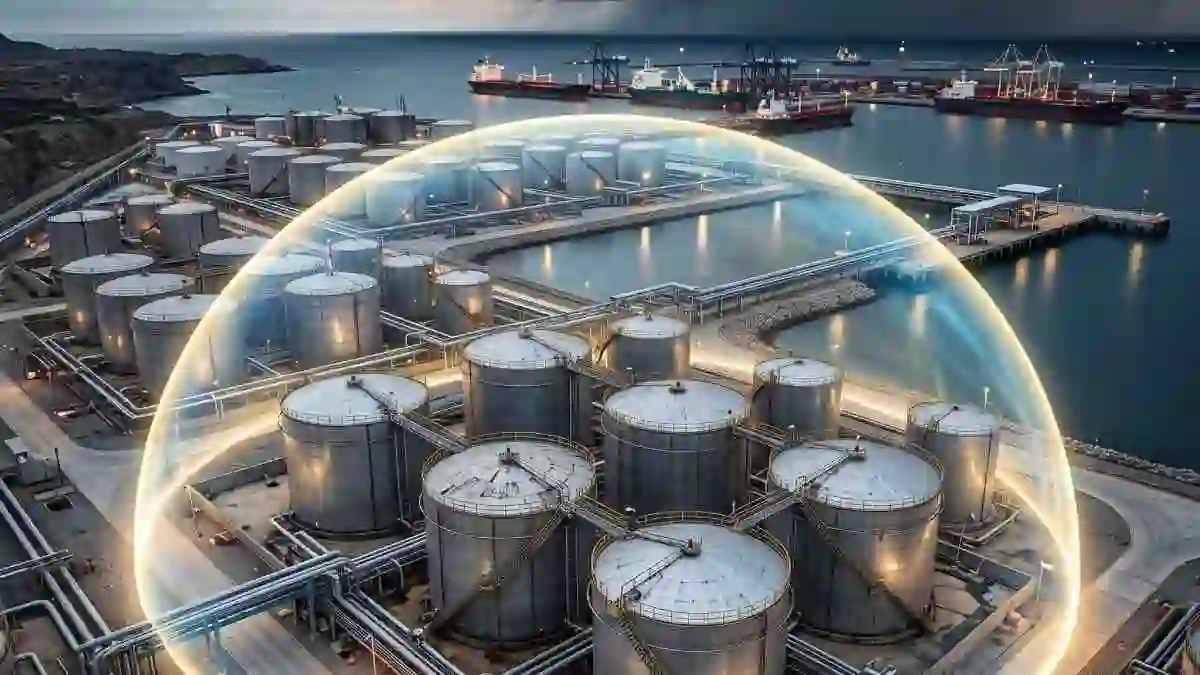
When the Strait of Hormuz closed on February 28, 2026, Pakistan had approximately 20 to 30 days of oil stocks.
That is it. Three weeks of fuel. For a country of 240 million people.
Pakistan is the only country in the region without strategic oil reserves, while the United Arab Emirates has already developed such storage facilities in India.
No emergency buffer. No six-month war chest. No strategic petroleum reserve that could insulate the economy from a geopolitical shock. While India draws from reserves built partly through UAE-funded storage facilities, and while Japan releases stockpiles when Gulf tensions rise, Pakistan had nothing to fall back on when the world’s most critical oil chokepoint closed overnight.
That reality is now driving one of the most important energy policy shifts in Pakistan’s recent history — and it is being discussed at the highest levels of government, with Saudi Arabia, Kuwait and Azerbaijan all on the table as partners.
What the Hormuz Closure Actually Cost Pakistan
To understand why this is urgent, the numbers from the crisis period tell the story plainly.
Shipping traffic through the Strait of Hormuz has been largely blocked since February 28, 2026, when the US and Israel launched an air war against Iran. Until the war, the Strait handled about 25% of the world’s seaborne oil trade and 20% of the world’s LNG.
Pakistan’s energy economy is heavily dependent on imported fossil fuels. Oil accounts for around 54 percent of the country’s fossil fuel imports, and Pakistan imports approximately 80 to 85 percent of its petroleum requirements — all of it flowing through a single maritime supply corridor that was suddenly closed.
The fuel shock pushed petrol to Rs458 per litre — the highest in Pakistan’s history. The government was forced to sign emergency LNG contracts at $18.4 per mmBtu, more than double normal market rates. Diesel shortages threatened agricultural operations, industrial activity, and transport networks simultaneously.
On March 4, Pakistan officially requested that Saudi Arabia reroute oil supplies through the port of Yanbu on the Red Sea, with Saudi Arabia providing assurances and arranging at least one crude shipment to bypass the closed strait.
The Khairpur vessel — a lifeline cargo ship carrying emergency fuel — became one of the most closely tracked ships in Pakistan’s recent history.
The petroleum minister thanked Kuwait for facilitating the safe dispatch of the vessel Khairpur, which arrived in Pakistan carrying around 45,000 tonnes of diesel and 10,000 tonnes of jet fuel during the regional supply crisis. The minister said the shipment was made possible through special approvals and close coordination between the two governments after disruptions in shipping routes created concerns over fuel availability in Pakistan.
45,000 tonnes of diesel and 10,000 tonnes of jet fuel, secured through diplomatic emergency channels — to keep Pakistan’s fuel system running. This is what energy insecurity looks like in practice.
The Committee, the Proposals and Why Previous Plans Stalled
The government formed a committee after the Iran-US war exposed Pakistan to multiple risks to its petroleum supply chain. The committee held a meeting to discuss various proposals for establishing strategic oil storage reserves in Pakistan.
But this is not the first time this conversation has happened. It has happened before — and gone nowhere.
Azerbaijan and the UAE had previously offered to help Pakistan develop strategic oil reserves, but the plan stalled due to bureaucratic delays, ultimately prompting both countries to step back from the initiative. An “oil city” was also proposed, but the plan failed to move forward.
The reasons for previous failures are familiar to anyone who has watched Pakistan’s infrastructure story: interministerial coordination failures, regulatory overlap, unclear ownership of the initiative across the petroleum, finance and planning ministries, and the perennial challenge of converting high-level commitments into signed agreements and then into actual construction.
The Hormuz shock has changed the political calculus. A policy discussion about reserves is no longer an abstract energy security exercise. It is a response to a crisis that every Pakistani felt at the fuel pump.
Saudi Arabia: The Primary Partner and the $10 Billion Refinery
At present, Pakistan has no strategic oil storage reserves, and there is a need to consider inviting Saudi Arabia to assist in developing such facilities in the country. It was noted that Pakistan is already part of the Saudi bloc, which had previously committed to investing $10 billion in an oil refinery project in Gwadar.
Saudi Arabia had earlier committed to investing $10 billion in an oil refinery project in Gwadar, and discussions are underway on the possible revival of that plan. Pakistan’s close ties with the kingdom, including a defence pact, are seen as supportive of deeper energy cooperation
The refinery plan carries its own extraordinary numbers. Saudi Aramco is expected to partner with Pakistani companies, with the project structured on a 60 percent Saudi and 40 percent local investment basis. Key local entities including Pakistan State Oil, OGDCL, Pakistan Petroleum Limited and Government Holdings Private Limited are expected to take part in the venture. The proposed refinery in Gwadar is expected to have a production capacity of up to 400,000 barrels per day, significantly boosting Pakistan’s refining capacity and energy infrastructure.
A 400,000 barrel per day refinery would make Pakistan a net exporter of refined petroleum products — not just a consumer of imported fuel. It would transform Gwadar from a transit port into a refining and export hub, generating foreign exchange rather than consuming it.
There have been discussions about the possibility of Saudi Arabia reviving the $10 billion refinery project in Gwadar. The Strategic Mutual Defence Agreement signed in September 2025 — which treats any attack on either country as an attack on both — has created the bilateral trust framework that previous investment discussions lacked.
Kuwait: Credit Facility, Emergency Diesel, and Now Strategic Storage
Kuwait’s role in Pakistan’s energy security has been a quiet constant — and it is deepening.
Pakistan imports more than 60 percent of its diesel requirements from Kuwait under a long-term agreement between Kuwait Petroleum Corporation and Pakistan State Oil, making Kuwait one of Pakistan’s most important energy partners.
Pakistan and Kuwait on May 12, 2026 agreed to explore new opportunities around building strategic storage in Pakistan’s petroleum and energy sectors, and enhance cooperation in refining for the mutual benefit of both nations. The development emerged during a meeting between Petroleum Minister Ali Pervaiz Malik and Kuwait’s Ambassador to Pakistan Nassar Abdulrahman Jasser Almutairi.
In April, Kuwait extended an oil credit facility to Pakistan for another two years. Earlier, in March, Kuwait had assured Pakistan of full facilitation in the supply of diesel and jet fuel after supplies were affected by the closure of the Strait of Hormuz.
The Kuwaiti ambassador hailed Pakistan’s efforts for peace in the region, saying that Kuwait encouraged its brothers in Pakistan to continue their constructive role for peace. Ambassador Almutairi said Islamabad’s role during the crisis has improved its standing in the international community.
The strategic storage agreement with Kuwait is still at the exploration stage — “agreed to explore” is not “agreed to build.” But the context of the meeting — Kuwait extending credit facilities, personally ensuring emergency diesel shipments, and praising Pakistan’s US-Iran mediation — reflects a bilateral relationship that is moving toward genuine strategic depth.
Azerbaijan: The SOCAR Pipeline and Reviving the Storage Offer
Azerbaijan has appeared in Pakistan’s energy storage conversations before — and left disappointed.
Azerbaijan had offered to help Pakistan build oil storage facilities similar to those developed by the UAE. The UAE operates some of the region’s largest oil storage facilities and has leased storage capacity to various countries, including India. Pakistan can also take up the matter with Azerbaijan to revive the plan of building oil strategic reserves in Gwadar or Karachi.
The state oil company of Azerbaijan, SOCAR, is not just a theoretical partner. Azerbaijan firm SOCAR was working with FWO to build an oil pipeline with an investment of $280 million in Pakistan.
The $280 million SOCAR-FWO pipeline project — already in progress — gives Pakistan a concrete existing relationship with Azerbaijan’s state energy company that goes beyond offers and memoranda. Reviving the storage component of Azerbaijan’s earlier proposal alongside the pipeline project creates a natural partnership extension rather than a new negotiation from zero.
Read more: Pakistan’s Blue Economy 2026: Ports, Fisheries, Energy City and the $100 Billion Vision
Gwadar: The Only Logical Location
Every analysis, proposal and expert opinion converges on a single location: Gwadar.
By developing large-scale oil storage facilities and strategic petroleum reserves at Gwadar, Pakistan could build emergency buffers against short-term supply disruptions. Expanding storage capacity would significantly enhance the country’s ability to withstand temporary supply shocks.
The closure of the Strait of Hormuz has further underscored Gwadar’s role as a possible alternative transportation route. Experts were of the view that Pakistan should avail of this opportunity and build oil storages in Gwadar which could be used by China as well.
Energy experts argue that Gwadar could serve as a strategic location for oil storage, particularly as an alternative route if disruptions occur in the Strait of Hormuz. The closure of the route during the conflict highlighted Gwadar’s potential role in regional energy logistics. Analysts note that such facilities could also align with the interests of China, a major importer of Iranian oil, given its operational control of Gwadar Port. They suggest that a Saudi-backed refinery and storage network could provide Beijing with an alternative supply corridor bypassing the Strait of Hormuz.
Iran has been supplying oil to China, which is a key importer of its oil. Pakistan has already given Gwadar Port to China and, therefore, it is also in the best interest of China to have oil storages in Gwadar. The Saudi oil refinery could also provide an alternate plan for China to import oil bypassing the Strait of Hormuz.
The logic is layered and compelling. Gwadar sits at the mouth of the Arabian Sea, outside the Strait of Hormuz’s chokepoint. China already operates the port through COPHC. Saudi Arabia wants to invest in a 400,000 bpd refinery there. Iran’s oil bound for China could route through Gwadar under the Pakistan-Iran Transit Corridor. Kuwait wants to build strategic storage. Azerbaijan’s pipeline termination point connects the network.
Each piece fits the others. What has been missing is the institutional will to assemble them.
The 90-Day Standard — How Far Pakistan Needs to Go
The International Energy Agency sets a standard for member economies: maintain 90 days of net oil imports in strategic reserves. It is the benchmark that separates energy-secure economies from energy-vulnerable ones.
Currently, Pakistan’s petroleum reserves typically cover only a few weeks of consumption, far below the 90-day strategic reserves maintained by many industrial economies.
Pakistan’s 20 to 30 days of current stocks represents roughly one-third of the IEA benchmark. Reaching 90 days would require a storage capacity approximately three times larger than current holdings — a massive infrastructure investment that cannot come from domestic resources alone.
Japanese refiners asked their government to release stockpiled oil during the Hormuz crisis, demonstrating the operational value of strategic reserves in real time. Japan draws from reserves built over decades of disciplined energy security investment. Pakistan watched that playbook being used successfully by others during a crisis it also experienced — but without the reserves to execute the same response.
Gas Storage: The Second Crisis Already Waiting
Oil storage is urgent. Gas storage may be more urgent still.
Different countries had offered Pakistan to build gas storages. During the war, Pakistan was facing a power crisis due to a shortage of LNG. There has been a study in Pakistan to build gas storages in those oil and gas wells that had been depleted. This plan can also be revived to build gas storage reserves because Pakistan also needs gas especially for power generation to save the country.
Pakistan’s LNG-dependent power generation sector has no buffer whatsoever. When global LNG prices spiked and shipping routes were disrupted, thermal power plants dependent on imported gas faced immediate fuel availability stress. The emergency LNG contract signed at $18.4 per mmBtu reflected the market reality of buying in a crisis without any stored inventory to draw down.
Depleted oil and gas wells in Sindh and Balochistan represent a ready-made underground storage infrastructure — the geology has already been proven, the cavities exist, and converting them to gas storage is significantly cheaper than building surface storage tanks. This plan, reportedly studied but never implemented, deserves immediate revival alongside the crude oil storage discussions.
The IEA Model — What Pakistan Should Learn From
Diversification — across supply corridors, energy technologies, and domestic resources — is essential for building resilience in an increasingly uncertain geopolitical environment. For Pakistan, the strategic significance of CPEC lies not only in roads and ports but in its potential to connect the country with emerging Eurasian energy networks while strengthening domestic energy systems. By investing in strategic storage, regional connectivity, decentralised renewable systems and electrified transport, Pakistan can gradually transition from a fragile import-dependent model toward a more diversified and resilient energy future.
The US Strategic Petroleum Reserve — 714 million barrels when at capacity — was specifically designed to buffer economic disruptions from oil supply shocks. When it was drawn down in 2022 following Russia’s invasion of Ukraine, it demonstrably dampened the price impact on American consumers. Pakistan needs no equivalent in scale — but it needs the concept embedded in policy, funded, and physically built.
The 2026 crisis has provided the political will. The Saudi and Kuwait partnerships provide the diplomatic framework. Gwadar provides the geographic logic. CPEC provides the connectivity infrastructure. What comes next is execution — and Pakistan has a documented history of turning these moments of clarity into another round of committee meetings.
Frequently Asked Questions (FAQs)
Q: Does Pakistan currently have any strategic oil reserves? No. Pakistan is the only country in the region without strategic oil reserves. Its current petroleum stocks cover only approximately 20 to 30 days of consumption — far below the 90-day benchmark maintained by IEA member economies. This gap was directly exposed during the 2026 Hormuz crisis, which forced Pakistan to negotiate emergency fuel shipments through diplomatic channels.
Q: What is Saudi Arabia’s role in the proposed strategic reserves plan? Saudi Arabia has been identified as the primary partner for developing strategic oil storage facilities in Pakistan. The proposal involves a joint venture with Saudi expertise and capital. Saudi Arabia has also previously committed to investing $10 billion in a 400,000 barrel per day refinery in Gwadar — a project whose revival is now under active discussion. Pakistan’s Strategic Mutual Defence Agreement with Saudi Arabia provides the bilateral trust framework for deeper energy investment.
Q: What did Kuwait commit to at the May 12 meeting? Kuwait agreed to explore new opportunities around building strategic storage in Pakistan’s petroleum and energy sectors and enhancing cooperation in refining. Kuwait supplies over 60 percent of Pakistan’s diesel requirements through Kuwait Petroleum Corporation’s long-term agreement with PSO, extended its oil credit facility to Pakistan for another two years in April 2026, and personally facilitated the emergency Khairpur vessel shipment of 45,000 tonnes of diesel and 10,000 tonnes of jet fuel during the Hormuz crisis.
Q: Why is Gwadar the preferred location for strategic oil storage? Gwadar sits outside the Strait of Hormuz chokepoint, meaning it remains accessible even when the strait is blockaded. It is already operated by China under CPEC, giving it guaranteed Chinese interest in funding storage infrastructure there. The proposed Saudi refinery would co-locate with storage facilities. The Pakistan-Iran Transit Corridor and the SOCAR-FWO pipeline both connect at Gwadar. It is the only location where all the partners’ interests — Saudi Arabia, Kuwait, China, Azerbaijan — naturally converge.
Q: What happened to previous offers from the UAE and Azerbaijan to build oil reserves? Both the UAE and Azerbaijan had previously offered to help Pakistan develop strategic oil storage. The UAE offered facilities modelled on its India storage partnership. Azerbaijan’s SOCAR made a similar offer. Both plans stalled due to bureaucratic delays within Pakistan’s energy ministry and planning institutions, ultimately causing both countries to withdraw from the initiatives. The 2026 crisis has revived these conversations, and Azerbaijan’s active SOCAR-FWO pipeline project provides a running bilateral relationship on which to rebuild the storage proposal.
Q: What would 90-day strategic reserves cost Pakistan to build? Pakistan currently holds approximately 20 to 30 days of petroleum stock. Reaching the 90-day IEA standard would require roughly tripling current storage capacity. Based on global benchmarks, building sufficient underground or surface storage for 60 additional days of consumption would require an investment of several billion dollars. Joint ventures with Saudi Arabia, Kuwait and Azerbaijan distribute that capital cost across multiple partners while aligning storage investment with the broader energy and defence cooperation frameworks already in place.