
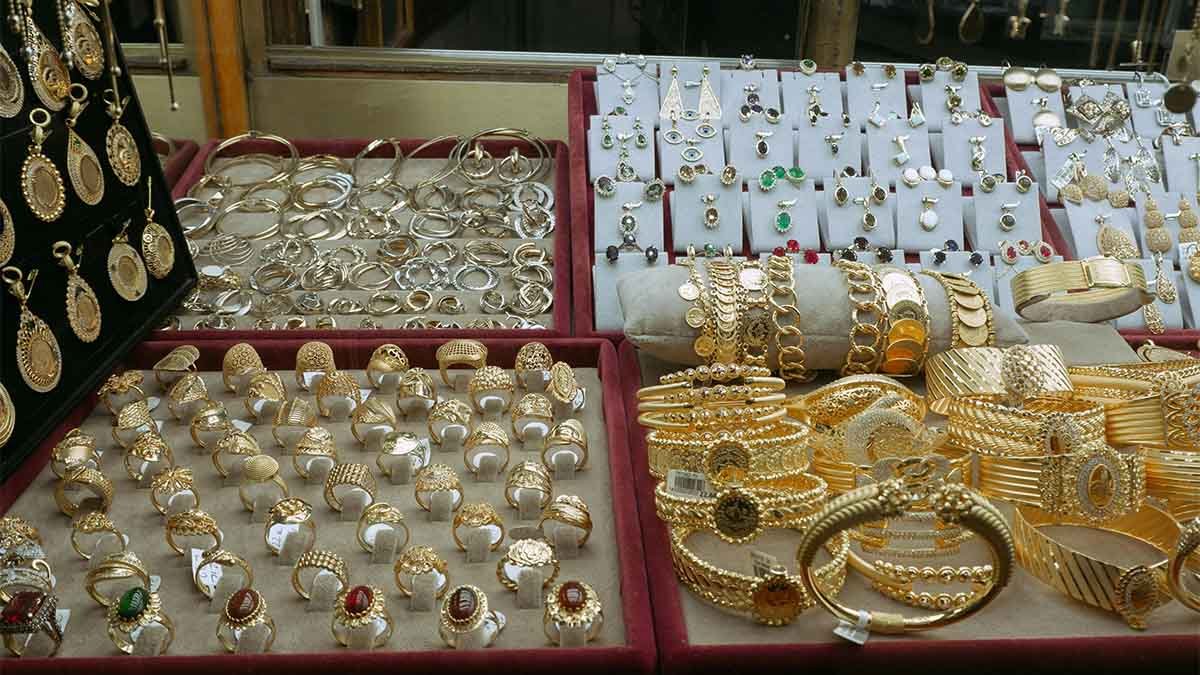
Pakistan holds some of the world’s finest gemstone reserves. The country produces emeralds from Swat, rubies from AJK, pink topaz from Katlang, sapphires from Nangimali, and peridot in volumes that could supply global markets for generations.
Yet for decades, almost none of this wealth reached its full value. That is now changing — driven by a surge in Chinese demand, a wave of Pakistani brands entering Chinese markets, and the most comprehensive gemstone policy reform in Pakistan’s history.
Pakistan’s Gemstone Wealth — A World-Class Resource Base
Pakistan is home to the world’s fifth-largest high-quality gemstone reserves, with deposits spread across Khyber Pakhtunkhwa and Gilgit-Baltistan. The country boasts an impressive array of precious stones, including Swat’s emerald, Mardan’s topaz, Mohmand’s nephrite, and Azad Jammu and Kashmir’s ruby.
Experts estimate that the country can annually export 800,000 carats of ruby, 87,000 carats of emerald, and five million carats of peridot, translating into millions of dollars in foreign exchange earnings.
Capitalising on its vast natural resources, low labour costs, skilled craftsmen, and growing national and international demand, Pakistan has the potential to become a regional hub for precious stone cutting and jewellery manufacturing.
A 47% Export Surge to China — The 2023 Signal
Pakistan’s exports of gems and precious stones to China saw a 47% increase in 2023, indicating growing recognition of the quality of Pakistani gemstones among Chinese buyers.
That year, the total import and export value of China’s jewelry industry reached a record high of $145.334 billion, an increase of 8.62% year-on-year.
Pakistani colored gemstones are gaining popularity in China’s jewelry market. Companies like WINZA have been at the forefront, operating branded stores and offices in major Chinese cities including Shanghai, Guangzhou, and Shenzhen.
Ahmed Aqeel, head of WINZA, noted that younger consumers increasingly prefer colored gemstones such as rubies and sapphires for weddings and personal collections — pointing to a maturing and diversified Chinese jewelry market offering significant opportunities for Pakistan’s gemstone industry.
Pakistan at Chinese Exhibitions — 2024 and 2025
WINZA’s Guinness World Record Kunzite at CIIE 2025
Pakistan’s jewellery industry made a landmark debut at the 8th China International Import Expo (CIIE) in Shanghai. The spotlight fell on WINZA, presenting the world’s largest gem-quality kunzite — a 3,051-carat crystal officially recognised by Guinness World Records. The remarkable gemstone, sourced from northern Pakistan, highlights the country’s growing potential in luxury exports.
In seven years, WINZA’s Chinese market share rose from 20% to over 50%, with annual growth averaging 30%. Since the second phase of the Pakistan-China Free Trade Agreement, gemstone exports have grown rapidly.
Pakistani Gems at China Nanjing Expo 2025
Around 10 Pakistani companies showcased their specimens at the 2025 China Nanjing (International) Mineral, Gemstone & Fossil Expo, which ran from May 15 to 19. The expo drew over 500 exhibitors from more than 50 countries, turning the 40,000-square-meter venue into a premier global platform.
Pakistani participants presented emeralds, tourmalines, topaz, morganite, quartz, aquamarine, pyrite, marble, and onyx sourced from Gilgit-Baltistan, Balochistan, and Khyber Pakhtunkhwa.
A Pakistani Jewellery Brand Enters Zhejiang
A Pakistani jewellery brand officially entered China’s Zhejiang province through a strategic business alliance. The agreement was signed in Hangzhou and aims to introduce culturally rich and heritage-inspired jewellery designs, particularly targeting the growing wedding and premium jewellery segments.5
Events like the China International Import Expo provide Pakistani gemstone exporters with direct access to Chinese consumers, helping them understand regional preferences and adapt their offerings. The growing focus on quality and value in the Chinese market positions colored gemstones as a high-demand niche.
The Crisis Beneath the Opportunity
$5 Billion Lost to Smuggling
Pakistan has lost $5 billion worth of gemstones due to smuggling, a parliamentary committee on commerce disclosed during a meeting chaired by Atif Khan, head of the National Assembly’s subcommittee on commerce.
Pakistan, the world’s 8th largest gemstone producer, has a formal export record of only $8 million — against a historical peak of $1.4 billion. Gemstones are smuggled to Thailand, where they are cut and polished, generating billions in revenue for that country.
Without proper regulation, Pakistan’s gemstone sector is estimated to be losing a staggering $2 billion annually, according to the United Nations Development Programme.
The Raw Export Problem
ICCI president Ahsan Zafar Bakhtawari noted that roughly 80% of Pakistan’s gemstone exports leave the country in raw form, pointing to the lack of in-country cutting, certification, and internationally recognised quality standards.
A special PM committee concluded that 30–40% of gemstones are lost due to non-scientific blasting and drilling — value destroyed before the stone even reaches a market.
High-quality cutting significantly enhances the value of gemstones, yet Pakistan’s cutting sector remains underdeveloped. The equipment and methods used are outdated, resulting in lower-quality cuts that cannot compete in international high-end markets.
Pakistan’s First National Gemstones Policy
$1 Billion Export Target Within Five Years
Pakistan has granted in-principle approval to its first national policy framework for gemstones and precious stones, aiming to reform the sector, align it with international standards, and lift annual exports to $1 billion within five years.
The policy prioritises private sector participation, particularly encouraging young entrepreneurs, and seeks to shift Pakistan away from exporting raw stones toward domestic cutting, polishing, and branding — an approach expected to significantly increase export earnings while generating skilled jobs.
National Warranty Office and Centres of Excellence
The policy framework includes geological mapping to accurately assess reserves, the establishment of internationally accredited laboratories and certification regimes, and the creation of a dedicated authority to regulate and promote the sector. The government plans to set up a National Warranty Office and at least two centres of excellence this year to support training, research, and value-added processing.
The federal cabinet has also approved a draft act for the establishment of a dedicated Gems & Jewelry Authority, expected to bring regulation, certification, and industry recognition to the sector.
Peshawar Gemstone City and Structural Reform
One of the most promising structural developments is Peshawar Gemstone City — an initiative designed to revolutionise the trade landscape of Namak Mandi, Peshawar. The project envisions a state-of-the-art facility providing training, certification, cutting, polishing, and marketing support to traders and artisans. Modern machinery will ensure Pakistan’s gemstones meet international standards, increasing their value and appeal.
At the heart of Pakistan’s gemstone industry lies Namak Mandi, a historic market that handles approximately 70% of Pakistan’s undocumented gemstone trade.
The government also introduced the National Minerals Harmonisation Framework 2025 at the Pakistan Minerals Investment Forum — a comprehensive policy designed to simplify investment procedures and create a more investor-friendly regulatory climate across the mining sector.
What CPEC Brings to the Equation
Under the trade bridge established by CPEC, the exchange of technology and equipment is inevitable.
Infrastructure projects under the Belt and Road Initiative, such as improved port facilities, are further enhancing trade efficiency and reducing shipping costs, enabling smoother access to Chinese consumers.
Chinese investment is proposed for setting up lapidaries and special industrial parks for cutting, polishing, faceting, and carving of gemstones. The Chinese government may also invest in extraction, as most gemstones are wasted due to indiscriminate blasting. CPEC and Gwadar Port will play a key role in enhancing the export of gemstones if gems and jewellery special industrial parks are established along the CPEC route.
Pakistan has the geological wealth. China has the processing infrastructure, consumer base, and financial depth. Between the January 2026 national policy approval, the $1 billion export target, the Peshawar Gemstone City initiative, and a new wave of Pakistani brands entering Chinese markets from Shanghai to Zhejiang — the China-Pakistan gems and jewellery sector is no longer just a story of potential. It is becoming a story of action.



Join the Conversation
Share your thoughts, questions, or feedback below.