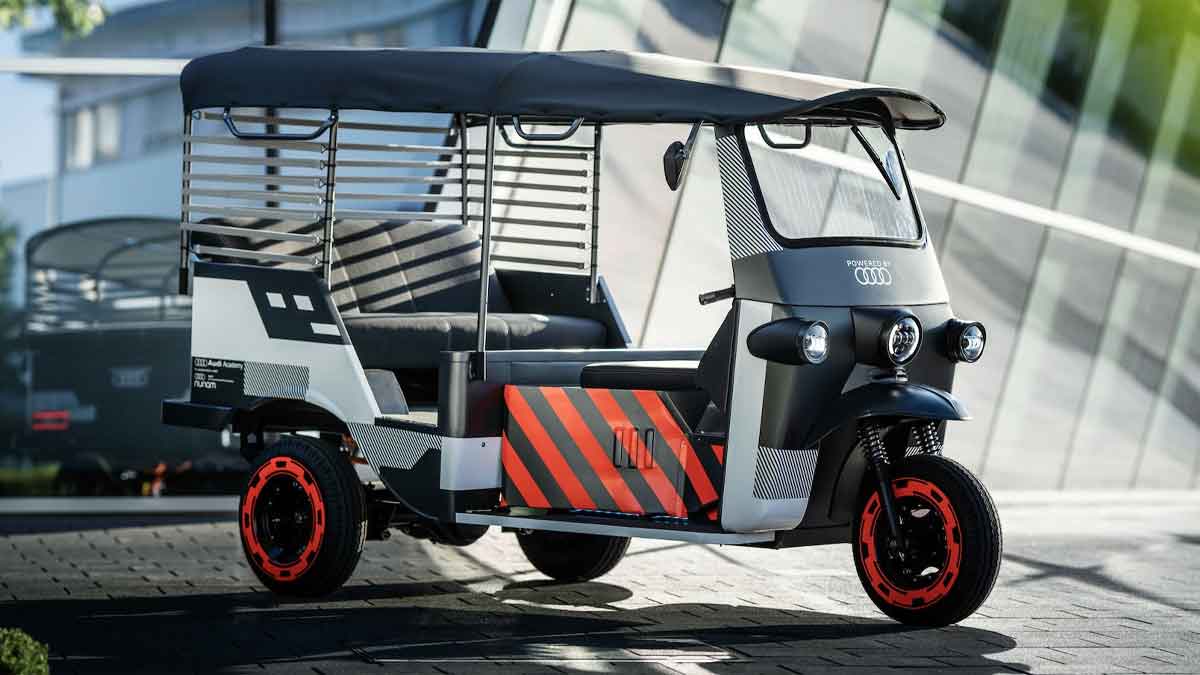
Pakistan’s transport sector is undergoing a historic transformation as the National Electric Vehicle (NEV) Policy 2025-30 enters full implementation. In March 2026, the shift from traditional combustion engines to electric three-wheelers has reached a tipping point, fueled by massive government subsidies and aggressive localization.
The federal government’s commitment to green mobility is no longer just a roadmap. It is a multi-billion rupee reality designed to reduce the national import bill and combat urban pollution. For rickshaw drivers and fleet operators, 2026 represents the most financially viable year to transition to electric power.
The NEV Policy 2025-30 and Subsidies
The cornerstone of this revolution is the National Electric Vehicle Policy 2025-30. Launched in June 2025, this policy targets a 30% market share for electric vehicles by 2030. To achieve this, the government announced a five-year subsidy package exceeding PKR 100 billion ($353 million) specifically for electric bikes and rickshaws.
For the 2025-26 fiscal year, the government allocated PKR 9 billion to facilitate the immediate adoption of energy-efficient transport. The most significant direct benefit for buyers is the PKR 400,000 subsidy per electric three-wheeler. This intervention has effectively slashed the upfront cost of high-quality electric rickshaws, making them competitive with traditional petrol and CNG models.
Interest-Free Financing Schemes
The State Bank of Pakistan (SBP) has introduced a specialized “Cost Sharing Scheme for Electric Rickshaws and Loaders” to remove financial barriers for low-income drivers. This scheme aims to finance approximately 3,171 units in its current phase.
Read more: Female teachers of Sialkot to get e-bikes
Key Financial Terms for 2026:
| Feature | Details |
|---|---|
| Loan Limit | Up to PKR 880,000 per unit |
| Markup Rate | 0% (Interest-Free)– Government covers full markup |
| Repayment Period | Maximum 3 years (36 monthly installments) |
| Equity Ratio | 80:20 (Debt-to-Equity) |
| Capital Subsidy | Up to PKR 200,000 (Can cover the equity portion) |
Under this structure, many drivers can acquire an electric rickshaw with zero upfront payment if the capital subsidy covers their 20% equity requirement. Fleet operators have also been prioritized, with 30% of the total quota reserved for commercial entities to encourage large-scale adoption in cities like Lahore and Karachi.
Sazgar Engineering: Leading Local Production
Sazgar Engineering Works Limited remains the dominant force in the domestic market. After receiving the first e-rickshaw manufacturing license in early 2024, the company has completed an PKR 11.5 billion expansion plan as of March 2026.
Production capacity has surged from 40 units to nearly 120 units per day. Sazgar’s 2026 lineup, including the updated eVe model, features a 3kW electric motor and range options between 130 km and 210 km on a single charge. The company is now rolling out local assembly (CKD) variants that are optimized for Pakistan’s unique road conditions and high-temperature environments.
Electric Rickshaw Prices in Pakistan (2025-2026)
Market prices have stabilized due to the 90% localization of components for two- and three-wheelers. While high-end models initially cost over PKR 1 million, local manufacturing has brought the base price down significantly.
Estimated Market Prices (Pre-Subsidy):
- Sazgar eVe 2025/2026: PKR 490,000 – 520,000
- Green Wheels Electric: PKR 450,000 – 480,000
- Super Power (SP E-Rickshaw): PKR 430,000 – 460,000
- United Bravo Electric: PKR 470,000 – 510,000
- Sazgar Shuttle EV (125AH): PKR 1,330,000 (Premium long-range model)
With the PKR 400,000 government subsidy applied to eligible models, the effective cost for an entry-level electric rickshaw can drop to as low as PKR 50,000 to PKR 100,000, excluding registration and insurance.
Localization and the 90% Milestone
The government’s push for a 90% localization rate within two years of the 2025 policy is nearing completion. As of early 2026, over 90% of parts for three-wheelers are manufactured within Pakistan.
While core technology such as motor controllers and advanced Lithium-ion battery cells are still partially imported, the assembly of battery packs and the fabrication of chassis and motors are now handled by local SMEs. This shift has reduced the dependency on expensive CKD kits from China, which previously cost nearly double the current local production price.
Infrastructure and City-Wide Adoption
Lahore has emerged as the national hub for electric mobility. Following a successful pilot project in late 2025, the Punjab government has integrated hundreds of electric rickshaws into the city’s transport grid.
Charging infrastructure is expanding rapidly. The initial phase of the NEV policy has seen the establishment of 40 dedicated charging stations nationwide, with new building codes now mandating EV charging points in commercial plazas. In cities like Swat and Mingora, local authorities are also introducing electric fleets to combat smog and environmental degradation.
Strategic Outlook for Drivers
The transition to electric power offers a clear economic advantage. Despite a higher initial purchase price for premium long-range models, the daily running costs are approximately 70% lower than petrol-powered alternatives.
Drivers using the PAVE (Pakistan Accelerated Vehicle Electrification) program report significant increases in take-home income due to the elimination of fuel costs and reduced maintenance requirements. With zero registration tolls and interest-free installments, the barrier to entry has never been lower.
As Pakistan moves toward its 2030 target of 2 million EVs on the road, the electric rickshaw stands as the most successful segment of the green transition. The combination of legislative support, manufacturing scale, and aggressive financial incentives has secured the electric three-wheeler’s place as the future of Pakistani urban transport.