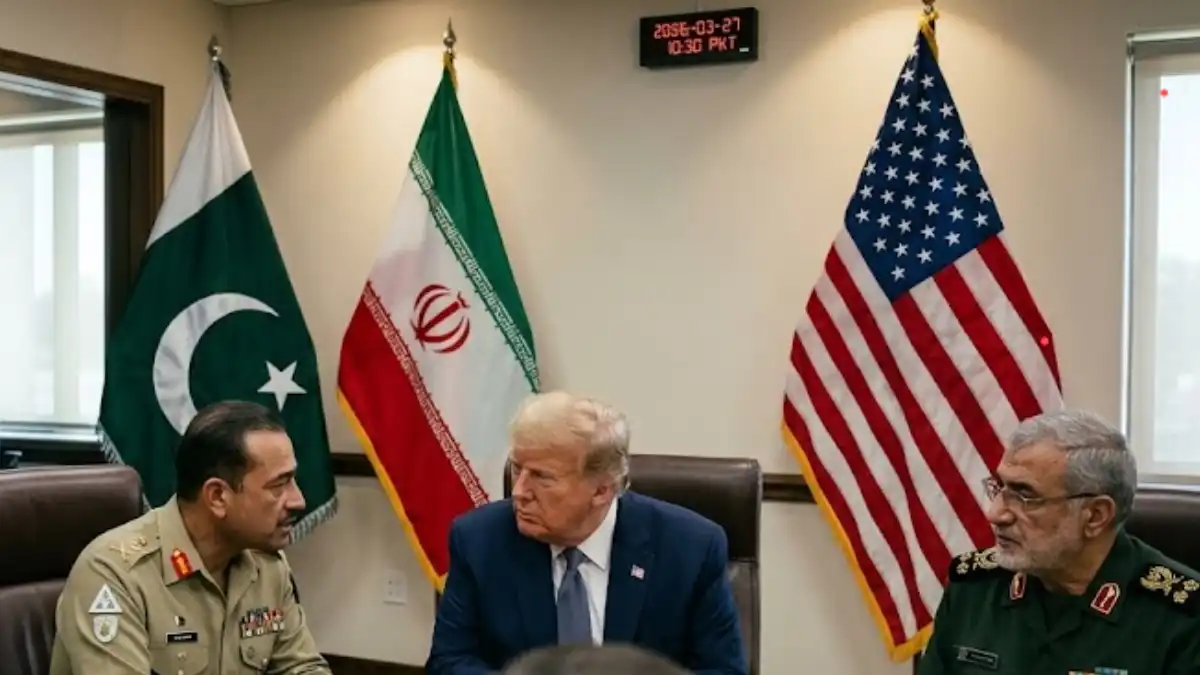
Discover the leaked details of the US 15-point proposal to Iran — and why Pakistan is now at the center of global diplomacy, with Asim Munir playing a key behind-the-scenes role.
In March 2026, Pakistan has emerged as the “indispensable bridge” in the fast-escalating tensions between the United States and Iran. While the world watches military movements in the Middle East with growing fear, a quiet but high-stakes diplomatic effort is unfolding in Islamabad.
At the heart of this effort, Pakistan is using its rare advantage — strong ties with both Washington and Tehran — to open channels of dialogue where others cannot. Unlike other regional players, Pakistan carries no direct baggage of the conflict, making it a trusted ground for negotiations.
Leveraging its position as a nuclear-armed neighbor to Iran and a long-standing strategic partner of the US, Pakistan is now facilitating a crucial 15-point peace proposal aimed at stopping the war before it spreads further.
Top diplomats from key regional powers have already gathered in Islamabad, signaling that the world is now looking toward Pakistan to lead the path to peace.
As tensions rise and trust remains fragile, one thing is clear — Pakistan is no longer on the sidelines. It is actively shaping the outcome of one of the most dangerous global conflicts today.
US 15-Point Proposal for Iran: A Ray of Hope
The most significant development in recent weeks is the clear manifestation of the official confirmation that Pakistan is relaying a 15-point proposal from Washington to Tehran.
• The Framework: On March 26, 2026, Pakistan’s Foreign Minister Ishaq Dar confirmed that these indirect talks are active. The proposal reportedly covers nuclear enrichment monitoring, regional security guarantees, and a framework for halting the current cycle of strikes.
• The “Islamabad Moment”: Prime Minister Shehbaz Sharif has publicly offered Islamabad as a neutral venue for face-to-face talks. For the first time in years, there is a tangible “off-ramp” being discussed, even as both sides maintain a tough public stance.
It sounds like you’re looking for the “no-nonsense” breakdown of what’s actually on the table. When Foreign Minister Ishaq Dar and the Pakistani leadership talk about this 15-point proposal, they are essentially carrying a “deal or bust” folder from Washington to Tehran.
Here is the plain-English version of what is in those 15 points and, more importantly, why both sides are still gritting their teeth.
Read more: Strait of Hormuz Closed: Pakistan Is Facing Fuel Shortages, Auto Industry Shock & Rising Prices
What are those 15 points in a US 15-point proposal for Iran?
1. Stop the Enrichment: It is mentioned that Iran must need to cease its uranium enrichment at 60% immediately.
2. Inspectors Back In: UN inspectors (IAEA) get 24/7 access to all nuclear sites.
3. The “Red Line” on Nukes: A written keep on guaranteeing that Iran will never pursue a nuclear weapon.
4. Ceasefire in the Shadows: An end to “proxy” attacks on US bases in Iraq and Syria.
5. Maritime Peace: No more seizing tankers or hitting ships in the Red Sea.
6. Ballistic Break: A pause on testing long-range missiles that can reach Europe or beyond.
7. Prisoner Swap: A “all-for-all” exchange of detainees held by both countries.
8. Sanctions Relief (Step 1): The US unfreezes specific Iranian oil assets for humanitarian use.
9. The “Islamabad Channel”: Establishing a permanent, direct hotline through Pakistan to stop accidental war.
10. Regional Dialogue: Iran must sit down with Gulf neighbors (Saudi Arabia/UAE) to discuss security and promote a dialogue.
11. Trade Opening: Lifting sanctions on Iranian civilian aviation and medicine.
12. No Cyber War: Both sides agree to stop hacking each other’s power grids and infrastructure.
13. Drone Export Ban: Iran must have to stop transferring “Shahed” style drones to conflict zones (like Russia/Ukraine).
14. US Troop Posture: The US agrees not to increase troop levels in the Middle East during the talks.
15. The Final Summit: A sheer dedication to a face-to-face meeting between leaders in a neutral city (likely Islamabad).
So, What’s the Problem with these US 15-points proposal for Iran?
If it sounds simple, why hasn’t it been signed? Here is the “human” side of why this proposal is a mess:
• The “Who Goes First?” Game: This is the biggest and arduous problem. Iran says, “Lift the sanctions first, then we stop the machines.” The US says, “Stop the machines first, then we will keep talk about money.” Neither side has a desire to look weak to their people back home.
• Trust is Dead: After the US pulled out of the previous 2015 deal, Tehran feels like a signature from Washington is not worth the paper it’s printed on. They want “ironclad guarantees” that the next US president won’t just cancel it again.
• The “All or Nothing” Trap: The US desires to include missiles and proxies (Points 4 & 6). Iran views those as their “insurance policy.” Giving them up feels like walking into a dark alley without a flashlight to them.
• The Spoilers: There are very powerful groups in both countries (and allies like Israel) who believe any deal is a “sell-out.” Pakistan is basically trying to hold a door open while masses on both sides are trying to kick it shut.
How Pakistan Fits In
Pakistan is not just a mailman here. They are the “translator.” Sometimes the US says something that sounds like a threat, and Pakistan rephrases it to Tehran as a “firm request.” It’s about softening the blow so both sides can keep talking without losing face.
Why Pakistan? The Unique Leverage
You might wonder why a country facing its own economic hurdles is at the center of this storm. The answer lies in a rare combination of “cards” that no other nation holds:
1. The Geographical Neighbor: Sharing a 900km border with Iran means Pakistan has a direct “skin in the game.” Any regional spillover affects Pakistan’s security and economy immediately.
2. The “Trusted Messenger” Status: Since 1992, Pakistan has represented Iranian diplomatic interests in the U.S. through an interest’s section in its Washington embassy.
3. Military-to-Military Ties: Field Marshal Asim Munir has developed a notable rapport with U.S. President Donald Trump. Their direct communication, combined with Munir’s visits to Tehran, provides a backchannel that bypasses traditional bureaucratic red tape.
4. Domestic Demographics: Hosting the world’s second-largest Shia population, Pakistan has a deep cultural and religious connection to Iran, giving its mediation efforts a layer of “soft power” and local legitimacy.
The Challenges: Walking the Tightrope
Despite the optimism, the path to peace is riddled with obstacles. Iran has publicly denied “direct negotiations,” labeling the exchange as merely a “delivery of messages.” Meanwhile, regional actors like Israel remain skeptical, fearing that a pause in military pressure might allow Tehran to regroup.
Pakistan also has to balance its Strategic Defense Pact with Saudi Arabia (signed in late 2025) while keeping Tehran’s trust. It’s a masterclass in “balancing act” diplomacy—trying to stop a regional war that could escalate sectarian tensions at home while reasserting its relevance on the world stage.
The Global Context: A Coordinated Effort
Pakistan isn’t acting alone. It is part of a “Mediation Trio” including Turkey and Egypt.
• Turkey is providing a similar geographical bridge.
• Egypt is offering a connection to the Arab world and Israel.
Together, these middle powers are proving that in a polarized world, the most effective solutions often come from the middle, not the margins.
FAQs
Is Pakistan currently hosting direct US-Iran talks?
As of March 27, 2026, talks remain indirect. Pakistan is relaying messages and proposals between the two capitals. However, Prime Minister Shehbaz Sharif has formally offered to host direct negotiations in Islamabad if both parties agree.
What is the US 15-point proposal for Iran mentioned by Ishaq Dar?
It is a framework shared by the U.S. intended to end the current conflict. While the full text is confidential, it includes a “monitored framework” for uranium enrichment and steps to stop attacks on energy infrastructure.
Why does the US trust Pakistan to mediate?
The U.S. recognizes Pakistan’s deep understanding of the Iranian leadership. President Trump noted in 2025 that Pakistan “knows Iran better than most.” Additionally, Pakistan’s lack of U.S. military bases makes it a more “neutral” ground in the eyes of Tehran.
How does this affect Pakistan’s economy?
Successful mediation is going to stabilize global energy markets and prevent a surge in oil prices, which is vital to push Pakistan economy to the pinnacle of success. It also increases Pakistan’s standing with international lenders and strategic partners.