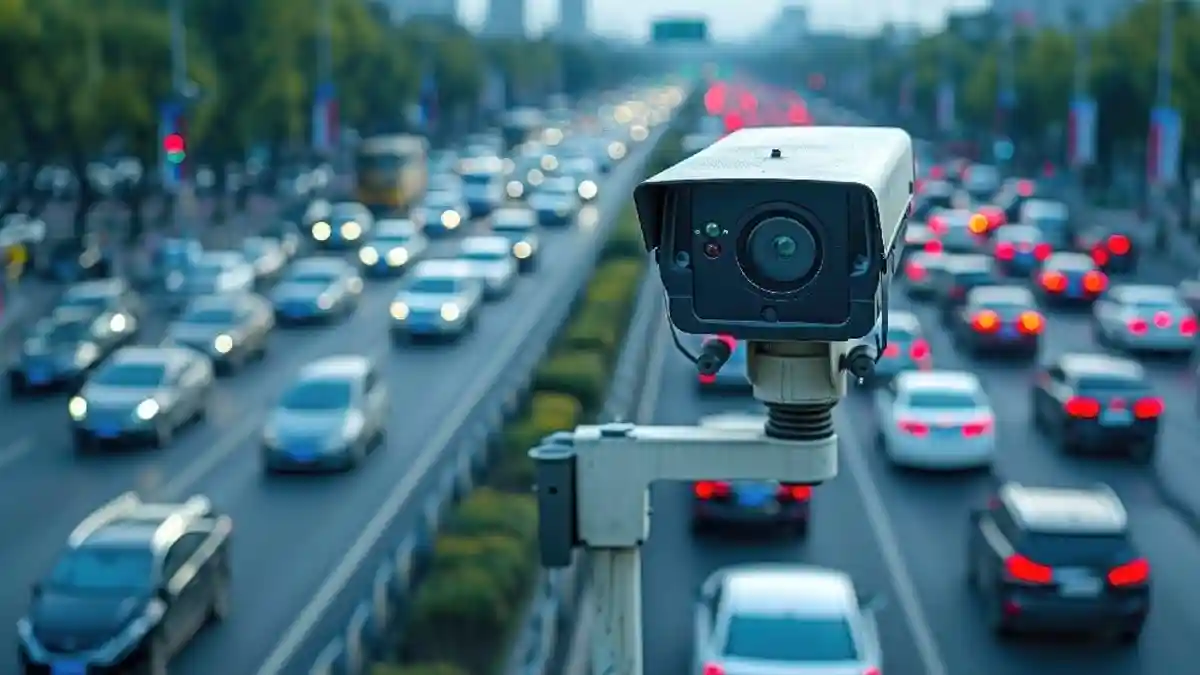
Khyber Pakhtunkhwa has achieved a historic milestone in urban security with the formal inauguration of the Peshawar Safe City Project in March 2026.
Chief Minister Muhammad Sohail Afridi led the ceremony, marking the end of a nearly two-decade wait for a centralized surveillance system.
The project represents a shift toward technology-driven policing, designed to counter modern security threats and streamline traffic management across the provincial capital.
The Peshawar Milestone: A Rs 2.23 Billion Investment
The first phase of the initiative in Peshawar was completed at a total cost of Rs 2.23 billion.
This investment has facilitated the installation of 711 high-definition surveillance cameras at 133 strategic and sensitive locations.
The system is managed through a state-of-the-art Command and Control Center (CCC) established at the Malik Saad Shaheed Police Lines.
This hub integrates urban surveillance, emergency response, and digital forensics into a single unified platform.
Status Update: Southern Districts Near Completion
While Peshawar is now live, parallel work in the high-risk southern districts is reaching its final stages.
Projects in Dera Ismail Khan, Bannu, and Lakki Marwat are reported to be over 90% complete as of early March 2026.
Authorities expect these systems to become fully operational within the next 40 to 45 days.
The Southern District expansion involves a separate projected budget of Rs 6 billion to address unique security challenges in the region.
| District | Target Locations | Camera Coverage |
|---|---|---|
| Dera Ismail Khan | 88 Locations | 400+ Cameras |
| Bannu | 76 Locations | 300+ Cameras |
| Lakki Marwat | 47 Locations | 250+ Cameras |
Advanced Surveillance and AI Integration
The 2026 rollout introduces several cutting-edge technological features previously unavailable to provincial law enforcement.
The network utilizes Artificial Intelligence (AI) for automated vehicle tracking and the identification of known offenders.
Furthermore, the system includes 20 smart surveillance vehicles and a fleet of drones, including long-range and thermal imaging units.
For public safety, 68 panic buttons have been installed at high-traffic points, allowing citizens to alert the CCC instantly during emergencies.
Traffic management has also been digitized through an e-challan system, which automatically penalizes violations recorded by the camera network.
Strategic Expansion: Karak, Tank, and North Waziristan
The provincial government is not stopping at the initial four districts.
PC-1 documents have already been finalized for the next phase, which includes Karak, Tank, and North Waziristan.
The expansion strategy for these areas focuses on securing entry-exit points and monitoring sensitive tribal border corridors.
Karak will see 40 cameras, Tank will receive 45, and North Waziristan is slated for 37 high-priority installations.
The Safe Cities Authority Act and Legal Framework
To ensure the long-term sustainability of the project, a new legislative framework is being enacted.
The Khyber Pakhtunkhwa Safe Cities Authority Act will establish a dedicated body to manage the infrastructure.
A key provision of this Act will mandate the integration of private surveillance systems from commercial plazas and hotels.
By linking private CCTV feeds to the central network, the police aim to create a comprehensive digital map of urban centers.
This legal mandate ensures that all new commercial projects contribute to the provincial security grid by default.
Future Outlook: Provincial Integration by 2028
Following the successful launch in Peshawar and the southern districts, the government plans to move into all divisional headquarters.
Cities including Mardan, Swat, Abbottabad, and Kohat are scheduled for implementation after June 2026.
The ultimate goal is to have a fully integrated digital security network across the entire province within the next two years.
This initiative is expected to reduce crime rates significantly and restore public confidence in the state’s ability to maintain order.
By transitioning from manual patrolling to digital oversight, the KP Police are setting a new standard for provincial security in Pakistan.
The integration of body-worn cameras and anti-drone systems further solidifies this project as the most advanced of its kind in the region.