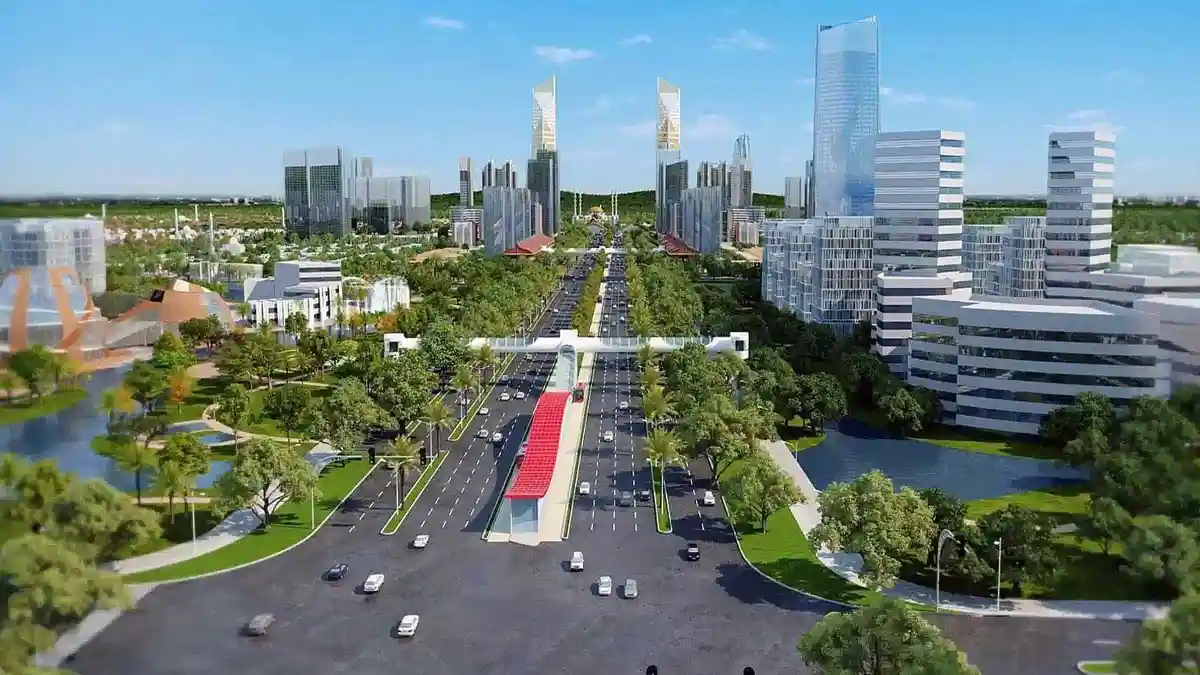
The transformation of Islamabad into Pakistan’s first government-led smart city has reached a critical implementation phase. Moving beyond initial pilot announcements, the project now integrates high-tech infrastructure with strict environmental regulations and digital governance.
Under the updated “Project 2027” roadmap, the Capital Development Authority (CDA) and the Ministry of IT are working to redefine urban living. This initiative serves as a blueprint for future digital hubs across Pakistan.
The Evolution of Project 2027
Originally launched in 2025, the Islamabad Smart City initiative was designed as a high-speed digital corridor. While the initial goal was to fiberize the city within 8 months, the scope has expanded into a more comprehensive multi-year strategy.
The current focus is on the “Project 2027” vision. This timeline targets the full integration of city utilities, waste management, and street lighting into a centralized digital dashboard by 2027.
High-Speed Fiberization
Fiber-to-the-Home (FTTH) and dedicated government broadband lines are currently being laid across core sectors. This infrastructure connects schools, police stations, and hospitals, ensuring that public services operate on a unified, high-speed network.
CDA Infrastructure Modernization
The CDA has shifted its focus from traditional civil works to “smart” urban design. This includes the installation of sensors in new road projects to monitor structural health and traffic volume in real-time.
Read more: All phones in Punjab now connected with Safe City control room
Smart Mobility and Environmental Mandates
A significant update in 2026 is the intersection of environmental policy and smart technology. To combat rising pollution levels, the government has introduced the Islamabad New Vehicle Emission Testing Rules 2025.
These rules mandate that every vehicle operating within the capital must undergo periodic carbon emission testing. Failure to comply results in automated penalties, demonstrating how the smart city model enforces public health standards.
Integration with Pak ID
The most innovative aspect of this rollout is the integration with the Pak ID Smart Transport System. Vehicle fitness certificates and emission data are now linked directly to a citizen’s national identity.
This link enables an automated E-challan system. If a vehicle fails an emission test or violates traffic laws, the system automatically registers the fine against the owner’s Pak ID, streamlining revenue collection and legal compliance.
AI-Managed Traffic Flow
Core commercial sectors are now seeing the deployment of sensor-laden streets. These sensors feed data into an AI-managed traffic system that adjusts signal timings based on real-time congestion, reducing average commute times by an estimated 15%.
Digital Health and “One Patient, One ID”
The healthcare sector is undergoing a massive digitalization through the “One Patient, One ID” system. This initiative creates a centralized medical record for every resident, accessible across all public hospitals and Basic Health Units (BHUs).
Telemedicine and BHU Connectivity
In rural outskirts of Islamabad, BHUs are now equipped with high-speed internet to facilitate telemedicine. Patients can consult with specialists in the city center via high-definition video links, ensuring that quality healthcare is not limited by geography.
Education and the Global Tech Partnership
Education remains a primary pillar of the smart city framework. The government has successfully introduced EdTech and AI-based learning modules for students from kindergarten to grade 6.
Training the Future Workforce
A cornerstone of the 2026 strategy is the massive vocational training program. In partnership with Google, Huawei, and Microsoft, the government is on track to train 500,000 youth in advanced IT skills.
These skills include:
- Cloud Computing and Data Analytics.
- Artificial Intelligence and Machine Learning.
- Cybersecurity and Network Administration.
This initiative ensures that as the city’s infrastructure becomes smarter, the local workforce is prepared to manage and innovate within that ecosystem.
Distinguishing the Pilot Project
It is important to distinguish the government-led Islamabad Smart City from private real estate ventures like Capital Smart City. While the latter is a residential development, the government project is a systemic upgrade of the capital’s entire administrative and social infrastructure.
The government-led project focuses on:
- Public Safety: Integrating Safe City cameras with AI for better crime prevention.
- Transparency: Moving all CDA and Excise services to digital portals.
- Sustainability: Using smart grids to reduce energy consumption in public buildings.
Strategic Economic Impact
The transition to a smart city is expected to boost Islamabad’s urban economy significantly. By providing a stable, high-tech environment, the city is attracting more international tech firms and startups.
The CDA has projected that the efficiency gains from digital governance and smart utilities could save the city millions in operational costs by the 2028 completion phase. These savings are earmarked for further expansion of the smart model to other major Pakistani cities.
Looking Ahead to 2028
As Islamabad nears the midpoint of its “Project 2027” timeline, the focus remains on execution. The integration of the Pak ID system with daily transport and environmental compliance marks a shift toward a truly data-driven society.
Residents can expect further digital updates to waste management and water distribution systems in the coming months. Islamabad is no longer just a capital city; it is becoming a digital laboratory for the future of Pakistan.