
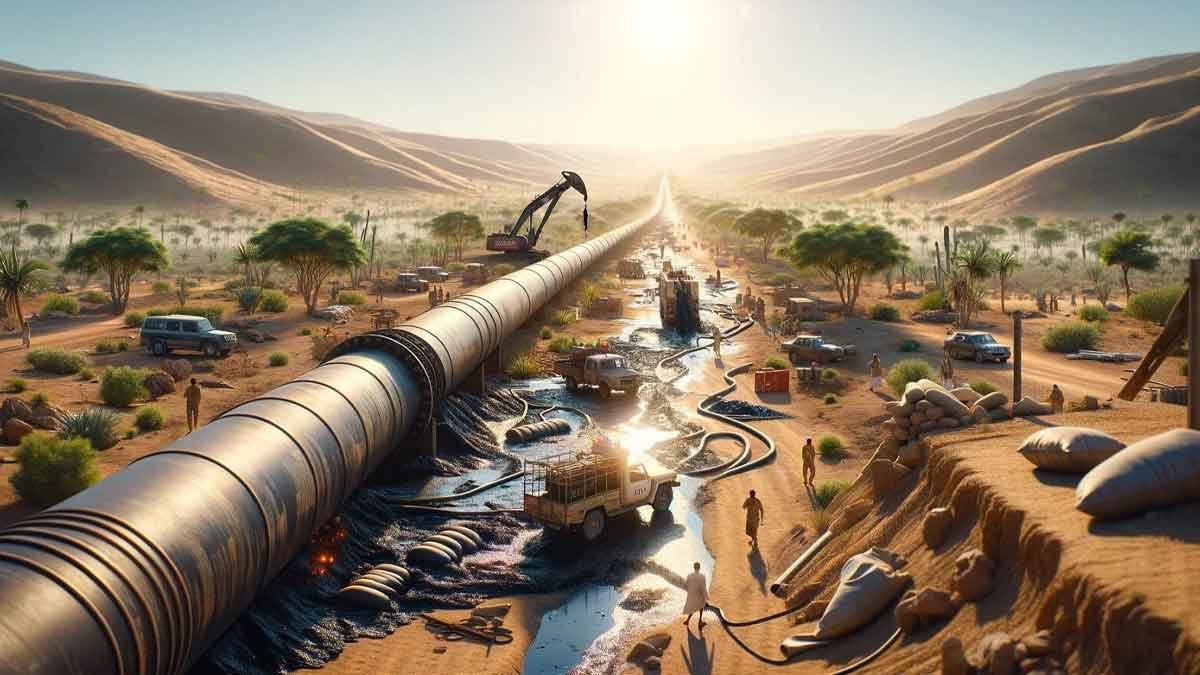
Pakistan has cleared a major energy infrastructure project that could reduce the country’s dependence on oil tankers for transporting petrol and diesel to northern regions.
The approved project is the Machike–Thallian–Tarru Jabba White Oil Pipeline, a long-delayed fuel corridor connecting Punjab to Khyber Pakhtunkhwa. Reports describe the main pipeline as nearly 435km, while some project references put the full network length at around 477km when linked sections and connectivity options are included. The route will extend the existing white oil network from Machike near Lahore toward Tarru Jabba near Peshawar, passing through Thallian.
What Is the New White Oil Pipeline?
A white oil pipeline carries refined petroleum products such as motor gasoline and high-speed diesel. This project is designed to complete Pakistan’s south-to-north fuel backbone, allowing petroleum products to move from Karachi-linked networks toward the northwest more efficiently.
The pipeline will run in two main segments: Machike to Thallian and Thallian to Tarru Jabba, with possible connections to Attock Refinery, Chakpirana, and Faqirabad. Initial capacity is expected to be around 7 million tonnes per year, expandable to 10 million tonnes.
Will Oil Tankers Disappear From Roads?
Not completely — but their role could shrink sharply.
Pakistan has relied heavily on tanker trucks to move fuel across the country. Older sector data shows road transport accounted for about 59% of petroleum product movement, while pipelines handled around 37.7% and rail carried only 3.6%. The introduction of the earlier White Oil Pipeline in 2004 reportedly eliminated around 4,000 tanker trucks from high-speed diesel distribution.
The new pipeline is expected to reduce tanker traffic on long northern routes, especially for petrol and diesel moving toward Islamabad, Rawalpindi, Peshawar, and surrounding areas. However, tankers will still be needed for last-mile delivery from depots to petrol pumps.
Read more: Govt approves $300 million White Oil Pipeline with dollar-based guaranteed returns
Why This Matters for Pakistan
The biggest benefit is supply-chain stability. Road-based fuel transport is vulnerable to highway closures, accidents, congestion, theft, adulteration, and transit losses. Special Investment Facilitation Council (SIFC) says the pipeline will reduce transport costs, minimize fuel losses, and improve reliability in Pakistan’s fuel supply chain.
This also has a safety angle. Long-distance oil tanker movement is considered risky, especially on motorways and highways where accidents can cause fires, spills, and traffic disruption. Business Recorder reported that the project is specifically intended to reduce reliance on tanker movement toward northern Pakistan.
Who Is Behind the Project?
The project is being spearheaded by the Frontier Works Organisation, with support from Pakistan State Oil, PARCO, and Inter-State Gas Systems. Business Recorder also reported that the project company is Frontier Oil Company, with Azerbaijan’s state-owned SOCAR holding a 25% share.
Earlier financing details showed FWO’s project company seeking a local banking facility of up to Rs. 75.9 billion, with HBL appointed as lead arranger for the financing mandate.
Could It Reduce Fuel Prices?
The pipeline may not directly cut petrol prices at the pump overnight. Fuel prices in Pakistan depend on global oil rates, exchange rates, taxes, levies, and government pricing policy.
But over time, cheaper and safer transport can reduce logistics costs, fuel losses, and inefficiencies. If these savings are passed through properly, consumers could benefit indirectly.
The Bottom Line
Pakistan’s new oil pipeline will not remove every tanker from the road, but it can reduce the country’s dependence on long-distance fuel trucking.
If completed and managed well, the Machike–Thallian–Tarru Jabba pipeline could become one of Pakistan’s most important energy logistics projects — making fuel movement safer, cheaper, and more reliable.
FAQs
What is the length of Pakistan’s new oil pipeline?
Reports describe the main corridor as nearly 435km, while some references mention about 477km including linked sections and connectivity options.
What will the pipeline carry?
It will carry refined petroleum products, mainly petrol and high-speed diesel.
Will fuel tankers disappear completely?
No. Tankers will still be needed for last-mile delivery, but long-distance tanker movement could reduce.
Which areas will benefit most?
Punjab, Islamabad-Rawalpindi, and Khyber Pakhtunkhwa are expected to benefit from more reliable northern fuel supply.

Join the Conversation
Share your thoughts, questions, or feedback below.