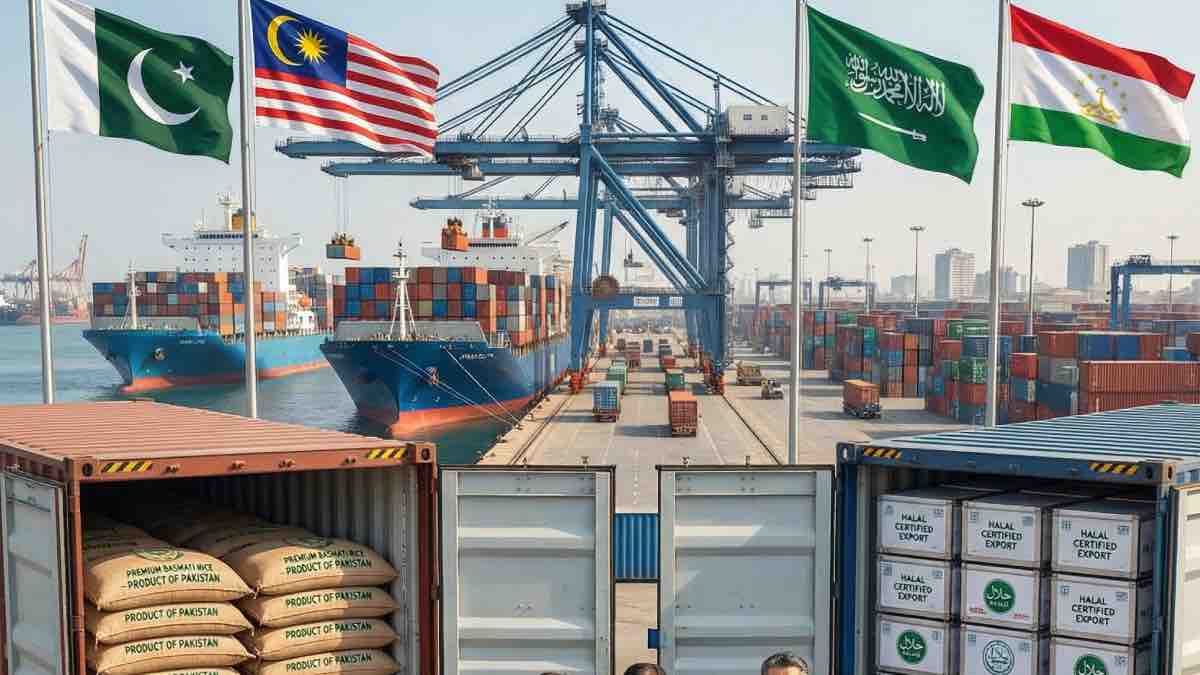
Malaysia, Saudi Arabia, Iran, and other Gulf countries are ready to import fresh meat and rice from Pakistan. Tajikistan has also shown strong interest and plans to import nearly 143,000 tonnes of meat from Pakistan.
Pakistan plans to expand its trade with Central Asia by exporting halal meat to Tajikistan. The planned exports total 143,000 tons and are valued at $14.5 million.
Pakistan’s Ambassador to Tajikistan, Muhammad Saeed Sarwar, shared this during a joint session with Pakistani media in Dushanbe.
He said there is strong potential for a Preferential Trade Agreement (PTA) between Pakistan and Tajikistan. According to the ambassador, trade liberalization will help strengthen regional economic ties.
He added that bilateral trade between the two countries could reach $300 million in the coming years. The halal meat sector, in particular, was highlighted as a key area for boosting trade between Pakistan and Tajikistan.
Malaysia, Saudi Arabia, Iran, Tajikistan Interested in Meat and Rice
Pakistan is seeing fresh opportunities to expand its agricultural exports, with countries such as Malaysia, Saudi Arabia, Iran, and Tajikistan expressing strong interest in importing Pakistani meat and rice. Federal Minister for National Food Security and Research Rana Tanveer Hussain said the growing demand highlights Pakistan’s untapped potential in value-added agriculture, livestock, and food processing.
Read more: Malaysia to import $200 million worth of Halal meat from Pakistan
Speaking at a high-level interactive session with exporters and industry stakeholders at the Federation of Pakistan Chambers of Commerce and Industry (FPCCI), the minister revealed that Tajikistan alone is interested in importing 143,000 tonnes of meat from Pakistan. Gulf countries and Malaysia, he added, are also ready to import fresh Pakistani meat and rice, provided international quality and regulatory standards are met.
Aligning with Global Standards is key
To fully benefit from these opportunities, Rana Tanveer Hussain kept on emphasizing the urgent need to upgrade Pakistan’s production processing and regulatory systems in line with international requirements.
He said modern slaughterhouses, improved cold-chain logistics, halal certification, and compliance with food safety standards are highly important to compete in global markets.
The meeting was held on the special instructions of Prime Minister Imran Khan to examine the reasons behind the recent slowdown in exports, particularly in the agriculture sector. It brought together exporters from meat, livestock, rice, fruits, vegetables, and other agri-based industries.
Exports Must Drive Economic Growth
The minister pointed out that despite improvements in economic and regional diplomacy, Pakistan’s total exports remain stuck around $30–32 billion, far below the country’s potential. “Exports are the backbone of our economy,” he said, noting that while remittances provide relief, they cannot substitute a strong export-led growth model.
He kept on showcasing empowering local farmers, processors, and exporters rather than relying heavily on imports. Strengthening domestic production, he said, would
- Create jobs
- Increase foreign exchange earnings
- Support long-term economic stability
Read more: Pakistan’s red meat and meat product exports hit record $512 million in FY24
Exporters are raising Key Concerns
Acting FPCCI President Saqib Riaz highlighted several challenges faced by exporters, including high tax rates, complicated regulations, and the unchecked conversion of fertile agricultural land into housing schemes. He stressed the need to provide security to farmland and promote agriculture-based industries instead.
FPCCI Vice President Tariq Jadon has sparked concerns regarding unbalanced Free Trade Agreements (FTAs) and losses caused by the closure of the Afghanistan border, which has disrupted regional trade routes.
Meanwhile, representatives from the fruit and vegetable sector called for better logistics and market access for products such as potatoes and kinnow, which have strong export potential.
Government guarantees Support
In response, Rana Tanveer Hussain assured exporters of full government support. He directed FPCCI and stakeholders to submit a consolidated list of issues and recommendations and declared that a follow-up meeting would be held for practical guidance and way forward.
The minister reaffirmed the dedication of the government to transforming Pakistan into a competitive, export-oriented economy, driven by agriculture, livestock, and value-added food production.
2 comments
[…] Read more: Pakistani meat and rice gain strong demand in Tajikistan, Malaysia, Saudi Arabia and Iran […]
[…] Read more: Pakistani meat and rice gain strong demand in Tajikistan, Malaysia, Saudi Arabia and Iran […]