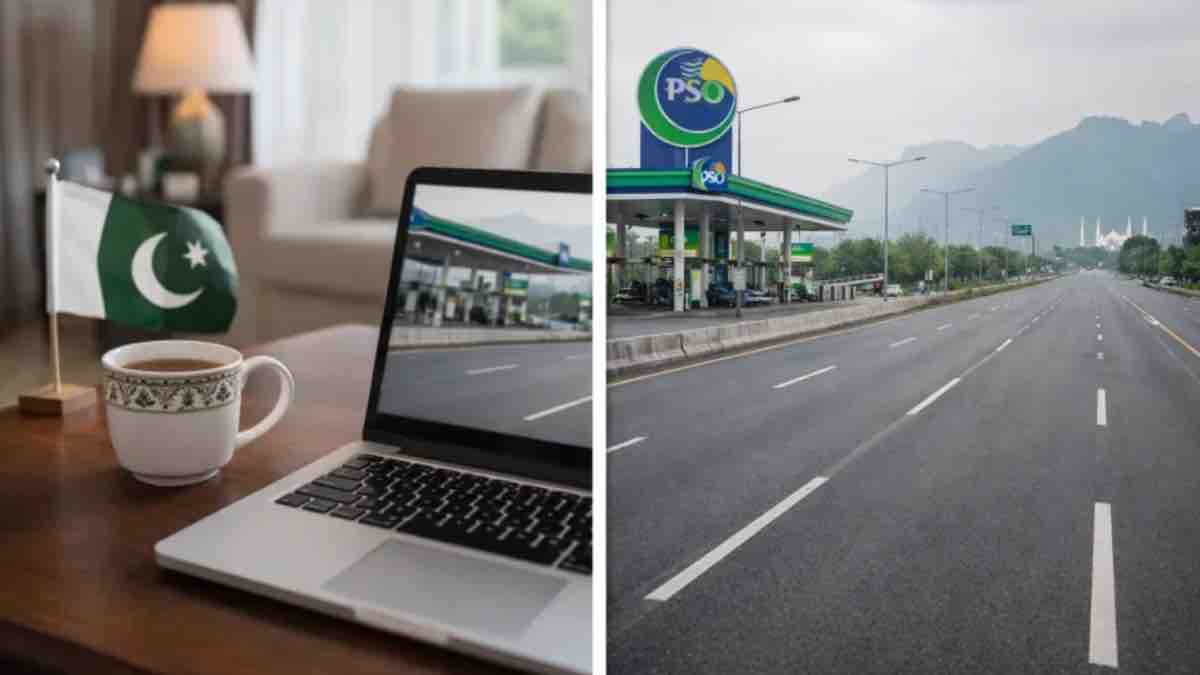
Discover how work from home and online classes save fuel in Pakistan. See why remote work is the best solution due to state of Hormuz closure.
Pakistan faces a serious energy challenge after tensions in the Middle East disrupted shipping routes near the Strait of Hormuz. This narrow sea route carries a huge portion of the world’s oil supply. Pakistan also depends heavily on fuel shipments that pass through this region.
When conflict disrupts this route, oil shipments slow down, and shipping costs rise sharply. As a result, petrol prices in Pakistan increase quickly, and national fuel reserves start shrinking.
At the moment, Pakistan holds roughly 26 days of fuel reserves. That means the country must reduce fuel consumption while new supply routes stabilize. Because of this situation, experts and policymakers now recommend an important strategy: work from home and online classes.
This step may look simple, but it can protect Pakistan’s fuel supply during this crisis.
Work From Home Can Reduce Daily Fuel Consumption
Millions of Pakistanis travel to offices every day. Cars, motorcycles, buses, and ride-hailing services burn large amounts of petrol during daily commuting.
However, when companies allow employees to work from home, daily commuting drops immediately.
For example:
- Employees no longer drive long distances to offices
- Traffic congestion decreases
- Fuel consumption drops across major cities
If large organizations shift even half of their workforce to remote work, Pakistan could save millions of liters of fuel every week.
This reduction gives the government more time to manage fuel imports and secure alternative supply routes.
Online Classes Can Save Fuel in Pakistan
Students also contribute significantly to daily fuel usage. Every morning, thousands of school vans, buses, and private vehicles transport students across cities.
When schools and universities move to online classes, these transportation systems temporarily stop operating.
This change produces three immediate benefits:
First, it reduces daily petrol consumption across urban areas.
Second, it lowers traffic pressure on major roads.
Third, it helps families save money on transport costs.
Because education transport forms a large part of urban traffic, online classes can quickly reduce fuel demand across the country.
Lower Fuel Demand Helps Control Inflation
Fuel prices are affecting almost every part of the economy. When petrol and diesel become expensive, transportation costs touch the sky. Consequently, food prices, delivery costs, and business expenses also rise.
However, if people reduce fuel consumption through remote work and digital education, demand for petrol falls.
Lower demand helps stabilize prices and reduces pressure on the national economy.
In simple words, every liter of petrol saved by a worker or student helps protect Pakistan from deeper economic problems.
Read more: https://www.pediastan.com/articles/strait-of-hormuz-closure-impact-pakistan/
Saving Fuel Helps Essential Services Continue
Another important reason to save fuel involves priority services.
Hospitals, ambulances, food delivery trucks, and emergency services must continue operating even during supply shortages. These sectors rely heavily on diesel and petrol.
When citizens minimize their own fuel consumption, the government can direct more fuel toward these essential services.
As a result, the healthcare system, food supply chains, and emergency operations remain stable even during a crisis.
Digital Work Culture Can Strengthen Pakistan’s Future by saving fuel in Pakistan
Interestingly, the Hormuz crisis may also accelerate Pakistan’s shift toward a digital work culture.
Remote work and online learning have already proved successful during past global emergencies. Now, the same approach can support Pakistan during an energy crisis.
Companies can adopt flexible work schedules, improve digital collaboration tools, and reduce unnecessary office travel.
At the same time, universities and schools can strengthen online learning platforms to ensure uninterrupted education.
These changes are going to save fuel today. Furthermore, it will also prepare Pakistan for future challenges.
Final Thoughts: Every Saved Liter Matters
Pakistan is facing a difficult energy situation at the moment because of the blockade near the Strait of Hormuz, which is the major choke point of 20 percent oil supply of the world. However, the country can reduce the impact by making smart decisions.
Working from home and online classes offer a practical and immediate solution. They reduce commuting, lower fuel demand, control inflation, and protect essential services.
Most importantly, they assist in extending Pakistan’s fuel reserves while new supply routes develop.
As the crisis is escalating, small actions have the potential to create a major impact. When employees open their laptops at home, and students attend classes online, they do more than continue their work or education; they actually help in protecting the nation’s energy security.