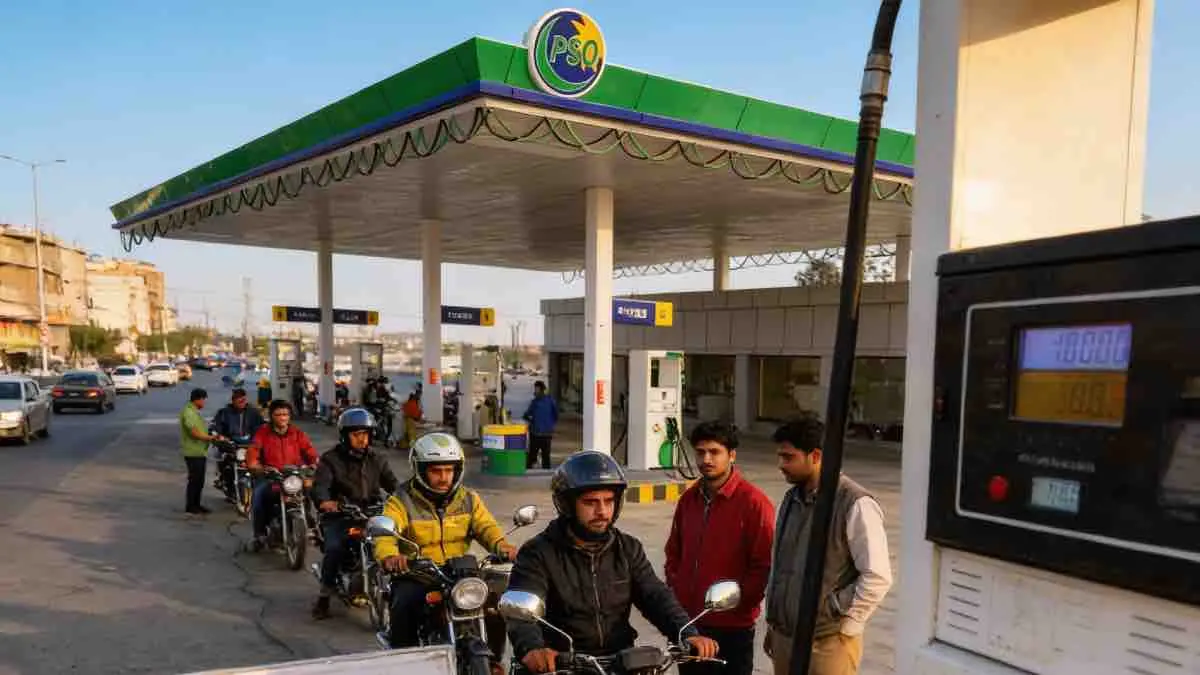
Pakistan’s federal and provincial governments have announced a sweeping fuel relief package after petrol prices surged to a record Rs 458.41 per litre — a 63% jump in under a month which was a later reduced to Rs 378 per liter after nationwide backlash.
The crisis stems from supply disruptions tied to the ongoing US-Israeli war on Iran and the closure of the Strait of Hormuz, a critical route for global oil shipments. With diesel also hitting Rs 520.35 per litre, the economic pressure on farmers, transporters and daily commuters has been immense.
What Triggered the Crisis
Two major fuel price increases hit Pakistan in quick succession — a Rs 55 per litre hike in March and a sharper increase that pushed petrol to Rs 458.41 and diesel to Rs 520.35.
The cumulative increase in petrol prices within a month reached 63%, while high-speed diesel rose by 75%. The government had held prices steady for weeks before the hikes, absorbing international pressure until it could no longer do so.
IMF guidance recommended targeting relief to those most affected by rising fuel costs, rather than offering blanket subsidies — leading to focused support for motorcyclists, small farmers and transport operators.
Federal Response: Levy Cut and Transport Support
Prime Minister Shehbaz Sharif moved quickly. He announced a cut of Rs 80 in the petrol levy after prices spiked, and directed that all public transport in Islamabad be made free for 30 days, with the government bearing a cost of Rs 350 million ($1.26 million).
Pakistan Railways also confirmed it would not increase fares despite rising diesel costs, with the government absorbing an estimated Rs 6 billion ($21.6 million) burden to protect passengers and freight operators.
For freight vehicles, the federal government announced Rs 100 per litre support, alongside fixed monthly assistance of Rs 70,000 for trucks, Rs 80,000 for large transport vehicles and Rs 100,000 for public service buses — initially for one month, subject to review.
Punjab’s Package: Free Transport, Farm Subsidies, Biker Relief
Punjab Chief Minister Maryam Nawaz unveiled one of the most comprehensive provincial responses.
Public transport services across Punjab were made free for one month, covering the Lahore Orange Line Metro Train, Metro Bus Service, Speedo Bus and Green Electric Buses.
For the agriculture sector, farmers owning up to 25 acres will receive a subsidy of Rs 150 per litre on 10 litres of diesel per acre, aimed at easing input costs for wheat growers.
Motorbike owners received a separate package. Registration fees and transfer charges have been completely waived, every registered motorbike will receive a Rs 2,000 monthly subsidy, and bike owners will get 20 litres of petrol per month at a subsidised rate of Rs 100 per litre.
Applications opened on April 4, 2026, through three channels: calling helpline 1000, visiting the official portal at mkb.punjab.gov.pk, or downloading the ‘Maryam Ko Batayen’ app from the Play Store or App Store.
Punjab alone is expected to spend Rs 35 billion per month, covering 22 million bikers, over 765,000 transport vehicles and more than one million farmers.
Read more: How Pakistan Played ‘Trump Card’ to Emerge as a Peace Broker in US-Iran Crisis
Sindh’s Rs55 Billion Subsidy Plan
Sindh Chief Minister Syed Murad Ali Shah announced a Rs 55 billion ($198 million) targeted subsidy package for motorbike users, small farmers and the transport sector.
Sindh will extend support to 6.7 million registered motorcycles through digital transfers of Rs 2,000 per month, alongside assistance to farmers via Hari Cards.
Sindh also announced a minimum wheat price of Rs 3,500 per maund and a Rs 1,500 per acre subsidy for small farmers to offset losses linked to higher diesel prices, with payments beginning April 6.
KP and Balochistan Also Act
Khyber-Pakhtunkhwa entered the implementation phase immediately, offering Rs2,000 monthly to over 1.6 million bikers. Balochistan faces data constraints, with limited vehicle registration coverage and reliance on BISP data for outreach.
Broader Fiscal Picture
The provinces have pooled nearly Rs 200 billion over three months under their NFC shares, with Punjab contributing around Rs 100 billion, Sindh Rs 51–52 billion, Khyber Pakhtunkhwa Rs 15 billion and Balochistan Rs 8–9 billion.
Finance Minister Aurangzeb said the government would review all measures monthly while ensuring stability in essential sectors.
Frequently Asked Questions (FAQs)
Q: Why did Pakistan’s petrol prices increase so sharply in 2026? The price surge followed supply disruptions caused by the US-Israeli war on Iran and the closure of the Strait of Hormuz. The government also raised the petroleum levy to record levels before announcing partial relief.
Q: Who qualifies for Punjab’s motorbike fuel subsidy? Registered motorbike owners in Punjab are eligible. They can apply via helpline 1000, the mkb.punjab.gov.pk portal, or the ‘Maryam Ko Batayen’ app using their CNIC and vehicle registration details.
Q: How much diesel subsidy will Punjab farmers receive? Wheat growers owning up to 25 acres will receive Rs 150 per litre on 10 litres of diesel per acre, directly reducing farming input costs during the harvest season.
Q: Is public transport really free in Punjab and Islamabad? Yes, for one month. Punjab’s Orange Line, Metro Bus, Speedo Bus and Green Electric Buses are all fare-free. Islamabad’s public transport is also free for 30 days, at a government cost of Rs 350 million.
Q: What is Sindh’s relief package worth? Sindh announced a Rs 55 billion ($198 million) subsidy covering motorbike users, small farmers and transport operators, with biker cash transfers of Rs 2,000 per month beginning April 6.