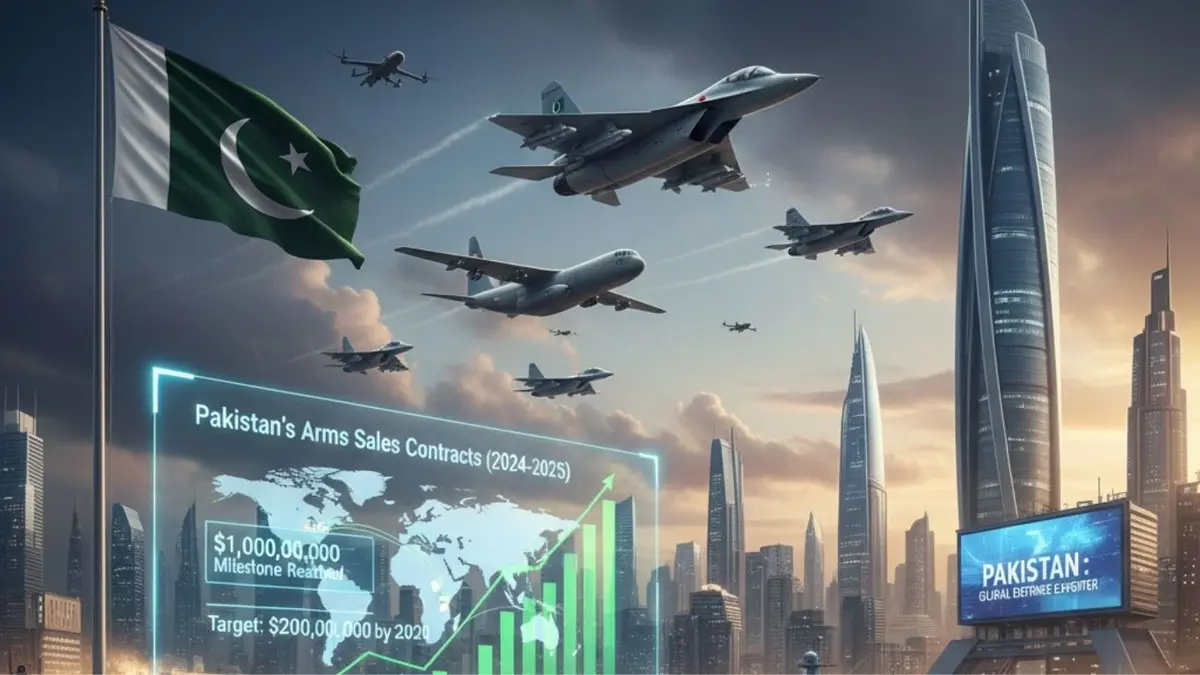
During the 2024–25 fiscal year, the country signed more than $10 billion worth of defence export contracts, showing strong growth in arms production and sales. And this is marking its transformation from a traditional arms importer into an emerging player in the multi-billion-dollar global defense exports industry.
This milestone is reflecting years of steady investment in indigenous defense production under Pakistan’s long-term Vision 2030. Furthermore, this Vision 2030 aims to position the country among the leading arms-exporting nations. According to defense industry estimates, Pakistan now targets $20 billion per annum revenue through defense and weapons exports by 2030.
Some of the major Pakistan arms sales
The surge in Pakistan’s arms exports during 2024–25 was highly driven by several high-value, strategically important agreements:
• Azerbaijan – JF-17 Block III Deal ($4.6 Billion):
Azerbaijan expanded its fleet of JF-17 Thunder Block III fighter jets from 16 to 40 aircraft. This became the largest single aviation export contract for Pakistan. You can confirm the news on this site Pakistan confirmed the sale of up to 40 new JF-17 Thunder Block III fighters to equip the Azerbaijani Air Force. Moreover, it is a major endorsement of its aerospace capabilities.
• Libya Defense Agreement ($4–4.6 Billion):
Pakistan finalized a multi-year defense pact with Libya covering JF-17 fighter jets, Super Mushshak trainer aircraft, and land- and sea-based military equipment. Pakistan arms sale contract with Libya proved to be beneficial for Pakistan as it increased defense export rates.
• African Defense Markets ($1.5 Billion):
Multiple African countries signed combined contracts for combat drones, armored vehicles, and K-8 Karakorum trainer jets, strengthening Pakistan’s footprint in emerging markets.
• Saudi Arabia Strategic Talks:
Negotiations with Saudi Arabia continue for a potential $2–4 billion JF-17 Block III deal, possibly converting financial arrangements into long-term defense cooperation.
Together, these agreements helped Pakistan sign over $10 billion arms sales contracts in 2024–25, firmly placing it on the global defense export map.
Why Pakistan’s Defense Exports Are Gaining Momentum
Pakistan’s growing success in the arms exports industry is based on three key strengths:
i) Cost-effective, combat-proven systems such as the JF-17, Al-Khalid tank, and armed UAVs
ii) Political flexibility, offering alternatives to Western suppliers with fewer geopolitical restrictions
iii) Integrated defense ecosystem, including POF, PAC Kamra, and Karachi Shipyard
Notably, Pakistan’s aerial engagements in May 2025 enhanced international confidence in its BVR combat capability, avionics, and sensor-shooter integration. This all played a role in boosting export credibility.
Pakistan Targets $20B Annual Defense Exports by 2030
Looking ahead, Pakistan aims to double down on its momentum. Moreover, the country is making plans to achieve $20 billion per annum revenue through defense and weapons exports by 2030 by:
- Developing next-generation platforms under Project Azm
- Expanding UAV, ammunition, and naval exports
- Increasing value-addition through local manufacturing and branding
- Targeting Middle Eastern, African, and Central Asian markets
Pakistan’s Rise in the Global Arms Exports Industry
By signing over $10 billion in arms sales contracts in 2024–25, Pakistan has now taken a step into a new league of emerging global defense exporters.
However, if current trends continue, the country is on track to become a consistent multi-billion-dollar arms supplier, reshaping its economy and strategic influence well before 2030.