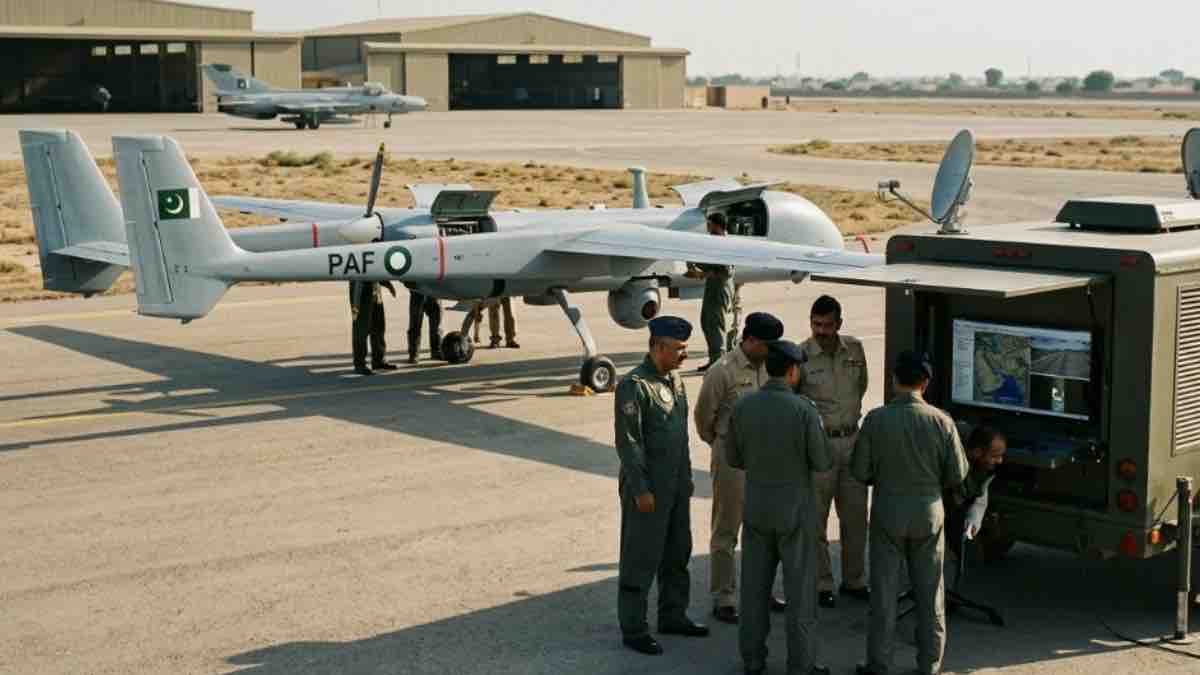
The Pakistan Air Force drone program has quietly evolved into one of the most diverse unmanned fleets in South Asia. Between 2007 and 2026, the Pakistan Air Force built a wide mix of drones using Chinese, Turkish, and locally developed platforms. These systems now support missions like surveillance, intelligence gathering, precision strikes, and emerging autonomous operations.
Pakistan Air Force Drone Program: How It Started and Evolved
In the early years, the Pakistan Air Force relied on basic target drones and surveillance systems. European platforms, including those from Leonardo, helped the PAF build its initial operational experience. However, restrictions on weapon integration limited their full potential.
This challenge pushed the PAF to explore other options. Chinese manufacturers stepped in and provided armed drone capabilities, allowing Pakistan to expand its operational use of unmanned systems. Later, Turkish companies like Baykar added another dimension by offering advanced drones without strict export restrictions.
Pakistan Air Force Drone Program: Multi-Vendor Strategy and Benefits
Instead of depending on a single supplier, the PAF adopted a multi-vendor strategy. This approach allowed it to minimize dependance on any one country and gain better pricing, technology access, and flexibility.
Today, the drone fleet includes a mix of:
- Chinese systems for cost-effective armed drones
- Turkish platforms for advanced capabilities and supply chain flexibility
- Local developments for long-term independence
This combination has helped Pakistan build a balanced and adaptable drone ecosystem, minimizing the risks of supply disruptions or political pressure.
Read more: PAF showcases most advanced JF-17 Thunder jets at UK airshow after combat success against India
Local Development in Drone Program
A major focus of the Pakistan Air Force drone program is local production and innovation. The National Aerospace Science and Technology Park are playing a major role in developing indigenous drone technologies.
Some local projects include:
• KaGeM V3 loitering munition, designed for precision strikes
• Al-Murtajiz autonomous effector concept, aimed at future autonomous warfare
At the same time, organizations like NESCOM have developed systems, for example, the Shahpar and Burraq drones. However, parallel development efforts across different institutions have sometimes created overlapping projects and coordination challenges.
Pakistan Air Force Drone Program: Current Capabilities
Over the past few years, the PAF has steadily improved its drone capabilities. It moved from small systems to more advanced platforms:
- Early 2000s: Basic target and surveillance drones
- 2013 onwards: Medium-altitude long-endurance (MALE) drones
- 2022–2023: Introduction of high-end systems like Bayraktar Akinci drone
These developments are clearly manifesting a clear shift toward high-performance and long-range unmanned systems.
Challenges Facing Pakistan Air Force Drone Program
Despite strong progress, the program is still encountering challenges. Budget limitations can slow down expansion, while multiple development tracks sometimes create inefficiencies.
Another major issue is the requirement for better coordination between different organizations. Even though the PAF controls major decisions, aligning all stakeholders remains important for scaling production and improving efficiency.
Future of this program
Looking ahead, the Pakistan Air Force is expected to focus on:
- Local manufacturing and assembly of advanced drones
- Autonomous and AI-powered systems
- Stronger collaboration with international partners
Talks with Turkish firms for local drone assembly in Pakistan could further strengthen the country’s defense industry and minimize dependency on imports.
All-inclusively, the Pakistan Air Force drone program is moving toward a self-reliant and technologically advanced future. Moreover, it focuses on innovation and strategic flexibility.
Read more: Islamabad to deploy drones, rescue motorbikes, specialized vehicles to improve response times
Frequently Asked Questions
What makes the Pakistan Air Force drone program unique?
The PAF keeps on using a mix of Chinese, Turkish, and local drones, which reduces dependency on a single supplier and improves flexibility.
When did Pakistan start developing its drone capabilities?
The program started in the early 2000s with basic drones and expanded significantly after 2013 with advanced systems.
Which countries supply drones to Pakistan?
Pakistan is mainly showing cooperation with China and Turkiye, along with developing its own local drone systems.
What is the role of local organizations in drone development?
Institutions like the National Aerospace Science and Technology Park and NESCOM develop indigenous drones and technologies.
What are the major advantages of drones in the PAF?
- Drones are used for various important purposes in PAF, such as
- surveillance
- intelligence gathering
- Precision strikes
- Future Autonomous Missions.