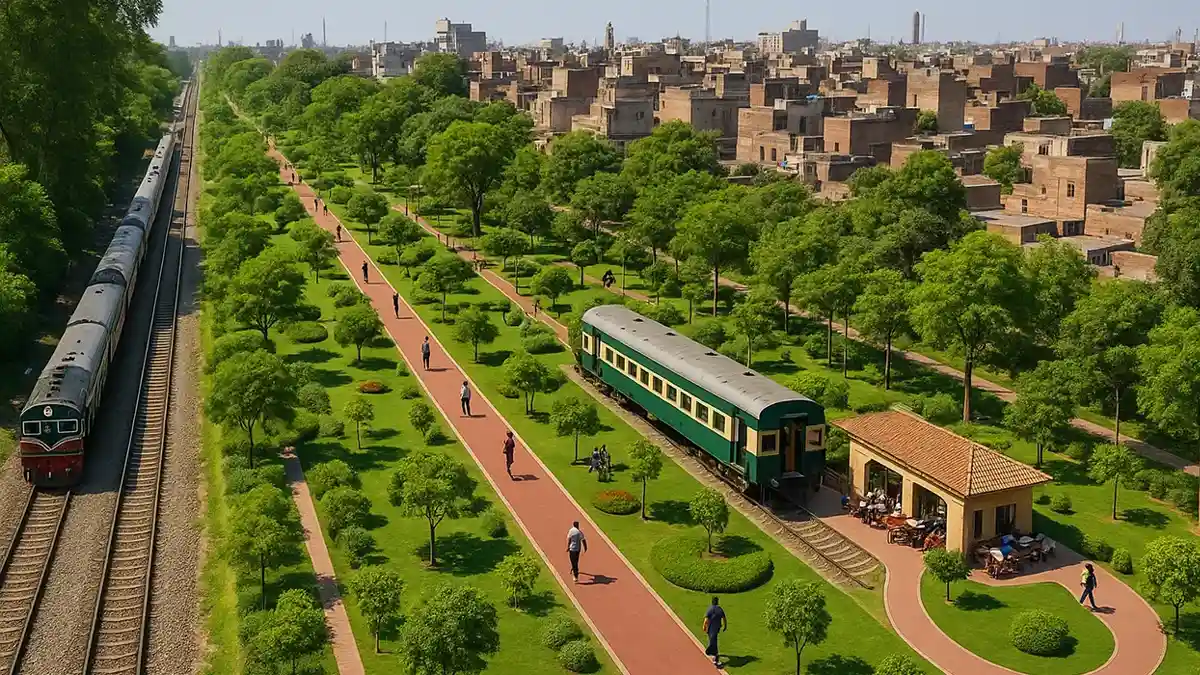
The Punjab government has approved a state-of-the-art project: a 40-kilometer green corridor running through the heart of Lahore.
The corridor will stretch from Shahdara to Raiwind, and it will transform barren land along the railway tracks into lush, tree-lined green belts. Officials say the project, with an estimated cost of over Rs. 2.35 billion, will cover nearly 700 kanals and is expected to be completed within a year.
Restoring health and life in the city
Lahore has ranked among the most polluted cities of the world, with smog and poor air quality threatening the health of its residents, especially during the winter months.
The major aim behind this program is to serve as both a natural air purifier and a recreational escape for citizens. “It’s not just about planting trees — it’s about restoring health and life to our city,” a Punjab Housing Department official remarked.
More Than Just a Green Belt
The project goes beyond planting trees. At select points along the corridor, old railway carriages will be recreated into libraries and cafés. Moreover, these will provide residents unique community spaces where they can read, relax, and connect. Recreational areas and walking tracks will also be developed, encouraging healthy outdoor activities and family visits.
Read more: Modern rest areas will be built at six locations on Lahore Ring Road
Part of a Larger Vision
The corridor makes part of the broader environmental strategy of Punjab to
- Fight climate change
- Reduce smog
- Improve urban livability
Officials highlight that projects like these are highly vital for safeguarding public health, particularly for kids and the older people who are mostly affected by various issues specifically related to respiration.
A Greener Future for the City
If completed on schedule, this corridor will add a green lung to Lahore. Moreover, it will also set an example for other major cities struggling with pollution. Experts say the move could inspire similar projects across Pakistan.
For the masses of Lahore, the upcoming year could make a major change — from battling smog to breathing easier in a city where nature is finally being brought back to life.