The Asian Development Bank (ADB) has completed the initial feasibility study for the proposed Islamabad Inter-City Bus Terminal.
ADB is now developing a financial model to implement the project, which will be linked with Islamabad’s Metro Bus and Electric Feeder Bus services. The terminal aims to improve urban connectivity and reduce traffic congestion on major roads.
The project will also feature modern electric charging points for electric buses, supporting cleaner and more efficient public transport.
Islamabad electric bus service reaches a major milestone
Islamabad’s electric bus service has achieved a major breakthrough. The network is now fully operational across all 21 designated routes, marking a turning point for public transport in the federal capital.
The Capital Development Authority (CDA) is leading the initiative under the federal government’s Green City vision. The main goal behind the project is to reduce pollution, cut fuel costs which is much high, and provide reliable transport for residents.
This shift has already changed how people move across the city.
Fleet strength and ridership hit record levels
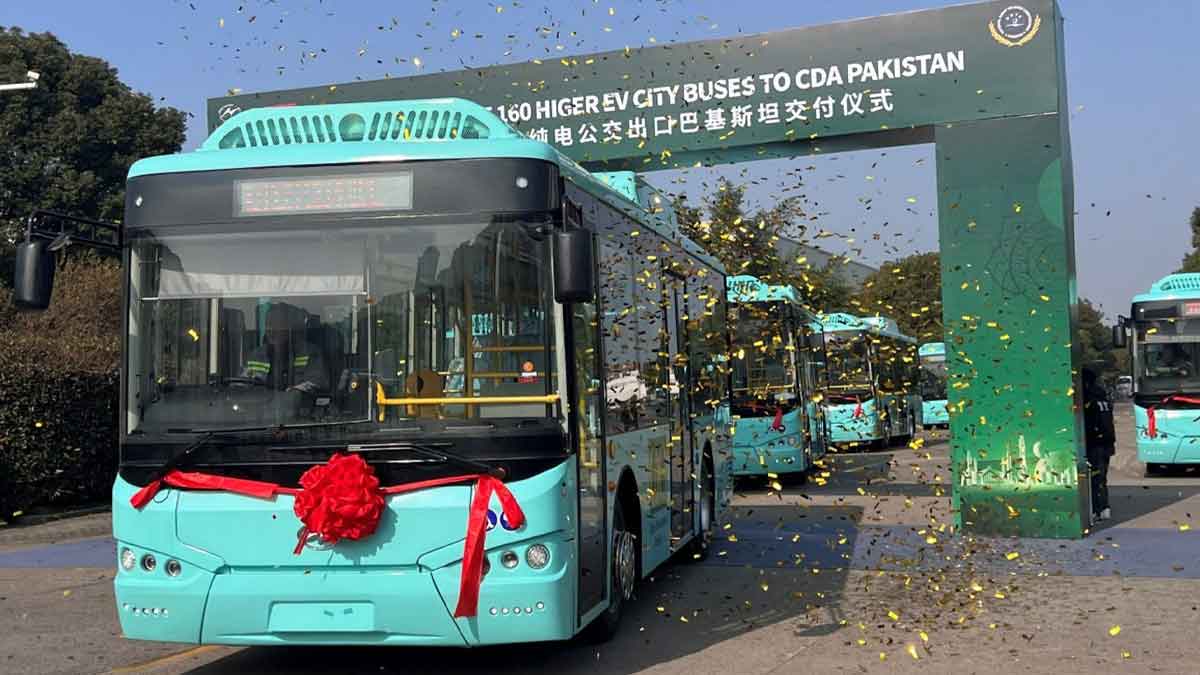
As of January 2026, the Islamabad electric bus service operates a fleet of 160 modern electric buses. All 21 routes now run without interruption.
Daily ridership has crossed 102,000 passengers in a single day this month. This figure is clearly depicting growing public trust in the service.
Two major depots, located at Site A and Zero Point, are nearing full completion. These depots include advanced charging infrastructure designed to support round-the-clock operations.
Read more: G-9 Sector to Faizabad and Nilor to Khannapul routes added to Islamabad’s electric bus network
Key electric bus routes serving Islamabad
The electric buses act as a feeder system for Metro Bus corridors, including the Red, Orange, Blue, and Green Lines.
Some of the most heavily used routes include:
1: FR-01: NUST Metro Station to Khanna Pul
2: FR-04: PIMS to Bari Imam
3: FR-05: Golra Mor to Taxila
4: FR-08: PIMS to Faizabad via Aabpara
5: FR-11: Golra Mor to Sector I-16
6: ST-01: PIMS to Daman-e-Koh (tourist route)
7: New Route: G-9 Karachi Company to Faizabad
8: New Route: Nilore to Khanna Pul
These routes connect residential sectors, hospitals, universities, and commercial hubs.
Smart technology improves daily commuting
The Islamabad electric bus service is making use of modern technology to improve user experience. Passengers are capable of tracking buses in real time through Google Maps and the CDA mobile app. This feature reduces waiting time and uncertainty.
The system now supports QR code payments and tap-and-go cards. Cashless travel has made boarding faster and safer. Additionally, CDA is also installing LED information boards at 216 bus stops. These screens show live arrival times and route maps.
Environmental and economic impact of electric buses
Electric buses are helping Islamabad cut emissions. Officials estimate fuel savings of around 30,000 barrels per year.
Lower fuel consumption reduces air pollution and operational costs. Moreover, the project also supports Pakistan’s broader climate commitments.
Residents now enjoy quieter rides and cleaner air, especially in high-traffic zones.
Inter-city electric bus link to launch soon
A major expansion is coming next month. The Punjab government will launch 15 electric buses from Gujar Khan to T-Chowk, directly linking the area with Rawalpindi and Islamabad.
As per RTA Secretary Asad Shirazi, authorities have already approved the route. The buses will start from Gujar Khan Adda, pass through Mandra, and reach T-Chowk via G.T. Road.
This service will offer an eco-friendly option for daily commuters entering the twin cities.
What lies ahead for Islamabad’s electric buses
Furthermore, CDA plans to extend routes to underserved areas, including E-11 and nearby rural sectors. Officials are working hard to expand coverage without compromising frequency.
The Islamabad electric bus service now serving as a model for sustainable urban transport in Pakistan. It blends technology, accessibility, and environmental responsibility.
If the same momentum continues, Islamabad could soon emerge as a trend setter of the national standard for clean public transport.