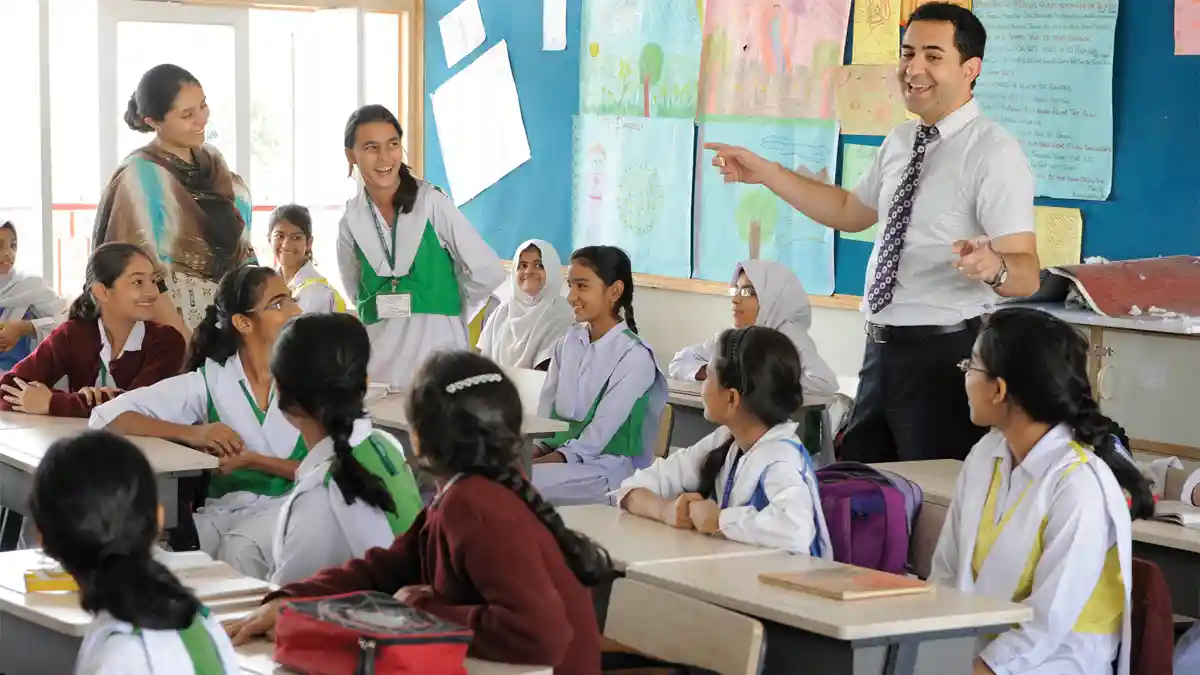
The Punjab Schools Education Department has declared that traditional board examinations for grades nine and ten will be replaced with a new assessment test.
The change, as per Punjab Education Minister Rana Sikandar Hayat, is designed to make improvements in student performance. The initiative will focus on the development of stronger foundational skills from the earliest years of schooling.
Why the Change Matters
Students in Punjab have been evaluated through high-pressure board exams for a long time. Moreover, they are often criticized for encouraging rote memorization over real understanding.
Rana Sikandar Hayat said the new assessment system will take a more holistic approach, measuring not only textbook knowledge but also problem-solving ability comprehension and practical application of concepts.
“This is about making learning meaningful,” he explained. “Our goal is to ensure that when a child passes out of school, they are ready for higher education and real-world challenges.”
Starting with the Middle Years
It is declared by the department that the conduction of the assessment of the 8th grade is going to be done by PECTA (Punjab Examination Commission for Testing and Assessment).
The organization will release detailed guidelines for schools, teachers, and students within the upcoming 20 days, ensuring everyone understands the format and expectations well before test day.
Read more: Punjab implements anti-cheating system based on face recognition in matric exams
Initially, the new system will be implemented in government schools, giving public school students an opportunity to adapt before a wider rollout. For private schools, the traditional board exam will remain optional in the first phase.
Benefits for teachers and students
- Professionals keep on believing that this step is going to reduce anxiety ad pressure that a person feels while giving or preparing for exams.
- Moreover, it will help in shifting focus toward deeper learning.
- Teachers will have to make quality adjustments in their lesson plans to align with the broader skill-based evaluation, while students may feel more encouraged to think critically rather than simply memorize notes.
Parents, too, are highly hopeful. “If this helps my son understand concepts instead of cramming overnight, it will be worth it,” said Ayesha Khan, whose child is in grade eight.
First assessment session is anticipated in February or March next year; Punjab is setting the stage for a new chapter in its education journey—and this step could make classrooms more cooperative, learning more relevant, and students more confident about their future.