
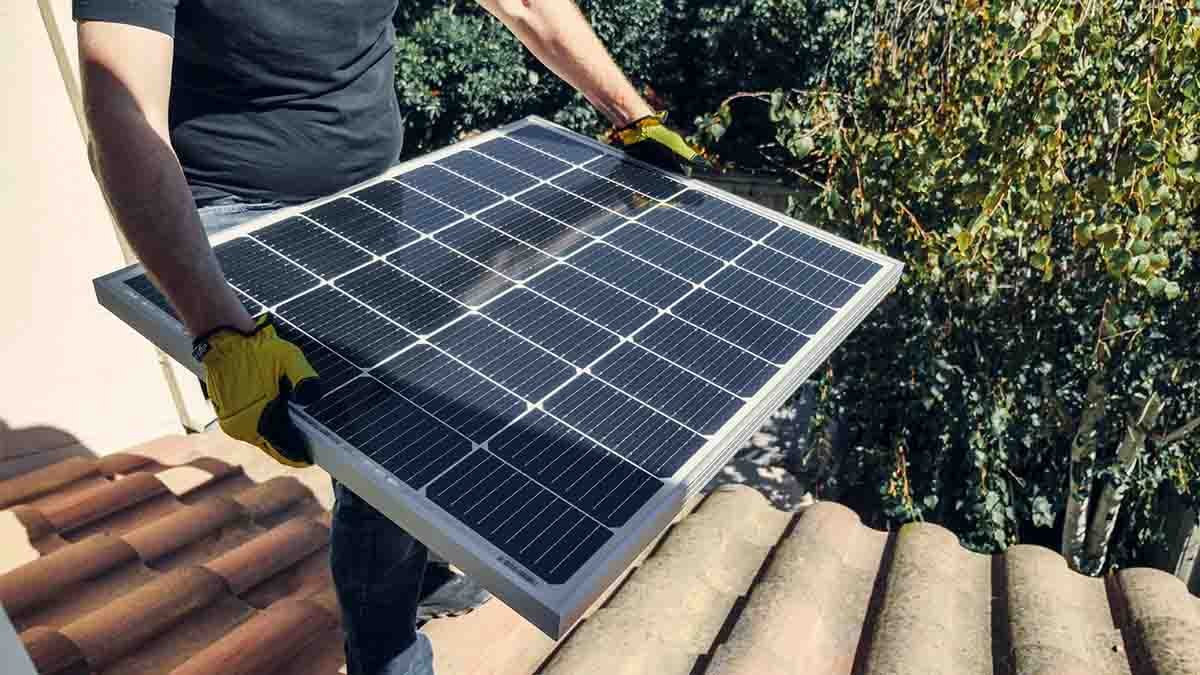
Sindh has launched Pakistan’s largest provincial renewable energy initiative, distributing solar home systems to over 500,000 low-income households across 30 districts under a Rs 200 billion World Bank-supported program.
Phase-I distributed solar systems to 77,000 families, while Phase-II targets an additional 123,000 households. PPP Chairman Bilawal Bhutto-Zardari ordered purchase of 300,000 additional solar units beyond the original 200,000-household target.
The Sindh Solar Energy Project (SSEP) addresses electricity access challenges through solar home systems, utility-scale solar parks, rooftop installations on public buildings, and agricultural solar tubewells.
Project Overview and Investment
The development objective of Sindh Solar Energy Project aims to increase solar power generation and access to electricity in Sindh Province.
The comprehensive initiative promotes clean energy adoption while reducing electricity costs for vulnerable communities facing load shedding, high tariffs, and unreliable grid access.
World Bank Partnership
The Pakistan government and World Bank signed a financing agreement worth $100 million for Sindh Solar Energy Project to increase solar power generation and access to electricity in the province.
The International Development Association extends financing of $100 million for the project while the Sindh government contributes the remaining amount.
The collaboration introduces international best practices with renewable energy auctions, reduces solar deployment costs, creates sustainable business models for replication, and builds institutional and private sector capacity.
Rs 200 Billion Initiative
Energy Minister Syed Nasir Hussain Shah highlighted the Rs. 200 billion initiative backed by the World Bank, with 162,600 families receiving solar systems in first phase, while another 500,000 families will be facilitated in next phase.
The expanded program demonstrates Sindh government’s commitment to renewable energy transition and poverty alleviation through sustainable electricity access.
Solar Home Systems Distribution
Sindh government commenced distribution of solar home systems to 200,000 low-income households across the province in March 2025. CM Murad Ali Shah expressed hope that 200,000 SHS kits would be distributed by July 2025, with a target of 400 kits per district per week.
The distribution prioritizes households in rural areas with limited or no grid connectivity, where solar systems provide transformative impact on education, business operations, and quality of life.
Phase-I Completion
In first phase, 77,000 families already received solar panels. Distribution ceremonies were held across Sindh including Hyderabad, Sukkur, and Karachi divisions.
Sindh Energy Department distributed solar home systems to 100 rural families in Tando Jam, Hyderabad, under SSEP, with Senior Minister Sharjeel Inam Memon stating the program is designed to support low-income households and will benefit 200,000 families.
Beneficiaries reported immediate relief from electricity costs, enabling children to study after dark, extending business operating hours, and improving household living conditions.
Phase-II Progress
Second phase will distribute solar systems to 123,000 more families. The next phase of solar system distribution will begin after June, ensuring more families benefit from clean and affordable energy.
Phase-II prioritizes districts with lowest electrification rates and highest poverty levels, aligning with provincial development objectives and Sustainable Development Goals.
Expansion to 500,000 Households
PPP Chairman Bilawal Bhutto-Zardari ordered purchase of additional 300,000 solar units for distribution among low-income families. This expansion triples the original target, making SSEP one of South Asia’s largest solar home system programs.
Bilawal Bhutto Zardari’s vision is to ensure electricity for all, with distribution of 200,000 solar systems already begun, and initiative to provide additional 500,000 solar systems commencing this year, targeting regions where electricity services are lacking.
The expanded program addresses Sindh’s chronic energy access challenges while advancing climate resilience and renewable energy transition goals.
Free Solar Scheme for Low-Income Households
By August 2025, Sindh government launched a free solar system scheme specifically targeting households consuming less than 100 electricity units per month.
The targeted initiative provides complete solar systems at zero cost to families most vulnerable to electricity poverty, ensuring equitable energy access regardless of income level.
Eligibility Criteria
Monthly electricity consumption must be under 100 units for past six consecutive months. Applicants must not have received solar system under any previous government program.
Required documents include CNIC, latest electricity bill, and application form verified by UC chairman or gazetted officer6. Unverified forms are not processed.
Households must be registered electricity consumers with valid connections. The six-month consumption history prevents misuse while ensuring genuine low-income families benefit.
Application Process
Completed applications with documents must be submitted by August 20, 2025, to Energy Department, 3rd Floor, State Life Building No. 3, Dr. Ziauddin Ahmed Road, Karachi.
If number of applicants exceeds available systems, lottery system will select final recipients. If applicants exceed available systems, lottery will be conducted to ensure fairness.
Applicants receive SMS notifications regarding application status, lottery results, and distribution schedules. The transparent lottery mechanism prevents favoritism and ensures merit-based allocation.
Required Documents
Applicants must submit computerized national identity card copy, latest six months’ electricity bills demonstrating under-100-unit consumption, and completed application form.
The application form requires verification signature from Union Council Chairman or any gazetted government officer. This verification confirms applicant identity and prevents duplicate applications.
Incomplete applications or those lacking proper verification are rejected. Applicants should retain application submission receipts for reference during distribution.
Solar Home System Specifications
Each system includes 80W solar panel, smart power management unit, long-lasting battery, and essential accessories such as LED bulbs and mobile charging facilities.
The systems provide sufficient electricity for basic household needs including lighting, mobile phone charging, small fans, and low-wattage appliances. Battery storage ensures electricity availability during night hours and cloudy periods.
Smart power management units optimize energy utilization, protect batteries from overcharging, and extend system lifespan. LED bulbs consume minimal power while providing bright illumination for studying and household activities.
The standardized specifications ensure quality consistency across all distributed systems. All components meet international quality standards with warranties covering manufacturing defects.
Selection and Distribution Process
Transparent beneficiary selection and efficient distribution mechanisms ensure SSEP reaches intended low-income households without political interference or corruption.
BISP-Based Selection
Beneficiaries are carefully selected using data from Benazir Income Support Programme, ensuring most needy families are prioritized. Project follows BISP criteria to ensure transparency, with merit-based selection process.
BISP maintains Pakistan’s most comprehensive poverty database covering over 9 million families. Cross-referencing SSEP beneficiaries with BISP data ensures solar systems reach genuinely impoverished households.
The data-driven selection removes discretionary decision-making, preventing elite capture and ensuring equitable distribution across districts regardless of political influence.
NGO Implementation Partners
SHS kits are distributed equally across all 30 districts of Sindh, facilitated with help of established NGOs like HANDS, SRSO, and SAFCO, ensuring efficient delivery of kits.
These NGOs possess extensive rural networks, community trust, and logistical capacity for last-mile delivery in remote areas. They conduct beneficiary verification, coordinate distribution ceremonies, and provide basic user training.
HANDS (Health and Nutrition Development Society), SRSO (Sindh Rural Support Organisation), and SAFCO (Sindh Agricultural and Forestry Workers Coordinating Organisation) have proven track records implementing large-scale development programs across Sindh’s rural districts.
Solar Park Development
Sindh is developing utility-scale solar parks to generate clean electricity for grid supply, complementing household solar systems with large-scale renewable generation capacity.
Jamshoro Solar Park
SSEP project includes 400MW solar park at Manjhand town in Jamshoro district at cost of $40 million. Cabinet approved allotment of 250 acres land for 500MW solar park at Manjhand in district Jamshoro.
The expanded 500MW capacity represents significant upgrade from initial 400MW plan. The solar park will generate affordable electricity through competitive tariff-based auctions following international best practices.
Utility-Scale Solar component aims for identification and development of publicly owned solar parks, and support for competitive selection of private sector developers through solar auction for construction of solar power plants.
The park’s location near existing grid infrastructure facilitates power evacuation. Manjhand’s high solar irradiation levels ensure optimal generation efficiency throughout the year.
Karachi Solar Park
Sindh cabinet approved establishment of 120 MW solar park on 612 acres in Karachi Central District. This urban solar park will supply clean electricity to Karachi’s industrial and commercial consumers.
The Karachi facility demonstrates solar viability in urban contexts, potentially inspiring private sector investment in distributed generation. Combined with Jamshoro, these parks add over 600MW renewable capacity to Sindh’s energy mix.
Rooftop Solar Program
$25 million project will install rooftop solar systems on public buildings in Karachi and Hyderabad with 20MW capacity.
Distributed Solar component aims for procurement and installation of solar PV systems and associated energy management systems on rooftops and other available space on and around public sector buildings1.
Government buildings including hospitals, schools, universities, and administrative offices will receive rooftop installations. This reduces government electricity expenditure while demonstrating solar technology reliability for private building owners.
Agricultural Solar Tubewell Scheme
Solar Water Tubewell Scheme launched under ADB Scheme No. 25 (2025–26) and Scheme No. 26 (2025–26), aiming to provide farmers with vital access to solar-powered irrigation solutions.
Agriculture consumes significant electricity and diesel for irrigation pumps. Solar tubewells eliminate fuel costs, reduce carbon emissions, and provide reliable water access during critical growth periods.
Farmers interested in applying must demonstrate ownership of at least 12 acres of agricultural land. This threshold prioritizes larger farming operations where irrigation efficiency gains translate into significant food production increases.
Solar Water Lift Pump requires farmer’s share of PKR 600,000; Solar Water Tubewell – 100 ft requires PKR 838,000; 150 ft requires PKR 1,038,000; 250 ft requires PKR 1,340,000.
The cost-sharing model ensures farmer commitment while making solar irrigation affordable. Government subsidies cover majority of installation costs. Different tubewell depths accommodate varying groundwater levels across Sindh’s agricultural zones.
Approved firms include M/s MDS & Co., M/s Sarwar Engineering Works, M/s ZN Sahito, M/s MB Royal Enterprises, M/s KKB Kaimkhani & Brothers, M/s Sarhad Plastic Industries, and M/s Density Drilling.
Pre-qualification of installation firms ensures quality standards, prevents substandard work, and protects farmers from fraudulent contractors. Approved firms undergo technical evaluation and quality certification before authorization.
Economic and Social Impact
The Sindh Solar Energy Project delivers transformative economic and social benefits extending beyond electricity access to poverty reduction, climate action, and sustainable development.
Through this initiative, we are providing solar power solutions to low-income households, enabling them to improve quality of life, access better education for their children, and enhance their businesses.
Eliminating electricity costs for 500,000 households generates cumulative savings exceeding billions of rupees annually. These savings enable families to invest in education, healthcare, nutrition, and productive assets.
Solar lighting extends study hours for children, improving educational outcomes. Businesses operate longer hours, increasing income generation. Healthcare improves with refrigeration for medicines and lighting for nighttime emergencies.
Sindh government aims to reduce reliance on traditional power sources and expand adoption of clean energy, with solar distribution program aligning with Pakistan’s broader push for sustainable energy solutions and rural electrification.
The project avoids thousands of tons of carbon emissions annually, contributing to Pakistan’s climate commitments under the Paris Agreement. Renewable energy expansion reduces fossil fuel import dependency, improving national energy security.
Sindh government successfully commissioned its first power plant under Public-Private Partnership, with Sindh Transmission and Dispatch Company now supplying electricity from this plant at lower tariffs.
Women empowerment advances significantly as household ownership transfers to women’s names, ensuring economic rights and decision-making authority. This aligns with Benazir Bhutto’s vision of women’s economic empowerment.
The project creates employment through manufacturing, installation, maintenance, and distribution activities. Local youth receive technical training in solar technology, building provincial renewable energy expertise.
Project introduces international best practices with renewable energy auctions, reduces headline cost of solar deployment, creates sustainable business models for potential replication, builds institutional and private sector capacity, and is designed to help steer Pakistan toward lower-carbon path to development.
SSEP establishes Sindh as Pakistan’s renewable energy leader, potentially serving as replication model for other provinces. Success demonstrates subnational governments can drive transformative energy transitions despite federal constraints.
The Rs 200 billion investment represents long-term commitment to sustainable development, energy access equity, and climate resilience—positioning Sindh to meet future energy demands through clean, indigenous resources while lifting millions from energy poverty.



Join the Conversation
Share your thoughts, questions, or feedback below.