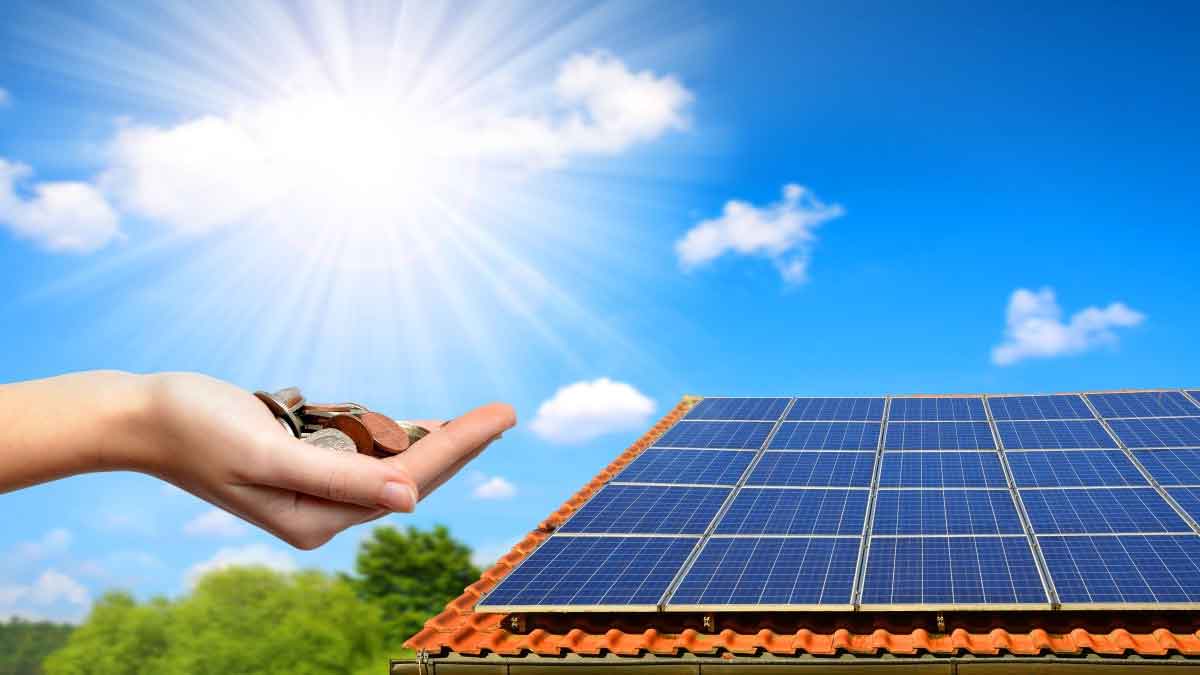
Pakistani solar landscape has undergone a radical transformation between 2024 and 2026. What began as a consumer-led movement to escape soaring grid tariffs has evolved into a sophisticated, regulated, and industrial-scale energy pillar.
After the record-breaking 17GW import surge of 2024, which positioned Pakistan as the world’s third-largest buyer of Chinese solar modules, the government has pivoted toward local manufacturing and grid stability through the Prosumer Regulations 2025.
The 17GW Milestone and Grid Dynamics
In 2024, Pakistan shocked global markets by importing over 17GW of solar panels. This massive influx of technology—largely high-efficiency N-type modules—resulted in a cumulative solar capacity exceeding 50GW by early 2026. This rapid adoption caused a 10% drop in grid demand by mid-2025, forcing national regulators to rethink the relationship between distributed generation and the central grid.
The surge was driven by electricity tariffs that climbed over 150% in a three-year window. Businesses and households viewed solar not just as a green alternative, but as a survival mechanism against inflation. However, the sheer volume of “behind-the-meter” generation led to the introduction of more stringent grid-balancing policies.
From Net Metering to Gross Metering
The most significant policy shift for 2026 is the transition from Net Metering to Gross Metering (also known as Net Billing) under the Prosumer Regulations 2025. This change fundamentally alters the financial equation for new solar adopters.
| Feature | Old Net Metering (Pre-2025) | New Gross Metering (2026) |
|---|---|---|
| Buyback Rate | ~Rs. 27 per unit | ~Rs. 11.33 per unit |
| Offset Logic | 1:1 units exchanged | Units sold at low rate; bought at high rate |
| Grid Interaction | Bi-directional flow | Separate measurement of export/import |
| Target Payback | 2.5–3 Years | 4.5–6 Years |
Under the new regime, the focus has shifted from “selling back to the grid” to self-consumption. To maximize ROI, users are now integrating Battery Energy Storage Systems (BESS) to store excess day-time energy for night-time use, rather than exporting it to the grid at the reduced rate of Rs. 11.33.
Fiscal Shifts and the 10% Sales Tax
To curb the outflow of foreign exchange and encourage domestic industry, the government introduced a 10% Sales Tax (GST) on imported solar panels effective July 1, 2025. Previously duty-free, the addition of this tax has marginally increased the upfront CAPEX for solar installations.
However, this fiscal move has successfully catalyzed the local manufacturing sector. Under the Special Investment Facilitation Council (SIFC) framework, several major projects have reached fruition:
- Sinotec 3GW Plant: A massive assembly facility in Karachi producing Tier-1 grade modules.
- AIKO-Punjab Partnership: A state-backed facility in Lahore focusing on high-efficiency ABC (All-Back Contact) technology.
- Local Inverter Assembly: Three new plants in the Faisalabad Industrial Zone are now producing hybrid inverters, further reducing reliance on imports.
SIFC and Utility-Scale Expansion
While residential solar dominated the 2024 boom, 2026 is defined by utility-scale progress. SIFC has streamlined land acquisition and fast-tracked the “Vision 2031” energy targets.
The government has successfully tendered 2,400MW of solar capacity across three primary hubs:
- Muzaffargarh (600MW): Aimed at reducing the fuel-price adjustment for southern Punjab.
- Layyah (1,200MW): A flagship solar park integrated with the national transmission revamp.
- Jhang (600MW): Strategically located to support the industrial load of central Pakistan.
These projects utilize advanced bifacial modules and tracking systems to achieve some of the lowest Levelized Cost of Electricity (LCOE) figures in the region.
Technology Benchmarks: The 700W+ Era
Technology remains a primary driver of market efficiency. The industry has moved decisively away from P-type PERC modules to N-type TopCon and HJT (Heterojunction) technologies.
Industry leaders like Trina Solar continue to set benchmarks with modules exceeding 700W and efficiencies surpassing 22.5%. The Vertex N 720W series remains the gold standard for industrial applications, such as the large-scale deployments seen at FectoCement and various textile hubs in Faisalabad.
Furthermore, the “Elementa 2” style storage solutions have become a necessity for commercial users. With the shift to gross metering, liquid-cooled energy storage systems allow industries to maintain a zero-export profile, ensuring that every kilowatt-hour generated is used internally to offset the high peak-hour grid rates.
Updated ROI and Economic Outlook
For a standard 10kW residential system in 2026, the economic profile has changed:
- Total Cost: Approximately Rs. 1.6M to 1.9M (including 10% GST and basic storage).
- Monthly Savings: Estimated at Rs. 45,000 to Rs. 60,000 depending on consumption patterns.
- Payback Period: Now averages 5 years, up from the 3-year period seen in 2024.
Despite the longer payback period, solar remains the most effective hedge against the “Death Spiral” of rising grid costs. As DISCOs (Distribution Companies) continue to hike fixed charges, the independence provided by a solar-plus-storage system is increasingly viewed as a non-negotiable asset for Pakistani middle-class households and SMEs.
Strategic Conclusion
Pakistan’s solar market has transitioned from a chaotic “gold rush” to a structured energy sector. While the end of the high-rate net metering era and the introduction of a 10% GST created temporary friction, they have paved the way for a more sustainable grid and a nascent local manufacturing base.
By 2026, solar energy has successfully claimed a 25% share in the national energy mix, proving that even with policy pivots, the sun remains Pakistan’s most reliable economic engine.