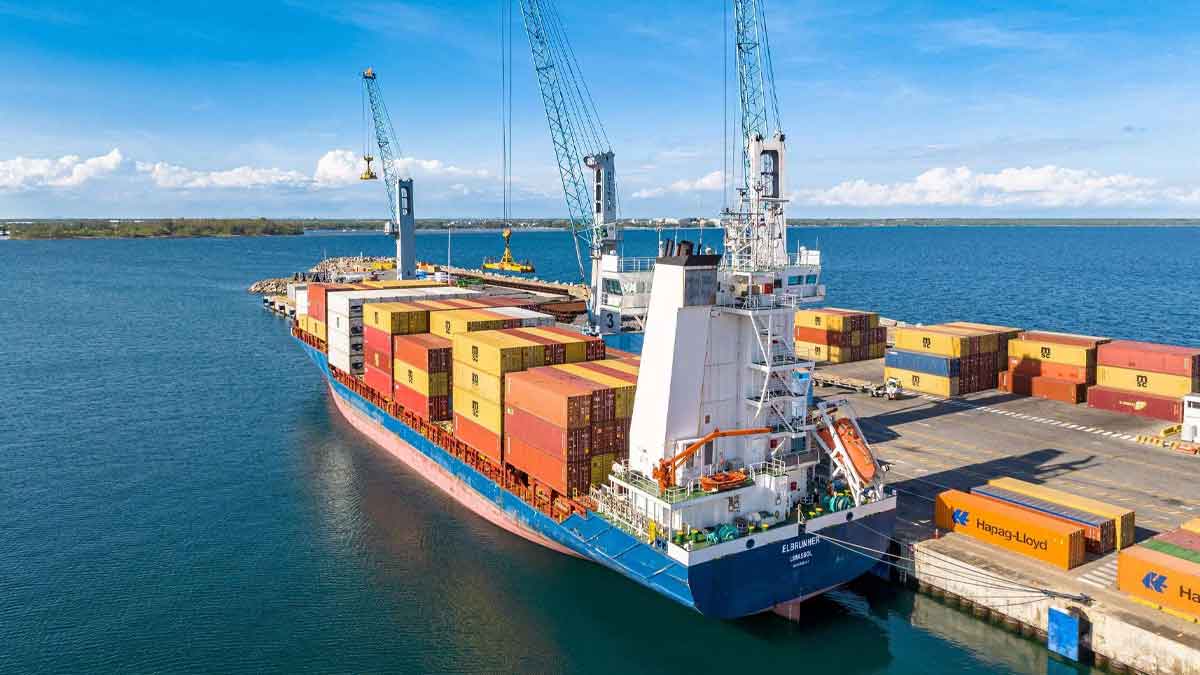
Prime Minister Shehbaz Sharif has ordered sweeping reforms across Pakistan’s ports to reduce cargo delays, lower costs for businesses, and strengthen the country’s trade and economic growth. The move comes as the government looks to fix long-standing bottlenecks in port operations that have raised logistics costs and weakened Pakistan’s competitiveness in regional and global markets.
The directives were issued during a meeting of a private-sector working group tasked with proposing reforms for the port sector. Officials and business representatives briefed the prime minister on operational challenges faced by importers, exporters, and shipping lines.
“Our ports play a critical role in expanding trade and driving economic growth,” Prime Minister Sharif said, stressing that inefficiencies at ports directly increase costs for businesses and consumers alike. He instructed all port-related agencies to improve coordination in order to reduce cargo dwell time — the period containers remain stuck at ports — which has been a major complaint of traders.
Focus on Lower Costs and Faster Clearance
The prime minister also ordered further reductions in port charges to ease the financial burden on the business community. High port fees, combined with delays in clearance, have long been cited as reasons why Pakistani exports struggle to compete with regional peers.
To address transparency concerns, Sharif directed authorities to introduce a clear and accountable system for auctioning abandoned cargo. He ordered the creation of dedicated yards at ports and recommended hiring internationally reputed firms to manage the auction process, reducing the risk of mismanagement and revenue leakage.
Infrastructure and Connectivity Upgrades
Recognizing the need for modern infrastructure, the prime minister called for faster progress on dredging and port expansion projects. Deeper and wider channels would permit larger vessels to dock at Pakistani ports, reducing freight costs and improving shipping efficiency.
Read more: China plans €2 billion maritime complex at Port Qasim with shipbuilding facility, modern steel mill
Sharif also emphasized improving rail connectivity between ports and inland destinations. Better rail links would
- Ease pressure on roads
- Speed up cargo movement
- Lower transportation costs for industries located away from coastal areas
Progress Already Underway
Officials kept on informing that the meeting that work on a National Ports Master Plan is moving ahead, aimed at setting a long-term vision for port development. A port community system, designed to digitally link shipping lines, customs, terminal operators, and regulators, has recently become operational.
They also noted that ports charges are already being reduced under the reforms, including a cut of over 50 percent in bulk cargo charges at Port Qasim. An electronic bidding system for auctioning abandoned cargo is expected to be launched soon, while tenders for dredging and expansion at Karachi’s ports have already been issued.
A Step Toward Trade-Led Growth
Analysts say these reforms, if fully implemented, could significantly
- Improve Pakistan’s trade logistics
- Reduce delays
- Attract greater investment
Efficient ports are considered to be highly crucial for
- Boosting exports
- Supporting industrial growth
- Putting Pakistan on a more sustainable economic path
1 comment
[…] Read more: Pakistan’s ports set for major reforms to speed up cargo movement […]