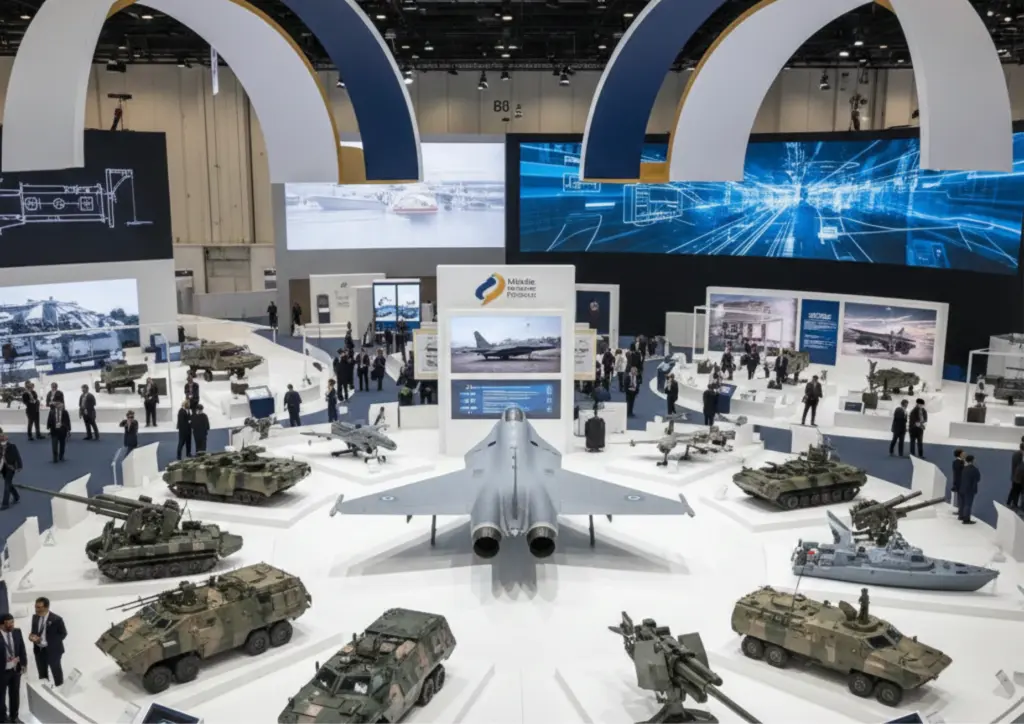
Pakistan is undergoing a quiet but profound transformation in the global defence market. Once heavily dependent on foreign suppliers, the country is now emerging as a credible exporter of advanced military hardware and proving itself as cost cost-effective defense supplier and creating various defense deals with several countries. Pakistan is positioning itself as a cost-effective and politically flexible alternative to Western and Russian defence giants.
By December 2025, Pakistan crossed several historic milestones, including its largest-ever defence export deals, expanded co-production facilities, and a more assertive defence diplomacy footprint spanning the Middle East, North Africa, the Caucasus, and beyond.
This shift signals not just commercial success, but a strategic reorientation of Pakistan’s military-industrial complex.
2025: A Breakthrough Year for Defence Diplomacy
The year 2025 marked a turning point, as Pakistan combined diplomacy, technology, and industrial capacity to secure multi-billion-dollar agreements. Defence exports are no longer incidental—they are becoming a pillar of foreign policy and economic strategy.
At the heart of this momentum is Pakistan’s focus on indigenous manufacturing, joint ventures, and systems that balance performance with affordability.
Pakistan–Saudi Strategic Mutual Defence Agreement (SMDA)
A Historic Upgrade in Defence Relations by becoming a cost-effective defense supplier to Saudi Arabia
On September 17, 2025, Prime Minister Shehbaz Sharif and Saudi Crown Prince Mohammed bin Salman signed the Strategic Mutual Defence Agreement (SMDA) in Riyadh—widely seen as the most significant defence pact between the two nations since the 1960s.
The “Article 5”–Style Collective Security Clause
The agreement’s most striking feature is its collective defence clause, which states:
“Any aggression against one shall be considered an aggression against both.”
This provision is acting as a powerful military and psychological deterrent, especially in a region shaped by missile threats, proxy conflicts, and drone warfare. This indicates how Pakistan is becoming or rising as Asia’s cost-effective defense supplier.
Missile Defence, Intelligence & Joint Production
Under the SMDA:
• Pakistan is integrating air defence and missile units into Saudi bases to counter drones and rockets.
• A real-time intelligence-sharing framework has been established.
• Saudi Arabia is investing directly in Pakistan’s defence manufacturing sector, supporting co-development of drones, munitions, and defence systems.
Between 2024 and 2025, Saudi commitments exceeded $2.8 billion, and it is stabilizing Pakistan’s military-industrial ecosystem amid domestic economic pressures.
The $4 Billion Libya Defence Deal: A Landmark Moment
In December 2025, Pakistan finalized a $4 billion defence agreement with the Libyan National Army (LNA)—one of the largest export contracts in its history.
Scope and Significance of $4 Billion Libya Defense Deal
The 2.5-year deal includes:
• JF-17 Thunder fighter jets
• Super Mushshak trainer aircraft
• Equipment for land, sea, and air forces
This agreement places Pakistan among a select group of countries capable of delivering full-spectrum conventional military solutions, not just individual platforms.
Azerbaijan and the JF-17 Block III Advantage
Azerbaijan is not considered to be a customer for Pakistan’s aerospace industry. After initial talks, Baku expanded its order to 40 JF-17 Block III fighters, valuing the deal at approximately $4.6 billion.
Strategic Impact
The Block III variant features:
• AESA radar
• Advanced electronic warfare suites
• Integration of PL-15E long-range air-to-air missiles
This combination significantly improves Azerbaijan’s air power, while displaying ability of Pakistan to deliver 4.5-generation capabilities at competitive costs.
The Turkey–Pakistan Drone Corridor
In late 2025, Pakistan and Turkey’s Baykar signed a landmark agreement to establish a combat drone assembly and production facility in Pakistan.
From Buyer to Co-Producer
The facility will focus on:
• Next-generation stealth drones
• Long-endurance UAV platforms
This shift transforms Pakistan from a customer into a co-producer, insulating its supply chain from sanctions and enabling exports to third-party markets.
Why Pakistan Is Emerging as a Defence Powerhouse
Indigenous Manufacturing & Technology Depth
Pakistan’s defence rise is rooted in public–private partnerships and sustained R&D:
• The JF-17 Block III is now regarded as one of the world’s most cost-effective advanced fighters.
• Missile tests in May 2025, including the Abdali (450 km) and Fateh series, demonstrated improved accuracy and counter-ABM survivability.
Economic and Strategic Gains
• Defence exports crossed $1.3 billion over the last three years
• Over 82 MoUs, valued at more than $36 billion, are in the pipeline
• Pakistan now ranks 12th globally in military power (Power Index: 0.2513)
Challenges in the way
Analysts are analyzing some of the major risks:
• Economic Stability: Sustaining high-tech defence production requires fiscal discipline and macroeconomic stability.
• Geopolitical Scrutiny: Deals like Libya encounter monitoring due to regional instability and arms embargo sensitivities.
• Rising Competition: China, Turkey, South Korea, and Iran are leaving no stone unturned to expand aggressively in the same cost-sensitive markets.
All-inclusively, Pakistan’s defence export surge is not a short-term anomaly—it is depicting a structural shift toward strategic autonomy, industrial depth, and global relevance. If economic reforms and diplomatic balance are maintained, Pakistan is well-positioned to become a leading defence supplier for emerging and post-conflict states, reshaping its role in the global security landscape.