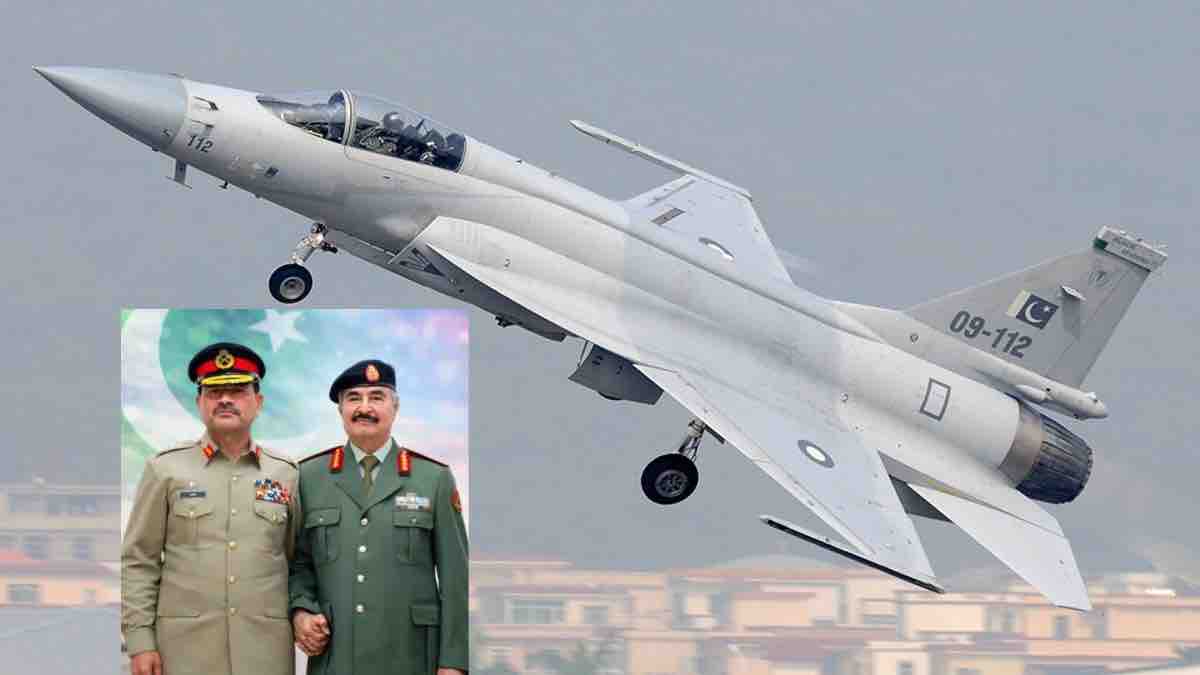
Pakistan and Libya signed a US$4.6 billion defence agreement, and the analysts are considering it a major shift in military cooperation across North Africa and South Asia. The deal is clearly indicating Libya’s efforts to rebuild its long-fragmented armed forces while strengthening Pakistan’s position as a cost-effective and reliable defence exporter outside traditional Western and Russian supply systems.
Large defense export deal in History
For Pakistan, this agreement represents one of the largest defence export deals in its history, equal in value to its earlier JF-17 fighter jet deal with Azerbaijan. For Libya, the pact is signaling a rare attempt to move toward structured, state-led military rebuilding after more than a decade of instability following the 2011 collapse of the Gaddafi regime.
A Deal Driven by Practical Needs
Defence analysts keep on saying that the timing and scale of the agreement reflect a changing approach to military procurement. Countries facing security challenges are increasingly prioritising affordability, faster delivery, local training, and fewer political conditions. Pakistan’s defence industry fits this model well, offering integrated solutions rather than isolated weapons platforms.
Reports suggest the agreement was finalised during Field Marshal Syed Asim Munir’s visit to Benghazi in mid-December 2025, marking the first-ever visit by a Pakistani army chief to Libya. During the visit, military cooperation documents were reportedly signed at the headquarters of the Libyan National Army (LNA) led by Field Marshal Khalifa Haftar.
Helping Libya Rebuild Its Armed Forces
Since 2011, Libya’s military has remained divided and weakened, struggling with outdated equipment, limited training, and fractured command structures. The new defence partnership suggests that Libyan authorities recognise that piecemeal purchases and foreign proxies are no longer enough to restore stability.
Read more: 52 Super Mushshak from Pakistan takes over basic flight training duties in Turkish Air Force
Pakistan’s appeal lies in its ability to provide a complete defence ecosystem, including combat aircraft such as the JF-17 Thunder, armored platforms like the Haider main battle tank, munitions, training programmes, and long-term maintenance support—all without the sanctions risks or political pressures often attached to Western or Russian suppliers.
The agreement includes:
- 16 JF-17 Thunder fighter jets
- 12 Super Mushak trainer aircraft
- 44 Haider main battle tanks
- Advanced infantry mortar systems
- One multi-purpose naval vessel
- Training for Libyan armed forces
Reviving an Old Relationship
Pakistan and Libya established diplomatic ties in 1951, and relations were particularly close during the Gaddafi era, when Libya provided
- Economic assistance
- Oil supplies
- Employment opportunities for Pakistani workers
That relationship weakened during Libya’s civil conflict but has gradually improved in recent years.
High-level military contacts throughout 2025 helped revive trust and paved the way for the current agreement.
A Broader Strategic Message
Beyond the numbers, the deal is clearly manifesting a broader trend in global defence cooperation. Emerging and post-conflict states are increasingly turning to South–South partnerships, focusing on practical capability building rather than ideological alignment.
For Pakistan, the agreement is going to solidify or improve its image as a rising defence exporter. For Libya, it indicates a step toward rebuilding national security institutions and restoring military balance in the region.