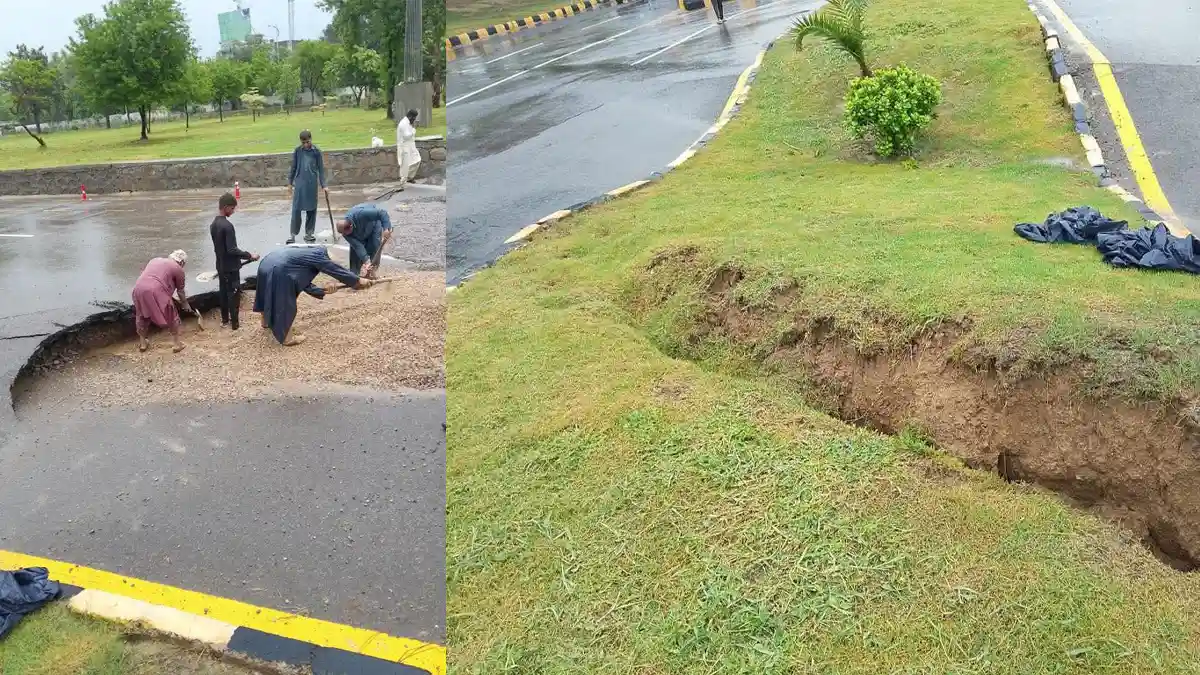
Islamabad’s much-hyped 9th Avenue underpass—praised just weeks ago as a symbol of rapid urban development—has cracked open during the season’s first monsoon rain, exposing serious flaws in construction quality and project oversight.
It was done to ease traffic between sectors H-9 and G-9, the underpass fastly shifted from a point of pride to a source of public frustration. After just one downpour, commuters started noticing alarming signs: surface cracks, water seepage, and large patches of uneven road. In some areas, water collected deep enough to cause slowdowns, and in others, drivers were forced to swerve to avoid sudden puddles.
Many Islamabad residents stated all this on social media to express their anger and disappointment. “If this is what happens after one rain, what will the road look like next year?” questioned one X (formerly Twitter) user. Others called for a formal investigation into whether proper materials and engineering standards were followed.
Celebrated Launch Now Under Scrutiny
Just a few weeks earlier, Interior Minister Mohsin Naqvi had inaugurated the underpass with much fanfare. At the time, he praised it as a step toward a “signal-free Islamabad” and announced a second underpass between sectors G-9 and G-10, to be built in collaboration with the Capital Development Authority (CDA). The promise was better traffic flow and faster commuting times for citizens in the capital.
Read more: Work on Islamabad’s F-8 flyover on track to be completed by Feb 15 deadline
However, with the 9th Avenue underpass showing signs of structural weakness so early, that vision now appears shaky—both literally and figuratively.
Residents Demand Accountability
Residents and city planners alike are calling for answers. Who was the contractor? Were quality checks done during construction? Did the CDA rush the project to meet a public deadline?
“This is not just a crack in the road—it’s a crack in public trust,” said a local engineer. “Infrastructure should last years, not weeks. We need to look beyond ribbon-cuttings and ensure real, lasting quality.”
With more infrastructure projects already planned or underway, many citizens believe this incident should serve as a wake-up call. Instead of racing to complete projects in record time, authorities must put a strong emphasis on the
- Right durable design
- Proper drainage
- Long-term safety
For a growing city like Islamabad, sustainable infrastructure isn’t considered to be a luxury—it’s a necessity.