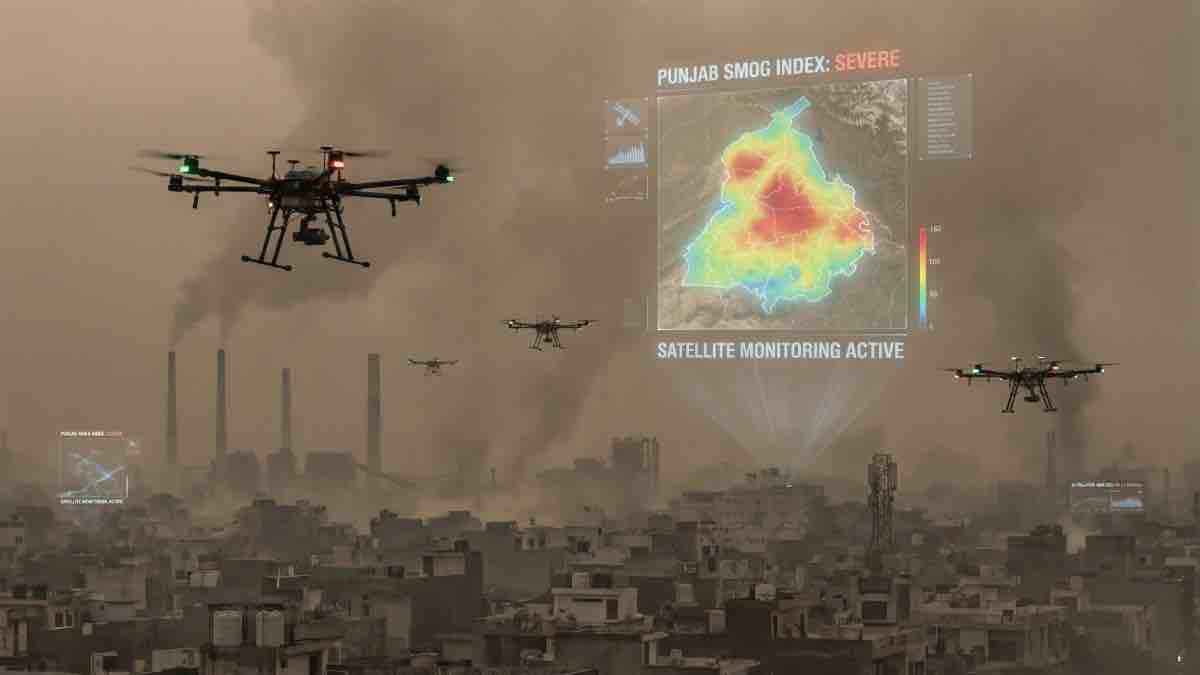
As winter smog once again blankets Punjab’s cities, the provincial government has rolled out an ambitious, technology-driven strategy to combat air pollution.
Punjab Senior Minister Marriyum Aurangzeb announced on Wednesday that the province is now using satellites, drones, and artificial intelligence (AI) to monitor and manage smog, warning that failure to change public behavior could make industrial masks a daily necessity in the future.
Punjab, Pakistan’s most populous province, experiences severe smog every year, particularly between late October and February. The pollution peaks during the colder months, disrupting daily life, closing schools, grounding flights, and posing serious health risks.
AI, Drones, and Digital Surveillance
Speaking at a public event, Aurangzeb said Punjab has established an AI-based machine-learning forecasting system capable of predicting smog patterns in advance. The province is also deploying surveillance drones and technology-enabled cameras to track pollution sources in real time.
“At present, one of the world’s best environmental protection forces—equipped with modern training, technology, and digitally integrated data—is operating in Punjab,” she claimed. As per the minister, monitoring systems are now fully digital, which ae now giving permission to the authorities to find out violations faster and respond more effectively.
Health Risks Continue to Rise
Smog is beyond an environmental issue—it is a growing public health emergency. Exposure causes immediate symptoms such as
- Eye irritation
- Sore throats
- Coughing
- Breathing difficulties
Long-term exposure significantly increases the risk of stroke, heart disease, and lung cancer
Children remain especially vulnerable due to their higher breathing rates and developing immune systems, making prolonged exposure even more dangerous for them.
Tackling Crop Burning and Vehicle Emissions
Aurangzeb pointed out that smoke from the eastern corridor across the Indian border intensifies during winter, contributing to regional smog. However, she acknowledged that domestic sources—especially crop burning, vehicle emissions, and industrial pollution—remain major drivers.
To address agricultural pollution, the Punjab government has distributed 5,000 super seeders to farmers on loan. These machines permit crops to be planted without burning leftover stubble, a major cause of seasonal smog.
For the first time, the Environmental Protection Agency has also introduced a comprehensive vehicle emission testing system, which are meant to minimize pollution from poorly maintained transport.
A Stark Warning for the Future
Aurangzeb has released a blunt warning: if public attitudes toward air quality and climate responsibility do not change, people may soon be forced to carry industrial-grade masks, much like a “purse or wallet.”
Pakistan’s major cities consistently rank among the world’s most polluted, which is undermining
- Public health
- Economic productivity
- Overall quality of life
The government’s technological push may be a step forward—but officials stress that lasting improvement will depend on collective behavior change, not technology alone.